I was looking for an update on the Jim Frenkel situation I’d mentioned recently. And, as far as I can see, there are no updates. However while I was browsing to see if there was new information on this story I stumbled upon one of the internet’s many pockets of awful.
I am not linking to it because I don’t want to give this guy the traffic. He’s an horrible piece of work.
This pocket of awful was the blog of an author, occasional video game designer and terrible internet troll who is best left nameless.
In his blog he leapt to the defense of Frenkel, claiming that the complaints levelled against him had surely been falsified. First he doxed the woman in question. I am not certain the extent to which she has made her personal information public with regard to this so I will not mention her by name. After that bit of nasty he provided his reasoning for why he believed her complaint to be spurious. His argument as for why was entirely lacking:
she was a completely useless and not terribly ornamental member of an otherwise excellent writing group in [redacted], she never actually did any writing, and all she wanted to do was talk about herself and babble about feminism
It’s typical misogynistic trolling. However it’s got a bit of a genre spin on it which I’d like to point out and that is the complaint – thrown between the sexist stab at her appearance and the misogynistic fear of the f-word – he attacked her for being attached to a writing group despite not publishing much.
This is the worst sort of drek. In a single sentence this vulgar little troll not only conjured up two sexist favourites but also a variant of the tired chestnut “she’s not really one of us, after all.”
This attitude REALLY bothers me on multiple levels. Fundamentally, it’s sexism, which I’m opposed to. However it also speaks to a major problem in fandom. That problem is the myth of the Fan as Outsider.
For as long as I’ve been involved with any sort of fandom there’s been this idea that the fan community is somehow different. This is tied up heavily in the self-identity of the nerd or the geek.
“We’ve been rejected because we’re a little bit weird,” fans say. “The normals don’t like us.”
But the truth is that most people really couldn’t care less.
A more honest truth is that there are quite a few people within Fandom who don’t particularly like people outside of Fandom. For them this sense of being an outsider is armour they can wear to mask the truth, they don’t want new people to join their club.
For a lot of people this isn’t tied into mysogeny or into any other particular prejudice other than a prejudice against people who think Star Trek is silly. However when a person is also a sexist, or a racist, we get the bile of people like our nameless blogger.
Fandom is not made of outsiders, it hasn’t been for a long time. Frankly it really never has been – most of the people I know from fan communities hold jobs, have families who love them and function perfectly well as members of general society when not having fun at conventions.
There’s nothing wrong with having a bit of an off-beat sense of fun, and our culture hasn’t had any problem with that since the sixties at least. It’s time we dismantled the myth of the Fan as Outsider. It’s only real use now is keeping people out – and I for one want the fan community to grow, diversify and become the welcoming and inclusive place we all like to tell ourselves it is.
 In part one I talked about the importance of brevity and of establishing stakes. Today I’ll pick up this discussion of making writing thrilling by looking at hooks and then will talk about the traps that a writer can fall into when they try to write thrilling and forget to write well.
 Hooks are deceptively simple. They’re little bits of text whose whole purpose is to make you interested in the story. Here’s an example of
 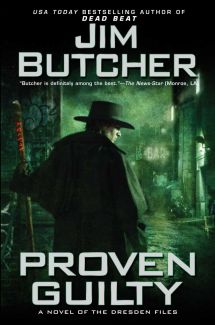 A hook doesn’t have to come at the end of a chapter. Here’s an example from one of Butcher’s
  Yesterday I talked about Pacific Rim and its masterful use of stakes to increase tension. However an action blockbuster movie has a lot of other tools available to create a thrilling atmosphere that an author just doesn’t have. (We can’t use sound editing to produce a boom and our explosions have to be made of orderly rows of print.)
 This is a matter of prose styling and this one goes back to Hemmingway. Because you know what’s another really thrilling little book?
  If you haven’t seen Pacific Rim you should go now. Seriously. Leave this blog, close your computer and go watch a midnight show somewhere right now.


 Ever meet a book that can break your heart? This is one of them. My immediate response to the story is that it reminded me, in the telling, of Le Guin. There was a similar ephemeral quality to the prose.
 Fair warning: this one is a little difficult to track down.
 I’ve got a soft spot for a coming of age story and this one is a doozy.
 Ok, this one is stretching the definition of fantasy a bit in that it’s a historical novel written in Ming Dynasty China. It is, in fact, one of the earliest true novels ever written anywhere and more people should read it for that reason alone. Happily a
  Returning to the present day, Above is another Young Adult entry on this list. This unapologetically Torontonian story (you can even see the CN Tower front-and center on the cover) plays out similarly to some of the works of Neil Gaiman as it tracks the slightly magical outcasts who live in the catacombs beneath the city.
 This is one of the first things often trotted out by the defenders of bad stories.
 Simon McNeil