
World-building: a genealogical approach

…In that Empire, the Art of Cartography attained such Perfection that the map of a single Province occupied the entirety of a City, and the map of the Empire, the entirety of a Province. In time, those Unconscionable Maps no longer satisfied, and the Cartographers Guilds struck a Map of the Empire whose size was that of the Empire, and which coincided point for point with it. The following Generations, who were not so fond of the Study of Cartography as their Forebears had been, saw that that vast Map
was Useless, and not without some Pitilessness was it, that they delivered it up to the Inclemencies of Sun and Winters. In the Deserts of the West, still today, there are Tattered Ruins of that Map, inhabited by Animals and Beggars; in all the Land there is no other Relic of the Disciplines of Geography.

—Suarez Miranda,Viajes devarones prudentes, Libro IV,Cap. XLV, Lerida, 1658

Jorge Luis Borges – On Exactitude in Science

There has recently been a surge of interest in Vajra Chandrasekera’s 2023 essay The Lone and Level Sands.

Chandrasekera is largely arguing from a position contra Jason Kehe in Wired regarding the quality of Brandon Sanderson. “Kehe—who is obviously a fan, who else could read 17 to 20 novels by any given author and be familiar enough with the lore to claim bona fides—takes the criticism of Sanderson as a poor writer of prose to a very familiar place: story over sentences, worlds over writing,” he says.

Chandrasekera ends his essay calling for, “a place where the sentences matter, and are the whole of the matter,” arguing for prose quality over the encyclopedic tendency of the world builder. However, with the recent resurfacing of this essay there has been some discussion regarding the vagaries of the definition. Simply put, it seems that for some world-building means any construction of setting; for others world-building is the insertion of setting that is extraneous to the utility of the story; for others world-building is a specific method of systematic de-mystification which seeks to provide an authoritative claim as to the truth of the setting.

How one feels about world-building thus becomes multi-varied based on two questions: which definition of world-building does a person adhere to and how do they feel about that?

The earliest approaches to the idea of world-building refer to the construction of simplified “worlds” for the use in scientific thought-experiment. In the 1920 work Space Time and Gravitation: An Outline of the General Relativity Theory, Arthur Eddington says, “The reader will easily see that a being confined to the surface of a sphere and not cognisant of a third dimension, will, so to speak, lose one of his dimensions altogether when he watches things occurring at a point 90° away. He regains it if he visits the spot and so adapts himself to the two dimensions which prevail there.

“It might seem that this kind of fantastic world-building can have little to do with practical problems. But that is not quite certain. May we not be able actually to observe the slowing down of natural phenomena at great distances from us?”

For Eddington there is a pedagogical and epistemological purpose to the built world – to provide a setting in which a difference allows for the exploration of the consequences of the laws of physics. Another of Eddingon’s examples involves the movement of light through an impossibly vast and free-floating body of water in space. The difference between the “absolute world” that Eddington describes and these simplified possible worlds is a useful tool to explicate how similar functions interact with difference – meanwhile their simplification creates a sort of scientific parsimony wherein the built world contains only those elements necessary for the thought experiment. The body of water is only water. It doesn’t contain land or creatures, there is no passing debris beyond light swallowed by it. It’s water because water contains the qualities necessary to make transparent how gravitation effects light in this case.

An oft-cited early essay on literary world-building is Tolkien’s On Fairy Stories from 1939. Now this is an interesting inclusion considering the extent to which Tolkien argues against rationalization in it, saying, ” I suspect that this flower-and-butterfly minuteness was also a product of “rationalization,” which transformed the glamour of Elfland into mere finesse, and invisibility into a fragility that could hide in a cowslip or shrink behind a blade of grass. It seems to become fashionable soon after the great voyages had begun to make the world seem too narrow to hold both men and elves; when the magic land of Hy Breasail in the West had become the mere Brazils, the land of red-dye-wood.” Tolkien argues against treating “fairy” to narrowly – to signify fairies or elves as the subjects of stories – and, instead argues that fairy stories are stories about the condition of faerie – a totalizing setting that contains the creatures of faerie, their lived environments and their metaphysical bounds. This is critical because, for Tolkien, fairy stories should be true in a metaphysical sense of the world and that truth depends not on a rationalization but rather on a mystification of the audience.

In fact Tolkien is quite critical of the scientific urge within literature, saying of anthropologists and folklorists that they are, “people using the stories not as they were meant to be used, but as a quarry from which to dig evidence, or information, about matters in which they are interested. ” Tolkien believes that folklorists tend to flatten stories: “We read that Beowulf “is only a version of Dat Erdmänneken”; that “The Black Bull of Norroway is Beauty and the Beast,” or “is the same story as Eros and Psyche”; that the Norse Mastermaid (or the Gaelic Battle of the Birds and its many congeners and variants) is “the same story as the Greek tale of Jason and Medea.””

Ultimately Tolkien seeks to create a form of belief in the audience and argues that creating a mode in which an audience can believe the truth of a fairy story is the ideal mode for the creation of those things that are valuable in a fairy story. Tolkien sets up the author as a demiurge, the secondary-world is the creation of the author just as the world is the creation of God. We should create a world crammed full of all the things in existence when creating a world. We aren’t seeking the parsimonious model of Eddington’s scientific worlds but rather to create a reflection of divine Truth. And this must mean that the world of the story is even vaster than what the author sets to the page. For Tolkien a fairy story must exist in an unbounded world: “Endings of this sort suit fairy-stories, because such tales have a greater sense and grasp of the endlessness of the World of Story than most modern “realistic” stories, already hemmed within the narrow confines of their own small time. A sharp cut in the endless tapestry is not unfittingly marked by a formula, even a grotesque or comic one. It was an irresistible development of modern illustration (so largely photographic) that borders should be abandoned and the “picture” end only with the paper.”

Richard Lupoff’s description of Edgar Rice Burroughs, in 1965, is interesting in how it fuses together these seemingly incompossible forms of worldbuilding. He says, “In short, Burroughs had created a fully-visualized hero – thirty years in apparent age but actually ageless, a professional soldier, an adventurer – and had transported him to a fully visualized alien world, the planet Barsoom, which we call Mars. Barsoom was fully equipped, far beyond even VanArnam’s description, with geography, history, mythology, flora and fauna, human and inhuman inhabitants, science, politics, religion, architecture, law, and every other institution to be expected in a fully developed world.”

For Lupoff the question of building a world was a matter of craft. That genre fiction is replete with fantastical settings is a given. Instead it is a question of how an author goes about realizing this world such that an audience will enjoy reading stories set within it. These, then, help us to see how our different definitions of world building arise: genre fiction has often shared a readership with scientific non-fiction where the construction of simple and parsimonious worlds was, even in the early 20th century, a well-established method for considering problems. Tolkien, held in the highest esteem created an argument not for parsimony in constructing worlds but rather in a kind of lush overabundance of detail designed to help an audience suspend disbelief and experience the demiurgic creation as a form of truth. These two strains then filter into practical craft considerations: put in a lot of setting detail so that we have a world that can be believed in. But, being rational Men of Science, we had best make sure that these worlds are systematic and consistent; the irrational might be disbelieved.

Hilariously this chimera would likely have Tolkien and Eddington both rolling in their respective graves. But this is all rather old news. Lupoff’s book about Edgar Rice Burroughs was published in 1965. Surely we’ve progressed the discourse subsequently.

In 2007 M. John Harrison approached the subject – arguing ultimately that world-building was unnecessary. “It is the great clomping foot of nerdism. It is the attempt to exhaustively survey a place that isn’t there. A good writer would never try to do that, even with a place that is there. It isn’t possible, & if it was the results wouldn’t be readable: they would constitute not a book but the biggest library ever built, a hallowed place of dedication & lifelong study.” It’s Borges’ map that was a perfect replica of its territory. But if Harrison sees world-building as Sisyphean then the question arises as to why he’s so specifically critical of this Sisyphean task over any of the other Sisyphean tasks in writing. For Harrison this is a matter that what he calls worldbuilding fiction, “becomes less an act of imagination than the literalisation of one.”

“This kind of worldbuilding actually undercuts the best and most exciting aspects of fantastic fiction, subordinating the uncontrolled, the intuitive & the authentically imaginative to the explicable; and replacing psychological, poetic & emotional logic with the rationality of the fake,” Harrison says, bringing into the conversation the Barthean idea that fiction doesn’t consist of an active authority and a passive audience but exists in the discursive interplay between author and audience. The author, putting too much labour into world-building, is subordinating the audience too much to their authority.

The author chokes out the possibility of imaginative agency for the audience by grounding the fiction too much in the detail of the world. Harrison is concerned with the ideology surrounding this chimerical world-building, calling it, “It’s a secularised, narcissised version of the fundamentalist Christian view that the world’s a watch & God’s the watchmaker.” It’s interesting that this criticism functions poorly for the openly theological ideas of Tolkien’s essay specifically because Tolkien did not view fairy stories as watches. Tolkien believes that fairy stories end with just-so vagaries in order to demonstrate that the world of the story necessarily extended out beyond the bounds of the page. However it works well against the successors to Tolkien who, taking a page from Lupoff, have bonded the parsimony of scientific world building to the pursuit of Truth in Tolkien’s. Though Harrison is happy to leave this mess at Tolkien’s feet it does, in fact, depend on a much more protestant religiosity than Tolkien could ever possess. There is a desire in the SFF idea of world building to create a rationally realized world rather than one that feels True. But I sometimes question whether SF fans even notice the difference. Harrison does hit the nail on the head toward the end of his essay when he treats this form of world-building as a remnant of a “fossilised remains of the postmodern paradigm.” Of course the separate world-building concepts of Eddington and Tolkien were themselves very modernist – each attempted to present a grand an unifying narrative about the world: Eddington’s was scientific and Tolkien’s religious. However the syncretic desire to merge these two together is, certainly, a postmodern affectation.

In 2014 Michael Moorcock spoke with John Picacio from Locus Magazine about his then-forthcoming novel The Whispering Swarm. In that article, Moorcock argued he dislikes being called a world-builder because he believed it, as a notion, belied a “failure of literary sophistication.” Moorcock, with characteristic bluntness, calls worldbuilding “anti-romantic rationalization” and lays blame at the feet of John W. Campbell. He also says, “I’m not trying to convince you this is going to be real. I’m trying to convince you these ideas have to be considered, that what’s going on in the world has to be thought about.” And so we can see that Moorcock shares Harrison’s concern regarding the tendency of an over-sufficiency of authorial instruction to limit the avenues for audience imagination. Campbell, who demanded the stow-away die at the end of the Cold Equations, could be something of a perfect vector for the protestant syncretization of parsimonious scientific modeling and a Christian pursuit of Truth via secondary creation. It would certainly fit with the John W. Campbell who assisted L. Ron Hubbard in the founding of Dianetics after all. However, as has been pointed out by the blogger who operates under the “heresiarch” pseudonym, Moorcock’s demand for the necessity of character is no less vulnerable to historicization than the world-builders focus on setting is. They argue stridently, and convincingly, against the idea of necessity as appropriate to any discussion of literature. Effectively nothing in literature is strictly needed.

They also say, “To condemn all of worldbuilding, you ought to be going after the strongest cases: this IMO means Le Guin’s Always Coming Home, a book which sadly no one has read,” and this is interesting specifically because of what Always Coming Home is: it’s a work of speculative science.

Specifically, Le Guin constructed an ethnography for a possible future people of California. It does all the things ethnographies do – it analyzes their writing, explores the structure of their myth and poetry, it interrogates how their folkways interface with their material culture. Always Coming Home is hardly a novel although it is certainly an excellent work of literature. But, rather, it’s attacking Tolkien from the opposite end, so to speak, and giving the anthropologists and folklorists their due, telling Tolkien that his search for an idealized Truth via the whole-cloth construction of myth missed the point of considering what a myth, in its specificity, might be for when not for the construction of an English national identity.

Le Guin’s work plays well both to problematize Tolkien and to knock some of the wind out of Moorcock’s sails by demonstrating that literature need not be a character study to be, well, literary. However I don’t think that Le Guin works well to particularly problematize Harrison except in as far as her work demonstrates that there are other ways to get at building a world and reasons to do so beyond reifying a protestant ideological mode of treating the world as a watchmaker’s product. But I think one would be a fool to fail to situate Le Guin, especially, within the postmodern mode that Harrison criticizes in his essay.

In 2020 Helen Marshall interrogated Harrison’s critique of world-building along with some of the critiques of it. She cites Charles Stross who says, “The implicit construction of an artificial but plausible world is what distinguishes a work of science fiction from any other form of literature. It’s an alternative type of underpinning to actually-existing reality, which is generally more substantial (and less plausible – reality is under no compulsion to make sense.)”

Marshall points out that, “If, as he says, reality is under no compulsion to make sense, how can art ever produce a plausible and coherent yet realistic world? In fact Stross wants the opposite of this sort of messy, inexplicable real-realism. Instead he turns to fiction because ‘worldbuilding provides a set of behavioural constraints that make it easier to understand the character of my fictional protagonists.”‘

She claims that Stross is openly advocating for the construction of hyperrealities, the very thing that Harrison critiqued previously, because it it allows Stross to make-visible those things that were invisible before.

In short Marshall points back to Eddington and his massive globe of water and says, “you’re just doing this again.”

But if what Stross is doing is simply a fictional version of Eddington’s thought exercise then how can we take his claim seriously that science fiction is unique in all forms of literature from doing so? Philosophy and science have been eating science fiction’s lunch for a few hundred years now in that regard. And this is the problem with trying to disentangle this chimera. Without Tolkien’s idealism, without his explicitly theological search for Truth, then all that is left of world-building is the thought experiment. Without the thought experiment we’re just still writing fairy stories. In either case the encyclopedic impulse of the world-builder becomes a bit of fannish silliness forced upon the audience by an author who won’t get out of the way of their own text.

Marshall argues that this is largely an economic activity, Echoing several prior authors she notes that market conditions prefer “encyclopedic, extendible, franchisable, consumable” art. Authors simply follow suit. This mirrors Chandrasekera’s argument that much of Brandon Sanderson’s tendency toward world-building is tied into his position as a business-person, as a start-up founder more than as an author. Sanderson has a financial incentive to be interested in a consistent ecosystem of products that locks in readers. If a reader is conditioned to expect the systematics of a Cosmere book they might look askance at Mordew or Ambergris.

Marshall argues that what Harrison is seeking is, “a mode of attack that would destabilize and unsettle, that would reveal the world as incoherent and painful rather than unified and offering the possibility of choice.”

She chronicles Harrison as having a nearly Brechtian desire to demystify fantasy for material reasons – “We learn to run away from fantasy and into the world, write fantasies at the heart of which by some twist lies the very thing we fantasise against,” she quotes him as saying. She places Harrison into a lineage including Mervyn Peake and China Mieville, citing Jeff and Ann VanderMeer regarding the foundation of the New Weird movement.

Ultimately Marshall proposes three solutions to Harrison’s attack on world-building. The first is to, like China Mieville, double-down on world-building, and use it to allow the creation of a fantasy that “interrogates the relationship between belief and reality.”

The second is to operate within the mode of Jeff VanderMeer and, as he suggested in Wonderbook to argue for “sufficient mystery and unexplored vistas, consistent inconsistency, multicultural representation, extended, literalised metaphors, multiple operational realities, collective and individual memory and imperfect comprehension.” The third is to follow Timothy Morton’s path into speculative realism. I have explored the relationship between VanderMeer and Morton previously and found this argument of particular interest.

She argues that Harrison ultimately rejects the idea that readers should believe (or even enjoy) built worlds as if they were real.

And so what we have is a story of a century of progression through modernity and into the postmodern followed by the recognition that the postmodern condition has reached its limits. World-building is a postmodern chimera of modernist rationalism and equally modernist reaction against rationalism. It paradoxically demands a multitudinous panoply of detail in order to make transparent problem-worlds fit for solving problems.

If we express skepticism for world-building it should be clear to an audience that this is not a matter of being skeptical of the power of setting. However we must not make the error of Stross and believe that setting only exists within the confines of genre, or that any setting is more or less artificial than another.

In fact, we can abandon Baudrillard’s anxiety in favor of a Deleuzian recognition of the powers of the false. We may not agree with Tolkien that there is any Truth to be found in an act of demiurgic creation but we can recognize how both Tolkien’s unbounded abundance and Eddington’s careful parsimony create a false image of the world – and that their capacity for action depends on that falsity. As Marshall points out, a built world cannot be as inherently contradictory as reality. There’s too much of the watchmaker’s stink upon any setting. And heresiarch is quite correct to point out that the watchmaker’s simplification applies as much to the inner setting of character as to the external setting of mise en scène.

But, just as this is the case, a built world allows us to highlight contradiction and inconsistency. VanderMeer’s ideas of consistent inconsistency, the blending of extended literalised metaphor into the assumed real stratum of a story and Morton’s use of the hauntological and the eschatological allow us to interrogate socio-cultural problems with the same sort of transparent clarity that Eddington sought for the mathematical problems of special relativity. Always Coming Home provides an excellent precedent for this sort of an operation, showing how a focus on setting can allow us to interrogate our own relationship between folkway and material culture as if we were anthropologists in the future.

Perhaps what sits so hard in the mouth of many critics regarding Brandon Sanderson’s school of world-building is that it becomes too systematic for its own sake without doing much of interest with it. Sanderson is not a talented enough writer to really tell us anything about his characters but his fantasy worlds are ultimately derivative enough that they don’t have much to say about our world. They become floating escapist signifiers that exist principally to entrap an audience in a labyrinth of rules and sour them on anything that doesn’t adhere to these arbitrary laws.

This is, however, not a critique of world-building qua world-building. It’s a critique of Sanderson’s prioritization of business over art.

As Harrison rightly points out, world-building is inherently political. But Marshall is right to problematize this by demonstrating how any given politic within fiction can be subverted by a cunning enough writer. As such we would, perhaps, be wise not to condemn world-building entirely but rather to guide artists to consider what their worlds are for. When you decide what is consistent and what is inconsistent, when you decide what to show and what to hide, whether to write about trees or whales or the layout of fantastical cities, ask yourself why. Ask yourself not whether the world will convince an audience of its truth but rather what it can do with its falsehood. What games are you playing with the audience and to what end?
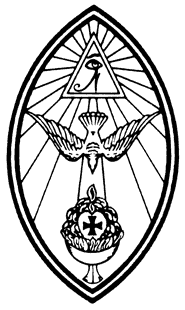
Magic and Lawlessness

Do what thou wilt shall be  the whole of the law.

I have an almost irrational distaste for “hard” magic systems in literature. This is not because of any particular aversion to stories getting metaphysical. I have absolutely no problem there but it is instead because I think attempts to systematize magic have a tendency to strip the magic out of it. There is a famous quote from Arthur C. Clarke that “any sufficiently advanced technology will be indistinguishable from magic.” It’s one of Clarke’s three laws. We will return to the other two. But I would propose that this construction, taken absent Clarke’s other two laws, has led to many attempts by fantasy authors to make magic into nothing but another technology. This is a bad thing that should be discouraged.

However to demonstrate both the problematic created by attempts to make a technology of magic and also why this is ultimately a bad endeavor for literature, surely, and also for metaphysics, it will be necessary for us to define some terms and the first of those is technology.

Skolnikoff echoes Harvey Brooks in describing technology as, “knowledge of how to fulfill certain human purposes in a specifiable and reproducible way,” and while he admits this definition lacks a certain level of precision it does capture the key issue with technology that need addressing:

  1. Technology fulfills specific human purposes
  2. Technology is specifiable and reproducible

These are the qualities that systematization imparts to magic that makes it like a technology.

Now, of course, we can see something of this vulgar materialism in the works of Jim Butcher, whose wizards frequently manipulate physics such as moving heat to create fire in one place and ice in another or to draw an object out of a stable orbit. In these cases wizardry, as a form of scholasticism, is very much a tool of executing a specific human purpose. The wizard has an objective – such as freezing a body of water – and an understanding of the forces required to cause a body of water to freeze. The heat within the water is taken up by the wizard who, acting as a conduit for this force, shunts it to his focus which disperses the captured heat as fire. This technological magic is specific and it is reproducible. A wizard, faced with a problem and a situation, will be able to derive the necessary technique in order to execute a task in a replicable manner. But where is the magic here? It’s all mathematics and physics equations. For all that Butcher might ground the magic of his wizards in a kind of materialist interpretation of the world as an interlocking system of energetic forces which can be manipulated, it’s all quite static. A magical feat, once undertaken, can always be accomplished again.

Frankly there’s a human project in these systems of magic. But should magic be bound in these standard, repeatable, goal-oriented systems? What about the magic of a shaft of sunlight piercing a forest canopy? What about the magic of the random fall of blood on a stone? Why must we exorcise the ineffable from magic?

I am proposing, as a counter to these project-derived visions of magic, one guided far more by inner experience which, as Bataille suggests, “cannot have any other concern nor other goal than itself.” I propose this, in part, because there’s no need for a technology called magic. As Clarke points out any sufficiently mystifying technology will serve just as well. The very use of his half-assed vulgar materialism is precisely the same thing that makes Butcher’s magic indistinguishable from a sufficiently obscured technology. However if we abandon a materialist metaphysics we run into other problems. Plato’s realm of ideal forms is destructive to the idea of change. For Plato all learning was just a remembrance as the ideal form of any given object always already existed. For anything truly new to be possible we need a materialist metaphysics. And so this leaves us at an impasse. Must we have our literature either abandon change or abandon magic? Of course this is where Bataille is useful for resolving this paradox. We simply must posit magic as being outside the boundary of project. Magic is indifferent to project, it is not a replicable system of knowledge that fulfills human purposes. It’s something else, something ineffable.

Magic is the creation of the new.

Speaking of magic within literature we are operating within an ontological mode. Magic exists in the experience of the text. Moving beyond a text magic exists in the immediate experience of the world. We become aware of magic when something new arises that was not there before. But Sartre quite rightly points out that, “every theory of knowledge… presupposes a metaphysics” if we treat the experience of magic as an awareness of the new then that must, in turn, be grounded in a metaphysics that allows new things to exist. As such let us discuss Sartre’s dialectic of being and nothingness not as his ontology but as the underlying metaphysical suppositions it makes.

For Sartre nothingness arises in the awareness of absence. “My friend is not here.” The absence of the friend is indicative of the nothingness within him. Now Sartre was quite careful to keep his nothing and his being entirely ontological – nothingness for Sartre isn’t a metaphysical void so much as a negation within awareness.

However there is a metaphysical requirement for being to arise from nothingness and that requirement is time. Simply put for being to arise there must be time within which it arises; change can only occur within a temporal field. How then do we handle the in-between moments when something is neither fully absent nor fully present – how do we handle the statement “my friend is not here yet?”

This is the domain of becoming. And becoming is where the magic lives. The systematic approach to magic supported by Butcher as described earlier doesn’t work well with becoming because it assumes magic to simply be the will of the magic-user. Tool-like the magic in his books has a specific teleology. It’s a tool a character uses to advance the action of the story. But while this tool-magic is in motion, while it advances the story, it isn’t fertile. It doesn’t make anything. Because becoming sits as a third term between being and nothingness it occupies a position of partially fulfilled potential. Effectively anything that exists at null-intensity has infinite potential for becoming. A non-thing might become anything. As nothingness enters into time it must begin to take form and this is becoming – the process of the foreclosure of potential into actuality. We can see an example of this in the work of Douglas Adams.

“Please do not be alarmed,” it said, “by anything you see or hear around you. You are bound to feel some initial ill effects as you have been rescued from certain death at an improbability level of two to the power of two hundred and seventy-­six thousand to one against possibly much higher. We are now cruising at a level of two to the power of twenty-­‐five thousand to one against and falling, and we will be restoring normality just as soon as we are sure what is normal anyway.”

Douglas Adams – Hitchiker’s Guide to the Galaxy.

The Infinite Improbability Drive enumerates the likelihood that any given event will occur in an infinite universe and then sees to it that any given improbable event is reified at its point of likelihood. “There’s an infinite number of monkeys outside who want to talk to us about this script for Hamlet they’ve worked out.” But this works quite well for the idea of the collapse of potential into being. Through the process of becoming the possibility of unlikely rescues and Hamlet writing monkeys are either brought into being or are discarded as normalcy, an end to magical time, begins.

And this points to Clarke’s much less often cited second law: “The only way of discovering the limits of the possible is to venture a little way past them into the impossible.”

But perhaps we’ve beat around the bush enough. It’s time to interrogate Brandon Sanderson’s, “laws of magic.” These are:

  1. An author’s ability to solve conflict with magic is directly proportional to how well the reader understands said magic.
  2. Limitations > power
  3. Expand on what you have already, before you add something new.

Sanderson has a “zeroth law” as well, “Err on the side of awesome.” Apparently “awesome” in this case is to be considered in the colloquial sense but I would honestly agree with it provided we use the formal definition of awesome as being that which provokes the sensation of awe.

Now to address Sanderson’s first law I’d say this depends on a functionalist, plot-centric read of magic. Magic is never the most expedient method of resolving plot. Sanderson seems aware of that but seems unable to look up past plot for how else one might want to use magic. As such he spends an entire law writing apologia for using magic the wrong way.

But if magic is not best used to serve the advancement of the plot what is it for? Magic allows us to directly visualize the impossible. This is critical to the communication of two functions within fiction: psychology and metaphysics. In discourses around psychology the ability to visualize the impossible is valuable for the construction and communication of a limit experience. Bataille argued that philosophy was restricted by the limit of knowledge as a goal. He believed it was necessary for philosophy to break this limit and he believed an inner experience would be the method of doing so. Returning to Sartre (and a careful reader will note that these two authors are marked by their very different interpretations of Heidegger – make of my synthesis what you will) we can recall that Sartre wanted to propose a non-intellectual being within itself. But his is a relatively sterile and analytic approach to this question: what is self when it isn’t reflective? Bataille wanted to explain how it felt to be a self that wasn’t reflective. Sartre found in appearance the truth of the absence of essence. The essential character of a perceived object, including the self as a perceived object, is its series of appearances. Bataille responds, “One must grasp the meaning from the inside.”

But doing this: identifying the core of a character without resorting to self-reflection and its infinitely regressing hall of mirrors is no easy feat and it isn’t one that can easily be approached from without. In order to communicate this to an audience you need something that engenders a purely affective, purely intensive response. Consider the following,

“The old man… sprang to his feet and leaped to the top of a large rock. There he stood… towering above them. His hood and his grey rags were flung away. His white garments shone. He lifted up his staff, and Gimli’s axe leaped from his grasp and fell ringing on the ground. The sword of Aragorn, stiff in his motionless hand, blazed with a sudden fire. Legolas gave a great shout and shot an arrow high into the air: it vanished in a flash of flame.”

JRR Tolkien – The Lord of the Rings: The Two Towers

From a plot perspective there is nothing in this scene that requires magic. All that needs to happen is that the three hunters need to meet an old friend and discover he’s different than he was before. And yet Tolkien goes to great length to show us something of Gandalf’s magic and, in doing so, to tell us something about how he has changed within.

The old Mithrandir would not have burned Legolas’ arrows to ash, he would not have ripped Gimli’s axe from his hands nor set alight Andruil. We don’t have any insight into how Gandalf accomplished this feat nor was it necessary to solve the conflict. Gandalf could have solved it in a word by saying “yo Aragorn, it’s ya boi,” but we have magic anyway. And it is, in fact, awesome. We see an experience of awe as these three eminently capable heroes are rendered useless before Gandalf. Their weapons cannot avail them because of the holy fire that suffuses the revived wizard. Gandalf has changed, he has become different to himself, and this ontological and psychological transformation is why we have magic here. The magic doesn’t serve story-conflict. It doesn’t serve plot. It serves character.

Another example of magic serving character is basically the entirety of A Wizard of Earthsea. Now considering how we are dallying with Heidegger in this question it might not be surprising that I bring up my favourite left-Heideggerian piece of theory-fiction. I have spoken at length about this book as a phenomenological exploration of being-toward-death. In my essay on A Wizard of Earthsea I concluded by describing Ged as the wellspring of power that rises out of the primordial origin of all things and the Gebbeth as the un-doer, the ender, the void into which all things fall. But in his unification at the resolution of the story, “Light and darkness met, and joined and were one.” In this case the whole book about wizardry and magic is nothing but a method of understanding who Ged is, what a life is, and what it is to live in the world. The flow of creation and destruction resides with becoming as a time-bound process of what is not to what is. Magic, in this work of literature, allows us to break into the impossibility of gebbeth ghost-shadows in order to probe the boundaries of a life to explore the limits and to cross the low-stone wall.

LeGuin does provide a whisper of systematics to magic in the deep discourse on the question of the name as a way of dividing being into discrete objects but this isn’t a system of spells at all. There’s no mechanic for the strength of the Gebbeth, it just gets weaker the more willing Ged is to take it into himself, to annihilate that name-driven division.

There is another reason for magic though and that is for a text to communicate something close enough to the limit of intelligibility to require us to push into the impossible to map the bounds of the possible. Fiction often serves metaphysical aims and this is a place where magic can be a critical exploratory tool. Consider the following from Legend of the Condor Heroes by Jin Yong.

The zheng was known for its melancholic twang, and this variety from the Western Regions was particularly mournful. Guo Jing had no ear for music, yet he noticed that each time a string rattled, his heart pulsed. As Viper Ouyang played faster his heart throbbed along uncomfortably, as if it were about to burst out of his chest.

Realizing he could die if the tempo increased further, he sat down to gather his spirit and still his thoughts in the Quanzhen way. As he channeled his internal energy around his body, his heartbeat slowed and soon he found he was no longer ensnared by the music.

Jin Yong – Legend of the Condor Heroes – A Bond Undone

Jin Yong goes on for several pages describing how the music of Ouyang Feng and Huang Yaoshi is used as a weapon by which they can pit their internal strength. But by making the fight so abstract he’s in turn able to discuss the ideas that Sunzi would call node and shih – or what we might call flow and event. “From hollowness, luminosity grows,” Guo Jing considers. We could consider how close this is to saying that being arises from nothingness. But regardless of the specifics of how this dialectic of void and object is described what we have is a section of text that simultaneously describes a magical duel played between martial masters and that goes into the Taoist metaphysics that underpins both Guo Jing as a character and the world in which the story occurs. This doesn’t do anything for the story really. It serves as an overture between two more plot-significant incidents. And no conflict is resolved. The musical duel ends in a draw. But the magic is incredibly valuable to the story as it communicates an idea about how our world functions.

Ultimately Sanderson’s first law of magic isn’t even wrong. It’s not even asking the right question.

His second law of magic might almost be useful if I were confident he understood what he was implying with it. Specifically, as I’ve mentioned previously through my exploration of Clarke’s second law the use of magic in a work of fiction should ultimately be entirely in service to the exploration of the limits – limits of speech, limits of experience, limits of knowledge – but I doubt this is what he means. Mr. Sanderson is so monomaniacally focused on plot-utility with his laws I’m sure what he means to say is that magic itself should be limited, should not be able to do too much. Whereas I champion an idea of magic as the wellspring of all that is, that vehicle that brings objects back over the limit of nothingness and into being.

But there’s another way that we should treat magic as limited – or rather we should treat the magician as limited. The wizard, as a figure of knowledge, is not a king. He may council the king. He may instruct the king. But he isn’t a ruler. To grasp magic, to truly understand it, requires an understanding of the limits of how one should act with it. Consider Ogion in A Wizard of Earthsea,

Three days went by and four days went by and still Ogion had not spoken a single charm in Ged’s hearing, and had not taught him a single name or rune or spell.
Though a very silent man he was so mild and calm that Ged soon lost his awe of him, and in a day or two more he was bold enough to ask his master, “When will my apprenticeship begin, Sir?”
“It has begun,” said Ogion.
There was a silence, as if Ged was keeping back something he had to say. Then he said it: “But I haven’t learned anything yet!”
“Because you haven’t found out what I am teaching,” replied the mage, going on at his steady, long-legged pace along their road, which was the high pass between Ovark and Wiss.

Ursula K. LeGuin – A wizard of Earthsea

Ogion is perhaps the clearest exemplar of the figure of the wizard in fiction. LeGuin introduces the Taoist concept of wuwei into the body of the wise teacher exemplified by Gandalf and T. H. White’s Merlyn and this helps to drive home how the form of knowledge that wizardry represents acts to limit the deeds of the wizard directly.

Fourfoil, they call it.” Ogion had halted, the coppershod foot of his staff near the little weed, so Ged looked closely at the plant, and plucked a dry seedpod from it, and finally asked, since Ogion said nothing more, “What is its use, Master?”
“None I know of.”

“When you know the fourfoil in all its seasons root and leaf and flower, by sight and scent and seed, then you may learn its true name, knowing its being: which is more than its use. What, after all, is the use of you? or of myself? Is Gont Mountain useful, or the Open Sea?” Ogion went on a half mile or so, and said at last, “To hear, one must be silent.”

Ursula K. LeGuin – A Wizard of Earthsea

Ogion positions himself and, transitively, wizardry, beyond the question of utility and of human project. Wizardry is silence. Magic is to know and not to speak. “when it rained Ogion would not even say the spell that every weatherworker knows, to send the storm aside” Ultimately LeGuin shows that this wisdom, the perfect limit of a Wizard, is one they all come to know when the Summoner says to Ged,

“You thought, as a boy, that a mage is one who can do anything. So I thought, once. So did we all. And the truth is that as a man’s real power grows and his knowledge widens, ever the way he can follow grows narrower: until at last he chooses nothing, but does only and wholly what he must.”

Ursula K. LeGuin – A Wizard of Earthsea

Of course LeGuin’s Taoist wizards are not the only ones who limit themselves such. Consider Merlyn,

“I cannot do any magic for Kay,” he said slowly, “except my own magic that I have anyway. Backsight and insight and all that. Do you mean anything I could do with that?”

“What does your backsight do?”

“It tells me what you would say is going to happen, and the insight sometimes says what is or was happening in other places.”

T. H. White – The Once and Future King

Again we have a wizard who has capacity for great magic. And again he refuses to freely-use his power not because of a metaphysical limit of his ability to cast a spell but because his knowledge makes it clear that he should not.

And, of course, the whole purpose of the Istari in the Lord of the Rings was not to confront Sauron’s power directly but rather to provide knowledge, succor and diplomacy. The powers of the Istari are never particularly codified. We know they live long lives. We know they are not easily killed. They wield powerful artifacts such as Gandalf’s ring or Saruman’s Palantir. But the magic that suffuses them is all luminance and splendor, not systematics. Gandalf’s magic isn’t a tool for accomplishing a project; it’s his being itself.

And so, in this, we almost agree. A magician, as a character, should be limited. To grasp magic is to hold the knowledge that magic is not a tool. To try and seize and use it for project leads to the Gebbeth and Ged’s failings. There can be no wizard-kings. But is this the limit that Sanderson meant? I honestly doubt it. Let’s examine Sanderson’s argument regarding limits:

 What makes Superman interesting, then? Two things: his code of ethics and his weakness to kryptonite.

Think about it for a moment. Why can Superman fly? Well, because that’s what he does. Why is he strong? Comic book aficionados might go into him drawing power from the sun, but in the end, we don’t really care why he’s strong. He just is.

But why is he weak to kryptonite? If you ask the common person with some familiarity with Superman, they’ll tell you it’s because kryptonite–this glowing green rock–is a shard from his homeworld, which was destroyed. The kryptonite draws you into the story, gets into who Superman is and where he comes from. Likewise, if you ask about his code of ethics–what he won’t do, rather than what he can do–we’ll go into talking about his family, how he was raised. We’ll talk about how Ma and Pa Kent instilled solid values into their adopted son, and how they taught him to use his strength not to kill, but to protect.

Superman is not his powers. Superman is his weaknesses.

Brandon Sanderson – Sanderson’s second law.

Now let us start by interrogating the idea that a code of ethics constitutes a weakness. This is somewhat alarming rhetoric being honest. I would contend that the idea of Superman as an ethical being is, in fact, a much more significant reserve of strength than his bullet-proof skin. The treatment of the green rock macguffin as if it says something profound about the character is plot-driven story rhetoric in all its glory.

Mr. Sanderson proceeds to, again, mistake restraint for weakness when he says, “The {LotR} films, it should be noted, played this concept up much more than the books did, as the director realized Aragorn became far more interesting when he was reluctant to become king. His weakness gave him much more depth than his abilities.” This is not a weakness. Self-restraint, self-doubt and morality are not weaknesses imposed on characters to make the plot more exciting. They’re opportunities to interrogate the world.

When Mr. Sanderson digs into advice for authors the plot centrism rears its head in full again. He describes the systematics underlying the tedious magic of Wheel of Time, a series of books he wrote the concluding volumes of, and focuses entirely on the weaving metaphor as representing a structural weakness that limits characters actions within magic. He is trying to cut magic down to size, to make it into a function that achieves a goal.

While discussing Mr. Sanderson’s first law I repeatedly argued that this misses why magic is used in literature. There will always be a more parsimonious method to drive plot forward than magic. Why bother with a fireball when you can bash the other guy’s brains in with a rock? If magic isn’t probing the limits of the inexpressible why are we even bothering with it? Magic in Lord of the Rings represents the interplay of spirit and matter as set forth by the song of Eru and Morgoth’s Ring. Magic in A Wizard of Earthsea is a reflection of Ged’s own being toward death. Magic in Legend of the Condor Heroes is an opportunity to expound on flow and event, on the dynamic interplay of yin and yang. In all these cases the magic doesn’t exist to move the action along but to interrogate something that would be difficult to access otherwise. I mean have you tried to just read Being and Time? Or the Daodejing? Magic gives us a vehicle to make these very abstract discourses concerning ontology and metaphysics into something which can be interrogated even by a child. Limits. The reason why wizards are limited, why the Summoner tells Ged a wizard does only and wholly what he must, why Merlyn refuses to cast spells for Wart’s friend and why Gandalf doesn’t raze the gates of Mordor and cast down Barad Dur with his own hands is because magic cannot be limited. It is the inexhaustible wellspring. And to try and command that, to use it as a tool, is akin to trying to draw down the sun to warm your house. To try and command magic is to be consumed. This is the wisdom that limits the wizard.

Sanderson’s third law is the most tedious of the bunch. “Expand what you already have before you add something new,” he says and, frankly what can I say beyond that this is the very antithesis of magic. Earlier I described Magic as being best a representation of becoming – magic is the bringing forth of nothingness into being. In this I’d gladly cite the historical use of alchemy to create long life, gold or simply to create the capacity for creation. And, of course, alchemists failed in part because their knowledge of the things they were trying to create was incomplete and flawed and in part because they’d failed to learn the Summoner’s commandment, “do only and wholly what you must.” This statement is not, however absent from the teachings of historical magi. For instance there is Crowley’s famous proclamation, “Do what thou wilt shall be the whole of the law.”

The Book of the Law continues, “pure will, unassuaged of purpose, delivered from the lust of result, is every way perfect.” And this begins to hint at what Crowley means by will. Because Crowley’s pure will is “delivered from the lust of result” – the mage does not seek project. Rather Pure Will is what Nietzsche would describe as Amor Fati.

I want to learn more and more to see as beautiful what is necessary in things; then I shall be one of those who make things beautiful. Amor fati: let that be my love henceforth! I do not want to wage war against what is ugly. I do not want to accuse; I do not even want to accuse those who accuse. Looking away shall be my only negation. And all in all and on the whole: some day I wish to be only a Yes-sayer.

Fredrich Nietzsche – The Gay Science

Pure will represents an aesthetic and ethical acceptance of what one only and wholly must do. In the face of the limitless font of all being there is no wisdom but wuwei. Zhuangzi says “the noble master who finds he has to follow some course to govern the world will realize that actionless action (wuwei) is the best course. By no-action, he can rest in the real substance of his nature and destiny.”

For Zhuangzi the world is far too vast for any person to command – to attempt to command it is to throw it into disarray. Only through this letting go, this retreat, can one grasp what one must do. There is an arrogance to the belief that a person can narrow magic and shape it into a human project. This arrogance caused alchemists to chase dreams of gold or to drink mercury and cinnabar, poisoning themselves out of a desire for eternal life. Do what thou wilt shall be the whole of the law. As magic is becoming, is the very process by which the new arises, it’s laughable to instruct authors to pare it back, to build a logical system.

Sanderson has a “zeroth” law. He enumerated it thusly to match Asimov’s laws of robotics. This is laughable as the laws of robotics were diegetic laws – not advice to writers. But it’s the best of the bunch so I do want to give it mention despite its silly allusion to classic SF. “Err on the side of awesome.” On this we agree in a way. When I described the value of magic in literature as being purely affective, pure intensity, I was gesturing in the direction of awe. Awe is equal parts beauty and terror. There is awe in the scene of Gandalf’s meeting with the three hunters. There is awe in Guo Jing listening to the musical duel. But awe is an ecstatic sensation. It’s what Bataille would call a limit experience. Awe, in fiction, should grip the reader like the hooks and chains of a cenobite. It should leave the reader exposed and discomforted. Awe is not an experience bound by law. The colloquial use of “awesome” to mean “agreeable,” or “enjoyable” is a failure of understanding of the magic not written into a story but working upon the reader through engagement with the story. A writer provokes awe not by putting magic into the story but by making magic of the story.

Magic is not cybernetic. It must be taken whole: like the sun in a forest, like blood on a stone. It doesn’t need to be limited if it is used correctly. There’s no point to building a gun that is fueled by willpower points rather than bullets. That isn’t what magic is for in fiction. Magic makes the invisible visible. It makes the impossible possible. It makes nothingness into being. There is no law here that governs magic; the only law is that which governs the mage: wuwei, amor fati, pure will. And so my advice to writers is to abandon all laws. Do what thou wilt shall be the whole of the law. Find the magic in your work, the real magic, not the technology of pyrotechnics and telekinesis. And surrender to it.