Magic and immortality in Frieren: Beyond Journey’s End

So that he should not be one of those who hold their peace but should bear witness in favor of those plague-stricken people; so that some memorial of the injustice and outrage done them might endure; and to state quite simply what we learn in a time of pestilence: that there are more things to admire in men than to despise.

Albert Camus – The Plague

Frieren: Beyond Journey’s End took me a bit outside of my usual comfort zone. Erroneously referred to as “cozy” fantasy, this Japanese fantasy cartoon features an elf member of an heroic adventuring party who is motivated to retrace the steps of her former grand adventure after the death of two of her former party members from old age. Motivated by the death of her old party leader (and possible, but missed, romantic companion) Himmel, she takes on the adopted daughter of of another companion, the priest Heiter, as an apprentice and together the two magi travel north, to the site of the Demon King’s Castle, where Frieren’s party previously saved the world and ushered in a time of peace, so that they can find the place where souls go after death. Along the way they are joined by Stark, a human warrior who was apprenticed to Frieren’s living (but very elderly) companion Eisen. A romance eventually blooms between Fern and Stark. And so the core of the show consists of these three companions traveling northward, getting into little adventures and having remarkably deep conversations.

This show is a pretty classic example of Japanese engagement with existentialist themes. But, where works like Nier: Automata works with Sartrean and Beauvoirian questions of the construction of self-identity, Frieren: Beyond Journey’s End is more indebted to Camus.

This is something we can approach from multiple directions: there is a melancholia to Frieren that, combined with a preoccupation with memory and what it means to revisit a meaningful place after many long years, seems most akin to Return to Tipasa and there is an optimism about humanity that would harken to the Plague. This is a show about memory – the central question early in the series is what it means to be remembered. Himmel and Heiter were very old men when they died and statues of them in their youth dot the countryside. But these idealized statues belie the reality of the men they represent. It’s not that Himmel wasn’t an ideal hero – but he was more than that. He was more than a little bit vain. He was an optimist about humanity. He was a good companion, a good friend to his friends. Heiter was a drunk and a dissolute but also the exact sort of person who would adopt and raise a child as best he could because he knew it was the right thing to do. Our access to Himmel and Heiter comes mostly from the memories of Frieren, a person who has an absurdly long lifespan and who has seen close friends come and go many times in the past. So what does it mean?

We learn that Frieren’s favourite spell is one that was created by her own mentor, now long dead and we know that she loved Himmel in a deep way that is difficult to define but no less profound for its ambiguity. Frieren learns from her companions and adds elements of their passions and interests into her own self-identity. She is always thorough exploring dungeons because Himmel loved dungeons so very much that, in expressing his love, he lives on in her. But the show wants us to understand that memories are fickle. Frieren regularly encounters villages that her party passed before. Nobody lives who remembers their last visit or, in one particularly poignant incident, a single very elderly Dwarf still remains who was there before, but he’s struggling with dementia and, even in life, his memory of that incident dims every day. And so Frieren must watch as the people she knows fades into myth, as even she, herself, becomes a mythological object.

The early episodes of this series are preoccupied with death and loss. When we see how Heiter came to care for Fern she is on the verge of suicide. He persuades her not to because of the loss of memory that her death would entail. Memory is situated throughout this series as a good in and of itself. This scene is one of the first places where we can see the show grappling with the question of absurdity. Fern is a young orphan who watched her parents die and yet it is for the sake of their memories that she steps away from suicide. There is something Sisyphean in persisting to remember when memory necessarily includes the memory of pain. We must imagine Fern happy.

It is good to remain in contact with the past. There is a sadness in the loss of that connection. And the series does start with a remarkably sad tone as we watch our title character openly weep at Himmel’s grave and then again at Heiter’s deathbed. This adds additional poignancy to the episode-long quest to find blue flowers to plant around a statue to Himmel. Frieren seems sincerely joyful as she goes about hunting down Himmel’s favorite flower and it’s a joyous moment, framed by an explosion of petals and a swelling score, when she finally finds the flowers. This scene becomes very nearly surrealist with how it substitutes an abstract symbol for a moment of action.

And, of course, the subsequent episode, which brings into the series the idea of magic as something violent and dangerous (something that is only done after establishing how much Frieren uses magic for the beautiful and the mundane) shows us something else about the value of memory. During the Hero Quest the demon Qual was such a terrible threat that they were unable to kill him, instead sealing him away. Qual had developed a specialized attack spell which would penetrate defensive magics. When Frieren releases Qual from his prison she kills him with a single blow after both she and Fern demonstrate how their defensive spells are impregnable against his killing magic.

It transpires that, after trapping Qual Frieren, and other wizards, devoted considerable energy into understanding his spell and into refining defensive magic to respond to it. What was once the state of the art has become the basis upon which the art has been constructed. Qual is remembered as a terrible threat but he no longer is one.

This is an interesting problematization of the show’s initial call to hold onto memory in that it shows how important it is to keep memory in the context of the present situation. This feeds strongly into the dialectic between Frieren and Serie that occupies the final few episodes of the season and demonstrates a remarkable thematic cohesion within the series.

Stepping back it’s interesting to see the reception of Frieren in that it’s often lumped in with “cozy” fiction. I think this is a mistake. The show is paced a bit oddly. It will go two or three episodes at a time full of peaceful, quiet, domestic vingnettes before having an episode or two of horrible violence. This doesn’t follow the “fight an episode” format of many other fantasy cartoons. But it’s not that the discomfiting bloodshed of grimmer or darker fantasy is absent; it’s just spread out. The story gives itself time to breathe and flesh out its cast as fully realized people rather than as heroic archetypes.

And this returns us to the third protagonist of the series: Stark. Our warrior is another generational descendent of the Hero Party. He is the student of Frieren’s dwarf friend Eisen – who has greater longevity than humans but has also got too old for all this adventure business. Stark struggles with fear. He fled his village when it was attacked by demons and is afraid to fight the dragon when he’s first met. Stark also faces a Sisyphean task as his chosen line of work constantly puts him into the position of confronting the things that terrify him the most. And yet he persists.

As they travel across the years of the show Stark and Fern begin a shuddering and rocky romance that is actually given the space in the story to feel real and not just like the obligatory protagonist pairing off that many fantasy stories do.

I think that what really separates Frieren from other series is that it has a sincere interest in people and in the connections they form. One of the key theses of these shows is that what makes people something better than demons is that people: humans, elves and dwarves build community. They show an interest in other people not just as instruments of their will and desires but as other subjects with lives, wills and desires of their own. Even some of the less savory people of the show, such as Übel are differentiated from demons by the extent to which they care about others.

In fact, Übel is particularly important for establishing this distinction. A trouble-maker and a merciless killer, Übel is particularly good at piecing together how other mages magics work. She accomplishes metamagical acts that the show tells us should be impossible, driven entirely by the intensity with which she concentrates her attention on the internality of her targets. Übel sincerely cares about other people, even her victims, in a kind of a perverse way. She understands that the key to people around her is their own internality and, especially when engaged in violence against other people, she strives to build empathy for those around her. This nearly paradoxical relationship divides Übel clearly from demons like Aura the Guillotine. Aura is intelligent, powerful, cunning and charismatic. She is also purely individualistic. And that unwillingness to understand the internality of others is what kills her. Frieren wipes her out with ease because her solipsism makes her easy to dupe.

Humanity is presented as flawed. Aristocrats are haughty and tempermental. Wizards are prone to feats of absurd violence and treat life cheaply. While the series shows considerable affection for the peasantry they, too, are not idealized. Even the peasantry make mistakes. But the show tells us that people working together to form community can overcome the absurdity of their situation not in some climactic battle that sets the world right but in a continual process of building up even as things fall apart again.

The Hero Party ushered in an era of peace and yet Fern’s parents died in war only a few decades later. When Heiter takes her in it’s because he believes it’s what Himmel would have done in her place. The absurdity of the world is overcome again and again.

As the series progresses to its final arc the show becomes even more pointed regarding the absurd. Frieren has a tendency of getting trapped in an undignified position. This is a recurring visual gag going as far back as the first few episodes. We often, in montages, see the back half of Frieren protruding from an object after she allowed her curiosity to override her better judgment.

The classic version of this gag is to show Frieren caught by a mimic. The way mimics present to magical senses is such that there is a 1% chance a chest containing a magical item such as a grimoire will falsely register as a mimic. On this basis Frieren regularly disregards her personal safety to open mimics in the off chance that they’re actually treasure chests with grimoires in them.

And this helps us get at how Frieren’s immortality is really deployed thematically. Early in the series Fern complains about Frieren’s squandering of her considerable talents on mundanity to a herbalist they’re staying with. The herbalist explains that Frieren, being ancient beyond reckoning, has a different perspective on the world and on time. The herbalist describes this as wisdom. This seems dissonant with the sort of person who will take a 99% chance at getting chomped by an angry monster for a 1% chance at treasure. But the point is raised that, over her vast life, Frieren has got many grimoires out of many treasure chests that had a 99% chance of being mimics instead. It’s absurd, of course, in both senses of the word. But the lesson Frieren, as a character, teaches us is to embrace absurdity in all its forms.

And this brings us to the dialectic between Frieren and Serie.

Serie is an even more ancient elf than Frieren. Called the living grimoire, Serie taught Frieren’s mentor and has shaped human magical institutions for the milennia that followed. Serie has literally forgotten more about magic than most beings know – something hammered home by the show’s presentation of how Serie gifts any one spell she knows to any mage who passes the first-class examination. Doing so mystically causes Serie to forget the spell she has taught (though she can devote centuries to relearning these spells, something she doesn’t see as a major problem on account of her agelessness.) Serie doesn’t like Frieren much and actually fails her from the first class mage exam on the basis that Frieren is not the sort of mage that Serie wants her to be.

Serie sees magic as project in the sense of the word deployed by Bataille – that of something imposed from without as an ordering purpose or telos. Serie thinks magic should fuel ambition in some way. She treats this nebulously. It is not that every mage should be a would-be conqueror. But rather it’s that every mage should treat magic as a tool for accomplishing a goal that is something that could be validated as valuable by others.

Frieren runs counter to this. She collects spells as a hobby and has a lot of interest in hedge magic. Fern expresses frustration that Frieren spends so much time chasing spells that do ridiculous and pointless things such as turning sweet grapes sour or making a cup of hot tea. But Frieren says she has been improved by this hobby – that she was more apathetic before she did. Her bumbling around the countryside collecting little, pointless, useless spells helps her to empathize better with others. Frieren celebrates the idea that magic doesn’t have to have a project, that magic is something that goes beyond the bounds of utility or even of beauty (an objective for magic to which she is more closely aligned).

Considering how this show plays with the idea of future generations iterating upon the lives of their predecessors it’s hard not to see Frieren’s difference from Serie as being just such an iteration. But, of course, this iteration is absurd too. Despite the Hero Party ushering in an “era of peace” war didn’t vanish. Many mages remain soldiers or assassins who use magic to kill. Frieren kills demons without remorse and with overwhelming force. In the face of this it seems somewhat absurd to spend decades bumbling across the continent helping farmers and herbalists with mundane tasks in exchange for room, board and a few useless spells. She could be a great person. She was a great person. And, since it’s heavily implied that she’s still pretty young by elf standards she has much potential to continue being a great person. Instead she’s going on a years-long quest to see if there might be a place where the souls of the dead gather, a place she might see Himmel one last time. Serie responds to absurdity with the order of project. Frieren responds to absurdity by openly embracing it and riding within her condition. There’s a sense of wuwei to her actions.

From a critical perspective this puts Frieren, as a character, into the same category of wizard as Le Guin’s Ogion the Silent. Frieren’s magic is the lawless magic that will not serve project, the inarticulate magic that pushes us past the bounds of experience. I know it’s odd to situate a peaceful, quiet, show about small relationships as if it were aiming for the sorts of limit experiences we usually associate with Barker’s fetish demons and yet in her rejection of project in the face of the absurd there’s no other word for it. Frieren’s magic pushes past experience via uselessness rather than via pain but it pushes past experience all the same. If I had a complaint with Frieren: Beyond Journey’s End it’s that it ends rather abruptly. The last arc of the season takes place at a bottleneck city. The protagonists need accompaniment by a first-class mage to continue north. Fern passes while Frieren fails and then they just leave the city again. This is likely an artifact of its adaptation from a manga. It seems an appropriate end to a chapter in the middle of a book. It is a less appropriate end to a season of television.

But in a way this unsatisfying conclusion also serves the goal of asking the audience to wholeheartedly embrace absurdity. There was a situation. Then it ended and everybody moved on.
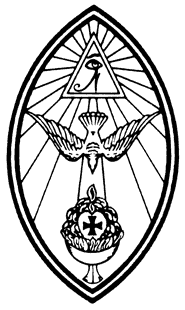
Magic and Lawlessness

Do what thou wilt shall be  the whole of the law.

I have an almost irrational distaste for “hard” magic systems in literature. This is not because of any particular aversion to stories getting metaphysical. I have absolutely no problem there but it is instead because I think attempts to systematize magic have a tendency to strip the magic out of it. There is a famous quote from Arthur C. Clarke that “any sufficiently advanced technology will be indistinguishable from magic.” It’s one of Clarke’s three laws. We will return to the other two. But I would propose that this construction, taken absent Clarke’s other two laws, has led to many attempts by fantasy authors to make magic into nothing but another technology. This is a bad thing that should be discouraged.

However to demonstrate both the problematic created by attempts to make a technology of magic and also why this is ultimately a bad endeavor for literature, surely, and also for metaphysics, it will be necessary for us to define some terms and the first of those is technology.

Skolnikoff echoes Harvey Brooks in describing technology as, “knowledge of how to fulfill certain human purposes in a specifiable and reproducible way,” and while he admits this definition lacks a certain level of precision it does capture the key issue with technology that need addressing:

  1. Technology fulfills specific human purposes
  2. Technology is specifiable and reproducible

These are the qualities that systematization imparts to magic that makes it like a technology.

Now, of course, we can see something of this vulgar materialism in the works of Jim Butcher, whose wizards frequently manipulate physics such as moving heat to create fire in one place and ice in another or to draw an object out of a stable orbit. In these cases wizardry, as a form of scholasticism, is very much a tool of executing a specific human purpose. The wizard has an objective – such as freezing a body of water – and an understanding of the forces required to cause a body of water to freeze. The heat within the water is taken up by the wizard who, acting as a conduit for this force, shunts it to his focus which disperses the captured heat as fire. This technological magic is specific and it is reproducible. A wizard, faced with a problem and a situation, will be able to derive the necessary technique in order to execute a task in a replicable manner. But where is the magic here? It’s all mathematics and physics equations. For all that Butcher might ground the magic of his wizards in a kind of materialist interpretation of the world as an interlocking system of energetic forces which can be manipulated, it’s all quite static. A magical feat, once undertaken, can always be accomplished again.

Frankly there’s a human project in these systems of magic. But should magic be bound in these standard, repeatable, goal-oriented systems? What about the magic of a shaft of sunlight piercing a forest canopy? What about the magic of the random fall of blood on a stone? Why must we exorcise the ineffable from magic?

I am proposing, as a counter to these project-derived visions of magic, one guided far more by inner experience which, as Bataille suggests, “cannot have any other concern nor other goal than itself.” I propose this, in part, because there’s no need for a technology called magic. As Clarke points out any sufficiently mystifying technology will serve just as well. The very use of his half-assed vulgar materialism is precisely the same thing that makes Butcher’s magic indistinguishable from a sufficiently obscured technology. However if we abandon a materialist metaphysics we run into other problems. Plato’s realm of ideal forms is destructive to the idea of change. For Plato all learning was just a remembrance as the ideal form of any given object always already existed. For anything truly new to be possible we need a materialist metaphysics. And so this leaves us at an impasse. Must we have our literature either abandon change or abandon magic? Of course this is where Bataille is useful for resolving this paradox. We simply must posit magic as being outside the boundary of project. Magic is indifferent to project, it is not a replicable system of knowledge that fulfills human purposes. It’s something else, something ineffable.

Magic is the creation of the new.

Speaking of magic within literature we are operating within an ontological mode. Magic exists in the experience of the text. Moving beyond a text magic exists in the immediate experience of the world. We become aware of magic when something new arises that was not there before. But Sartre quite rightly points out that, “every theory of knowledge… presupposes a metaphysics” if we treat the experience of magic as an awareness of the new then that must, in turn, be grounded in a metaphysics that allows new things to exist. As such let us discuss Sartre’s dialectic of being and nothingness not as his ontology but as the underlying metaphysical suppositions it makes.

For Sartre nothingness arises in the awareness of absence. “My friend is not here.” The absence of the friend is indicative of the nothingness within him. Now Sartre was quite careful to keep his nothing and his being entirely ontological – nothingness for Sartre isn’t a metaphysical void so much as a negation within awareness.

However there is a metaphysical requirement for being to arise from nothingness and that requirement is time. Simply put for being to arise there must be time within which it arises; change can only occur within a temporal field. How then do we handle the in-between moments when something is neither fully absent nor fully present – how do we handle the statement “my friend is not here yet?”

This is the domain of becoming. And becoming is where the magic lives. The systematic approach to magic supported by Butcher as described earlier doesn’t work well with becoming because it assumes magic to simply be the will of the magic-user. Tool-like the magic in his books has a specific teleology. It’s a tool a character uses to advance the action of the story. But while this tool-magic is in motion, while it advances the story, it isn’t fertile. It doesn’t make anything. Because becoming sits as a third term between being and nothingness it occupies a position of partially fulfilled potential. Effectively anything that exists at null-intensity has infinite potential for becoming. A non-thing might become anything. As nothingness enters into time it must begin to take form and this is becoming – the process of the foreclosure of potential into actuality. We can see an example of this in the work of Douglas Adams.

“Please do not be alarmed,” it said, “by anything you see or hear around you. You are bound to feel some initial ill effects as you have been rescued from certain death at an improbability level of two to the power of two hundred and seventy-­six thousand to one against possibly much higher. We are now cruising at a level of two to the power of twenty-­‐five thousand to one against and falling, and we will be restoring normality just as soon as we are sure what is normal anyway.”

Douglas Adams – Hitchiker’s Guide to the Galaxy.

The Infinite Improbability Drive enumerates the likelihood that any given event will occur in an infinite universe and then sees to it that any given improbable event is reified at its point of likelihood. “There’s an infinite number of monkeys outside who want to talk to us about this script for Hamlet they’ve worked out.” But this works quite well for the idea of the collapse of potential into being. Through the process of becoming the possibility of unlikely rescues and Hamlet writing monkeys are either brought into being or are discarded as normalcy, an end to magical time, begins.

And this points to Clarke’s much less often cited second law: “The only way of discovering the limits of the possible is to venture a little way past them into the impossible.”

But perhaps we’ve beat around the bush enough. It’s time to interrogate Brandon Sanderson’s, “laws of magic.” These are:

  1. An author’s ability to solve conflict with magic is directly proportional to how well the reader understands said magic.
  2. Limitations > power
  3. Expand on what you have already, before you add something new.

Sanderson has a “zeroth law” as well, “Err on the side of awesome.” Apparently “awesome” in this case is to be considered in the colloquial sense but I would honestly agree with it provided we use the formal definition of awesome as being that which provokes the sensation of awe.

Now to address Sanderson’s first law I’d say this depends on a functionalist, plot-centric read of magic. Magic is never the most expedient method of resolving plot. Sanderson seems aware of that but seems unable to look up past plot for how else one might want to use magic. As such he spends an entire law writing apologia for using magic the wrong way.

But if magic is not best used to serve the advancement of the plot what is it for? Magic allows us to directly visualize the impossible. This is critical to the communication of two functions within fiction: psychology and metaphysics. In discourses around psychology the ability to visualize the impossible is valuable for the construction and communication of a limit experience. Bataille argued that philosophy was restricted by the limit of knowledge as a goal. He believed it was necessary for philosophy to break this limit and he believed an inner experience would be the method of doing so. Returning to Sartre (and a careful reader will note that these two authors are marked by their very different interpretations of Heidegger – make of my synthesis what you will) we can recall that Sartre wanted to propose a non-intellectual being within itself. But his is a relatively sterile and analytic approach to this question: what is self when it isn’t reflective? Bataille wanted to explain how it felt to be a self that wasn’t reflective. Sartre found in appearance the truth of the absence of essence. The essential character of a perceived object, including the self as a perceived object, is its series of appearances. Bataille responds, “One must grasp the meaning from the inside.”

But doing this: identifying the core of a character without resorting to self-reflection and its infinitely regressing hall of mirrors is no easy feat and it isn’t one that can easily be approached from without. In order to communicate this to an audience you need something that engenders a purely affective, purely intensive response. Consider the following,

“The old man… sprang to his feet and leaped to the top of a large rock. There he stood… towering above them. His hood and his grey rags were flung away. His white garments shone. He lifted up his staff, and Gimli’s axe leaped from his grasp and fell ringing on the ground. The sword of Aragorn, stiff in his motionless hand, blazed with a sudden fire. Legolas gave a great shout and shot an arrow high into the air: it vanished in a flash of flame.”

JRR Tolkien – The Lord of the Rings: The Two Towers

From a plot perspective there is nothing in this scene that requires magic. All that needs to happen is that the three hunters need to meet an old friend and discover he’s different than he was before. And yet Tolkien goes to great length to show us something of Gandalf’s magic and, in doing so, to tell us something about how he has changed within.

The old Mithrandir would not have burned Legolas’ arrows to ash, he would not have ripped Gimli’s axe from his hands nor set alight Andruil. We don’t have any insight into how Gandalf accomplished this feat nor was it necessary to solve the conflict. Gandalf could have solved it in a word by saying “yo Aragorn, it’s ya boi,” but we have magic anyway. And it is, in fact, awesome. We see an experience of awe as these three eminently capable heroes are rendered useless before Gandalf. Their weapons cannot avail them because of the holy fire that suffuses the revived wizard. Gandalf has changed, he has become different to himself, and this ontological and psychological transformation is why we have magic here. The magic doesn’t serve story-conflict. It doesn’t serve plot. It serves character.

Another example of magic serving character is basically the entirety of A Wizard of Earthsea. Now considering how we are dallying with Heidegger in this question it might not be surprising that I bring up my favourite left-Heideggerian piece of theory-fiction. I have spoken at length about this book as a phenomenological exploration of being-toward-death. In my essay on A Wizard of Earthsea I concluded by describing Ged as the wellspring of power that rises out of the primordial origin of all things and the Gebbeth as the un-doer, the ender, the void into which all things fall. But in his unification at the resolution of the story, “Light and darkness met, and joined and were one.” In this case the whole book about wizardry and magic is nothing but a method of understanding who Ged is, what a life is, and what it is to live in the world. The flow of creation and destruction resides with becoming as a time-bound process of what is not to what is. Magic, in this work of literature, allows us to break into the impossibility of gebbeth ghost-shadows in order to probe the boundaries of a life to explore the limits and to cross the low-stone wall.

LeGuin does provide a whisper of systematics to magic in the deep discourse on the question of the name as a way of dividing being into discrete objects but this isn’t a system of spells at all. There’s no mechanic for the strength of the Gebbeth, it just gets weaker the more willing Ged is to take it into himself, to annihilate that name-driven division.

There is another reason for magic though and that is for a text to communicate something close enough to the limit of intelligibility to require us to push into the impossible to map the bounds of the possible. Fiction often serves metaphysical aims and this is a place where magic can be a critical exploratory tool. Consider the following from Legend of the Condor Heroes by Jin Yong.

The zheng was known for its melancholic twang, and this variety from the Western Regions was particularly mournful. Guo Jing had no ear for music, yet he noticed that each time a string rattled, his heart pulsed. As Viper Ouyang played faster his heart throbbed along uncomfortably, as if it were about to burst out of his chest.

Realizing he could die if the tempo increased further, he sat down to gather his spirit and still his thoughts in the Quanzhen way. As he channeled his internal energy around his body, his heartbeat slowed and soon he found he was no longer ensnared by the music.

Jin Yong – Legend of the Condor Heroes – A Bond Undone

Jin Yong goes on for several pages describing how the music of Ouyang Feng and Huang Yaoshi is used as a weapon by which they can pit their internal strength. But by making the fight so abstract he’s in turn able to discuss the ideas that Sunzi would call node and shih – or what we might call flow and event. “From hollowness, luminosity grows,” Guo Jing considers. We could consider how close this is to saying that being arises from nothingness. But regardless of the specifics of how this dialectic of void and object is described what we have is a section of text that simultaneously describes a magical duel played between martial masters and that goes into the Taoist metaphysics that underpins both Guo Jing as a character and the world in which the story occurs. This doesn’t do anything for the story really. It serves as an overture between two more plot-significant incidents. And no conflict is resolved. The musical duel ends in a draw. But the magic is incredibly valuable to the story as it communicates an idea about how our world functions.

Ultimately Sanderson’s first law of magic isn’t even wrong. It’s not even asking the right question.

His second law of magic might almost be useful if I were confident he understood what he was implying with it. Specifically, as I’ve mentioned previously through my exploration of Clarke’s second law the use of magic in a work of fiction should ultimately be entirely in service to the exploration of the limits – limits of speech, limits of experience, limits of knowledge – but I doubt this is what he means. Mr. Sanderson is so monomaniacally focused on plot-utility with his laws I’m sure what he means to say is that magic itself should be limited, should not be able to do too much. Whereas I champion an idea of magic as the wellspring of all that is, that vehicle that brings objects back over the limit of nothingness and into being.

But there’s another way that we should treat magic as limited – or rather we should treat the magician as limited. The wizard, as a figure of knowledge, is not a king. He may council the king. He may instruct the king. But he isn’t a ruler. To grasp magic, to truly understand it, requires an understanding of the limits of how one should act with it. Consider Ogion in A Wizard of Earthsea,

Three days went by and four days went by and still Ogion had not spoken a single charm in Ged’s hearing, and had not taught him a single name or rune or spell.
Though a very silent man he was so mild and calm that Ged soon lost his awe of him, and in a day or two more he was bold enough to ask his master, “When will my apprenticeship begin, Sir?”
“It has begun,” said Ogion.
There was a silence, as if Ged was keeping back something he had to say. Then he said it: “But I haven’t learned anything yet!”
“Because you haven’t found out what I am teaching,” replied the mage, going on at his steady, long-legged pace along their road, which was the high pass between Ovark and Wiss.

Ursula K. LeGuin – A wizard of Earthsea

Ogion is perhaps the clearest exemplar of the figure of the wizard in fiction. LeGuin introduces the Taoist concept of wuwei into the body of the wise teacher exemplified by Gandalf and T. H. White’s Merlyn and this helps to drive home how the form of knowledge that wizardry represents acts to limit the deeds of the wizard directly.

Fourfoil, they call it.” Ogion had halted, the coppershod foot of his staff near the little weed, so Ged looked closely at the plant, and plucked a dry seedpod from it, and finally asked, since Ogion said nothing more, “What is its use, Master?”
“None I know of.”

“When you know the fourfoil in all its seasons root and leaf and flower, by sight and scent and seed, then you may learn its true name, knowing its being: which is more than its use. What, after all, is the use of you? or of myself? Is Gont Mountain useful, or the Open Sea?” Ogion went on a half mile or so, and said at last, “To hear, one must be silent.”

Ursula K. LeGuin – A Wizard of Earthsea

Ogion positions himself and, transitively, wizardry, beyond the question of utility and of human project. Wizardry is silence. Magic is to know and not to speak. “when it rained Ogion would not even say the spell that every weatherworker knows, to send the storm aside” Ultimately LeGuin shows that this wisdom, the perfect limit of a Wizard, is one they all come to know when the Summoner says to Ged,

“You thought, as a boy, that a mage is one who can do anything. So I thought, once. So did we all. And the truth is that as a man’s real power grows and his knowledge widens, ever the way he can follow grows narrower: until at last he chooses nothing, but does only and wholly what he must.”

Ursula K. LeGuin – A Wizard of Earthsea

Of course LeGuin’s Taoist wizards are not the only ones who limit themselves such. Consider Merlyn,

“I cannot do any magic for Kay,” he said slowly, “except my own magic that I have anyway. Backsight and insight and all that. Do you mean anything I could do with that?”

“What does your backsight do?”

“It tells me what you would say is going to happen, and the insight sometimes says what is or was happening in other places.”

T. H. White – The Once and Future King

Again we have a wizard who has capacity for great magic. And again he refuses to freely-use his power not because of a metaphysical limit of his ability to cast a spell but because his knowledge makes it clear that he should not.

And, of course, the whole purpose of the Istari in the Lord of the Rings was not to confront Sauron’s power directly but rather to provide knowledge, succor and diplomacy. The powers of the Istari are never particularly codified. We know they live long lives. We know they are not easily killed. They wield powerful artifacts such as Gandalf’s ring or Saruman’s Palantir. But the magic that suffuses them is all luminance and splendor, not systematics. Gandalf’s magic isn’t a tool for accomplishing a project; it’s his being itself.

And so, in this, we almost agree. A magician, as a character, should be limited. To grasp magic is to hold the knowledge that magic is not a tool. To try and seize and use it for project leads to the Gebbeth and Ged’s failings. There can be no wizard-kings. But is this the limit that Sanderson meant? I honestly doubt it. Let’s examine Sanderson’s argument regarding limits:

 What makes Superman interesting, then? Two things: his code of ethics and his weakness to kryptonite.

Think about it for a moment. Why can Superman fly? Well, because that’s what he does. Why is he strong? Comic book aficionados might go into him drawing power from the sun, but in the end, we don’t really care why he’s strong. He just is.

But why is he weak to kryptonite? If you ask the common person with some familiarity with Superman, they’ll tell you it’s because kryptonite–this glowing green rock–is a shard from his homeworld, which was destroyed. The kryptonite draws you into the story, gets into who Superman is and where he comes from. Likewise, if you ask about his code of ethics–what he won’t do, rather than what he can do–we’ll go into talking about his family, how he was raised. We’ll talk about how Ma and Pa Kent instilled solid values into their adopted son, and how they taught him to use his strength not to kill, but to protect.

Superman is not his powers. Superman is his weaknesses.

Brandon Sanderson – Sanderson’s second law.

Now let us start by interrogating the idea that a code of ethics constitutes a weakness. This is somewhat alarming rhetoric being honest. I would contend that the idea of Superman as an ethical being is, in fact, a much more significant reserve of strength than his bullet-proof skin. The treatment of the green rock macguffin as if it says something profound about the character is plot-driven story rhetoric in all its glory.

Mr. Sanderson proceeds to, again, mistake restraint for weakness when he says, “The {LotR} films, it should be noted, played this concept up much more than the books did, as the director realized Aragorn became far more interesting when he was reluctant to become king. His weakness gave him much more depth than his abilities.” This is not a weakness. Self-restraint, self-doubt and morality are not weaknesses imposed on characters to make the plot more exciting. They’re opportunities to interrogate the world.

When Mr. Sanderson digs into advice for authors the plot centrism rears its head in full again. He describes the systematics underlying the tedious magic of Wheel of Time, a series of books he wrote the concluding volumes of, and focuses entirely on the weaving metaphor as representing a structural weakness that limits characters actions within magic. He is trying to cut magic down to size, to make it into a function that achieves a goal.

While discussing Mr. Sanderson’s first law I repeatedly argued that this misses why magic is used in literature. There will always be a more parsimonious method to drive plot forward than magic. Why bother with a fireball when you can bash the other guy’s brains in with a rock? If magic isn’t probing the limits of the inexpressible why are we even bothering with it? Magic in Lord of the Rings represents the interplay of spirit and matter as set forth by the song of Eru and Morgoth’s Ring. Magic in A Wizard of Earthsea is a reflection of Ged’s own being toward death. Magic in Legend of the Condor Heroes is an opportunity to expound on flow and event, on the dynamic interplay of yin and yang. In all these cases the magic doesn’t exist to move the action along but to interrogate something that would be difficult to access otherwise. I mean have you tried to just read Being and Time? Or the Daodejing? Magic gives us a vehicle to make these very abstract discourses concerning ontology and metaphysics into something which can be interrogated even by a child. Limits. The reason why wizards are limited, why the Summoner tells Ged a wizard does only and wholly what he must, why Merlyn refuses to cast spells for Wart’s friend and why Gandalf doesn’t raze the gates of Mordor and cast down Barad Dur with his own hands is because magic cannot be limited. It is the inexhaustible wellspring. And to try and command that, to use it as a tool, is akin to trying to draw down the sun to warm your house. To try and command magic is to be consumed. This is the wisdom that limits the wizard.

Sanderson’s third law is the most tedious of the bunch. “Expand what you already have before you add something new,” he says and, frankly what can I say beyond that this is the very antithesis of magic. Earlier I described Magic as being best a representation of becoming – magic is the bringing forth of nothingness into being. In this I’d gladly cite the historical use of alchemy to create long life, gold or simply to create the capacity for creation. And, of course, alchemists failed in part because their knowledge of the things they were trying to create was incomplete and flawed and in part because they’d failed to learn the Summoner’s commandment, “do only and wholly what you must.” This statement is not, however absent from the teachings of historical magi. For instance there is Crowley’s famous proclamation, “Do what thou wilt shall be the whole of the law.”

The Book of the Law continues, “pure will, unassuaged of purpose, delivered from the lust of result, is every way perfect.” And this begins to hint at what Crowley means by will. Because Crowley’s pure will is “delivered from the lust of result” – the mage does not seek project. Rather Pure Will is what Nietzsche would describe as Amor Fati.

I want to learn more and more to see as beautiful what is necessary in things; then I shall be one of those who make things beautiful. Amor fati: let that be my love henceforth! I do not want to wage war against what is ugly. I do not want to accuse; I do not even want to accuse those who accuse. Looking away shall be my only negation. And all in all and on the whole: some day I wish to be only a Yes-sayer.

Fredrich Nietzsche – The Gay Science

Pure will represents an aesthetic and ethical acceptance of what one only and wholly must do. In the face of the limitless font of all being there is no wisdom but wuwei. Zhuangzi says “the noble master who finds he has to follow some course to govern the world will realize that actionless action (wuwei) is the best course. By no-action, he can rest in the real substance of his nature and destiny.”

For Zhuangzi the world is far too vast for any person to command – to attempt to command it is to throw it into disarray. Only through this letting go, this retreat, can one grasp what one must do. There is an arrogance to the belief that a person can narrow magic and shape it into a human project. This arrogance caused alchemists to chase dreams of gold or to drink mercury and cinnabar, poisoning themselves out of a desire for eternal life. Do what thou wilt shall be the whole of the law. As magic is becoming, is the very process by which the new arises, it’s laughable to instruct authors to pare it back, to build a logical system.

Sanderson has a “zeroth” law. He enumerated it thusly to match Asimov’s laws of robotics. This is laughable as the laws of robotics were diegetic laws – not advice to writers. But it’s the best of the bunch so I do want to give it mention despite its silly allusion to classic SF. “Err on the side of awesome.” On this we agree in a way. When I described the value of magic in literature as being purely affective, pure intensity, I was gesturing in the direction of awe. Awe is equal parts beauty and terror. There is awe in the scene of Gandalf’s meeting with the three hunters. There is awe in Guo Jing listening to the musical duel. But awe is an ecstatic sensation. It’s what Bataille would call a limit experience. Awe, in fiction, should grip the reader like the hooks and chains of a cenobite. It should leave the reader exposed and discomforted. Awe is not an experience bound by law. The colloquial use of “awesome” to mean “agreeable,” or “enjoyable” is a failure of understanding of the magic not written into a story but working upon the reader through engagement with the story. A writer provokes awe not by putting magic into the story but by making magic of the story.

Magic is not cybernetic. It must be taken whole: like the sun in a forest, like blood on a stone. It doesn’t need to be limited if it is used correctly. There’s no point to building a gun that is fueled by willpower points rather than bullets. That isn’t what magic is for in fiction. Magic makes the invisible visible. It makes the impossible possible. It makes nothingness into being. There is no law here that governs magic; the only law is that which governs the mage: wuwei, amor fati, pure will. And so my advice to writers is to abandon all laws. Do what thou wilt shall be the whole of the law. Find the magic in your work, the real magic, not the technology of pyrotechnics and telekinesis. And surrender to it.