I don’t know how to start this review. There’s a challenge to introducing a thing so singularly odd as the 2023 film Poor Things. This movie, directed by the esteemed Greek director Yorgos Lanthimos, with cinematography by Robbie Ryan (who previously worked with Lanthimos on The Favourite), costume design by Holly Waddington and with art direction by Géza Kerti is a visual feast. With a setting in an alternate 1888 (estimated on state of Eiffel tower construction) in which Europe is bedecked in a baroque style reminiscent of the steampunk aesthetic at its best, the film balances on a line between German Expressionism and the French Fantastique in style. It’s as if the dream-like intrusion of the unnatural in Fantastique has forced its way into an Expressionist stage play.
The sets and costumes eschew realism; Bela’s dresses, in particular, are cloud-like confections of knit wool and silk while, for all the characters, there is a kind of heightened reality of late 19th century styles on display.
Continuing with expressionist elements we must address the performances. This will likely be a career-defining performance for Emma Stone; it has certainly been one of her most controversial both for the extensive position of sex in her performance and also for the questions regarding the realism of her “toddler” scenes.
I think those people who have criticized Stone for these earlier parts of the performance have missed that literally nobody in the film is trying for realism – these are expressionist performances top to bottom. I was, honestly, shocked by how effectively Mark Ruffalo chewed the scenery in his performance as the cad Duncan Wedderburn. He delivers the best performance of a weird little creep of a man I’ve seen since Brad Dourif stepped into the role of Grima Wormtongue. Taken together with Willem Dafoe in the same fine form as we might recall from his performance in The Lighthouse and even smaller roles like Kathryn Hunter as Swiney and we see a picture of a film where any sort of “realism” or verisimilitude in performance was hardly the point to begin with.
And honestly should we expect realism from the performance of an infant mind suddenly thrust into the body of an adult woman in the first place? All in all, Stone’s remarkable performance in this film has me curious to see The Favourite which she was also in.
But, continuing with influences, I do believe that this film has been mis-categorized as a sci-fi comedy or a comedy-drama by a lot of reviewers. I think, rather, it should be treated as a horror comedy. Now I should note that Ashley Darrow and Jonathan Greenaway of Horror Vanguard fame have talked a lot about the proximity of comedy and horror. Both are modes of cinema that aspire to do something to the body of the audience. So we can treat as a given that there is slippage between comedy and horror most of the time.
However, looking at this from a cinematographic perspective, I couldn’t help but note how the shot selection, with its preference for low-angle photography, fish-eye lenses and a pinhole camera effect, reflected a horror-cinema specific visual construction. There is a kind of embodied voyeurism to the camera that suggests not only somebody looking in on the action but, specifically, somebody looking in who should not be. Think Black Christmas. We are constantly treated to a perspective extremity – the camera shows us too much or too little. Contemporary Hollywood often pursues a kind of full-coverage sufficiency where the audience is asked to forget that there is a camera mediating the experience of the film. This is not the case here and it works to excellent, if occasionally alienating, effect. This contributes to the pervasive sense of discomfort that marks this film. I’ve said before that horror is the art of discomfort. If so then we have to recognize the horror present in Poor Things. Now this would not be Ryan’s first attempt at horror if we treat it that way, he previously worked on Isolation and I Am Not a Serial Killer while Lanthimos has previously worked in the genre via The Killing of a Sacred Deer so it’s not an absurd proposition that this team would work within a horror mode. But situating this film as a horror film still might challenge how it’s been received by much of the film press.
Additional evidence exists in the form of Ryan’s comments regarding key cinematographic referents. Because, according to Ryan, the most significant film that influenced the lighting and shot selection of Poor Things was Bram Stoker’s Dracula, which Lanthimos reportedly asked the crew to refer back to regularly throughout the production of the film. Shot like a horror film indeed. Considering the extent to which Poor Things serves as a callback to Frankenstein, in particular, it is also interesting that a Dracula movie, tied as it is to the same milieu of the 19th century British Gothic, would be selected.
Certainly expressionism has played an outsized influence in horror performance with stand-outs like the Evil Dead series and Mandy being particularly relevant. However horror, as a form of cinema, goes beyond shot selection, body reaction and an eschewing of verisimilitude in performance. But most horror contains something to be afraid of, generally a monster of either the literal or metaphorical varieties, and has something to say about fear or abjection.
This is also something very true about Poor Things.
Poor Things is, in fact, singularly fascinated with the figure of the monster. One of the first things we hear about Godwin Baxter is that he is a monster. Baxter, who presents as a cold and amoral man of science for most of the film’s runtime, is a grotesquerie. Covered in scars, Baxter was subjected to cruel medical experimentation by his father. Unable to produce his own gastric juices as a result of his father’s surgeries, Godwin must connect himself to a contraption in order to eat. a side-effect of this is that he loudly belches bubbles which drift about the room at mealtimes. Godwin’s amorality is very nearly secondary to his monstrosity as grotesquerie but this becomes something he seems sincerely proud of. Not only is he quite open about his gastronomic (and other) disabilities, cheerfully describing the circumstances that led to his disfigurement, but he also surrounds himself with grotesqueries: dogs with the grafted heads of geese, chickens with the grafted heads of dogs and other such chimera wander about his property. And then there are Bella and Felicity who are not grotesque in form but both of whom become grotesque via their behaviour.
This idea of the grotesque is also partially explored through Swiney – the heavily tattooed madam who occasionally becomes so overcome by her desire for youth and beauty that she will bite – literally trying to consume the beauty of others.
Bella will, eventually, also be called a monster, particularly by Duncan, because of his inability to control her and his unfounded belief that she is the author of his misfortune. A third figure of the monster arises via Alfie, an aristocrat and a military man so hated by the servants he casually abuses that he’s taken to carrying a revolver with him everywhere he goes, a man who drove his wife to suicide but cannot let go of her even in death, a grasping anti-moral being whose existence is marked entirely by his desire to subjugate, command and, ultimately, own other people.
This creates an interesting dichotomy surrounding what we consider monstrous: is the monster the grotesque? Is the monster the thing from outside that cannot be commanded or is the monster the thing from within that demands to command?
It’s interesting to note, however, that the monsters in Poor Things are not, generally, the source of terror in the film. Grotesque Dr. Baxter dies smiling, surrounded by people who care for him. He doesn’t stand in Bella’s way in any of her attempts to forge a sense of self and he is rewarded with her love in the end. Swiney, too, lets Bella go without a struggle and all the grotesques of Baxter’s home become either family or pets.
Duncan’s accusations of monstrosity toward Bella are almost immediately obvious as bad-faith. Duncan may believe, in some way, that Bella is the author of his misfortune but the film has established, ahead of time, that the man is entirely to blame for the things that befall him. He’s a lawyer who can’t spell, a drunk, a gambler and a scoundrel. For all his claims toward a rakish libertinism, he cannot tolerate the idea of a woman exercising the very freedom he starts by advocating and so we can add hypocrite to his plethora of character defects. He’s a small Wormtongue of a man. And by the time he calls Bella a monster the audience knows this all too well to be taken in.
We could possibly see Alfie as a source of terror if not for how readily Bella resolves him as a challenge. Alfie isn’t so much a source of terror for Bella as he is a final test of her commitment to self-development.
But this isn’t to say that there isn’t terror in the film. The terror, instead, comes from the question of individuation and how it ties into a very Freudian model of psychosexual development. Here is where the central conceit of Bella’s creation becomes useful, and how it plays games with the Frankensteinian notion of tabula rasa.
Because Bella is, of course, an infant mind implanted into the body of an adult woman. The conceit is that this specific mind (and with the very different development of Felicity it is clear that there is a clear specificity at play here) is developing toward adulthood at an accelerated rate. And throughout her development we see a clear progression of classical Freudian developmental stages at play.
Except for one very specific difference: Bella, throughout her development, insists upon her own agency. She forcefully asserts that she will be the author of every one of her decisions, the master of her ship, from her first stumbling steps to the moment she cuts out Alfie’s brain and replaces it with that of a goat. This leads to an interesting challenge to Freud here. Bella may experience the anal and phallic stages of development but she refuses to submit to Oedipus.
Deleuze and Guattari describe Oedipus and its impact on individuation, saying “With the same movement the Oedipus complex inserts desire into triangulation, and prohibits desire from satisfying itself with the terms of the triangulation. It forces desire to take as its object the differentiated parental persons, and, brandishing the threats of the undifferentiated, prohibits the correlative ego from satisfying its desires with these persons, in the name of the same requirements of differentiation.”
But Bella is, bluntly, her own mother. Her existence collapses the differentiation between differentiated global people such as “mother,” and “father” and the undifferentiated threat through the way in which she hacks at its basis.
She may call Dr. Baxter her father but she is not beholden to him. She leaves his side and he stands aside and lets her go. He attempts to arrange a marriage for her and she, instead, runs off with a rake so she can learn about the world. But this is not framed as a violation of parental law; instead it’s the great howling void of absolute freedom being embraced with gusto.
“Oedipus says to us: either you will internalize the differential functions that rule over the exclusive disjunctions, and thereby “resolve” Oedipus, or you will fall into the neurotic night of imaginary identifications.” But Bella does neither. Instead she individuates. She forges an identity that is not Dr. Baxter nor is it a rejection of him. She does not fall into neurosis, far from it, she forges a fully structured and functional frame of being entirely on her own terms.
In fact, Bella’s development is almost messianic thanks to the second text that lurks in the background of Poor Things, adjacent Frankenstein: Siddhartha. In some sense this is tied to the very Buddhist realization of the nature of suffering that Bella experiences on the cruise ship. Her discovery of the slums and her subsequent renunciation of wealth fits cleanly into the Buddhist story of the Four Sights but, rather than becoming an ascetic following this renunciation, Bella becomes a prostitute. This fits closely together with Hess’ argument in Siddhartha, “I saw a man, Siddhartha thought, a single man, before whom I would have to lower my glance. I do not want to lower my glance before any other, not before any other.”
And, of course, this leads Bella to the heights of moral development: socialism. It’s delightful that Bella’s full development into adulthood happens in a Paris winter during which her girlfriend invites her to a Socialist reading group. There’s a wonderful balance present here wherein a rejection of ascetic renunciation of individuality gives way to an enlightened sense of the collective value of humanity.
““I know it,” said Siddhartha; his smile shone golden. “I know it, Govinda. And behold, with this we are right in the middle of the thicket of opinions, in the dispute about words. For I cannot deny, my words of love are in a contradiction, a seeming contradiction with Gotama’s words. For this very reason, I distrust in words so much, for I know, this contradiction is a deception.”
Bella recognizes fully well, as an individuated subject, that a socialist liberation of humanity is a condition that can allow people to develop themselves. And she wants this so clearly and so forcefully that she will exercise extreme violence to protect this, destroying Alfie entirely rather than submitting to him.
Again, the contradiction is a deception. Bella takes away any hint of Alfie’s agency and reduces him to a goat munching grass in her yard specifically to protect the agency of herself, of Alfie’s beleaguered servants and as an attack upon the patriarchal systems that can produce Alfie to begin with. Bella’s story ends showing us that she is the owner of every one of her mistakes and every one of her triumphs but that, simultaneously, she does so via the community she is a part of. She honors the betrothal to Max that Dr. Baxter arranged but simultaneously insists on bringing Toinette into her family life as an equal partner. Max, for his part, freely accepts that to be husband to Bella means to freely accept her freedom. Many horrors and reversals befall Bella, almost all of them she is the author of. She freely goes with Alfie to his mansion. She could have refused. And when he tries to subjugate her, to shape her body to be the vessel of his will, she destroys him just as freely.
There is a terror in the tension between the clarity of which the film accepts a Freudian account of development and the way in which Bella refuses to succumb to it. But, in the end, the contradiction is the deception. Frankenstein is the monster and so is her maker but if Bella is the monstrous tabula rasa then she is the revelation that only by being a monstrous tabula rasa can one accept the burden of one’s own freedom.
The general sense in the public discourse is that Stranger Things is a product of nostalgia but that’s not quite right. I’ve struggled to write about this television show – I’ve been promising a review since June 2022 and yet nothing ever came together.
Part of the problem has been that I’ve struggled with the question of who Stranger Things is for. Certainly it’s most popular among kids. My daughter is a big fan. Many of her classmates and team-mates likewise enjoy the show.
But why make a television show so explicitly loyal to the 1980s as an aesthetic if your target audience consists of people who were born a decade into the 21st century?
Stranger Things presents as a form of nostalgia programming, harkening back to Red Dawn and A Nightmare on Elm Street (right down to a Robert Englund cameo). But its primary audience can’t possibly be nostalgic for the 80s. It’s a past they never experienced.
Recently a few pieces fell into place for me that made writing about this television show a bit more viable. The key was that the Youtube algorithm, trained by my fondness for Gorillaz started serving me more animated music videos. Two of these that I ended up watching were Starlight Brigade by TWRP and Starship Velociraptor by Jonathan Young. Now both of these are actually very similar to Stranger Things in a few critical ways: first they’re pretty obviously targeting kids. This is especially apparent with Starship Velociraptor that includes the following quite-childish lyrics:
It's got a dozen restrooms inside
In case we all just have to
Sit on the comfy leather seats
Comes with a fridge that's full of meat, oh
But as I was listening to these two songs it struck me that they weren’t precisely 1980s pastiche. For all that Starlight Brigade, as a work of visual art, attempts to replicated the haze of VHS and for all that both songs as audio works are marked by the synth-pop-rock fusion sound that characterizes public perceptions of the 1980s as a musical period they’re both far too polished there is a clarity and velocity to the songs that belies their announced ties to the past. These are very much simulacra of the 1980s. They present a false 80s – a past that never exactly was. This, oddly enough, situates these kid-friendly cartoon songs in the domain of Panos Cosmatos‘s superb Mandy in that they treat the 1980s hauntologically, allowing us to engage in a deconstruction of the aesthetics of the era via the powers of the false. Except there’s the question of target audience again. Mandy is made by people who lived through the 1980s and its target audience is likewise people old enough to remember the decade. Panos Cosmatos was 10 in 1984. Nicholas Cage was 20. Producer Elijah Wood was born in 1981 as was Andrea Risenborough (who played the title character.)
Mandy, made by children of the 1980s to interrogate the 1980s, was, most importantly, intended for an audience of people who experienced the 1980s. And as a result it makes a kind of internal sense. But these shows that use the same aesthetic indicators but are marketing them to kids age 6-14 don’t have this sort of logic. Why interrogate a decade your audience has never seen?
But of course their parents have experienced that decade. At least our parents had the decency to just force us to listen to the Beatles instead of fabricating an update to their childhood ready-made to make their own childhoods legible to their children. There’s a concession to the inevitable progress of time about these songs. “This ship is fire,” they say in Starship Velociraptor. But, of course, “x is fire” to mean “x is good and also contemporary” is a phrase out of the mid-2010s. It’s slang old enough to be legible to the Generation X and Millennial children of the 1980s who might have cause to reproduce their aesthetics in their children but also to their children.
And so far this isn’t any worse than that old Onion article about the “cool dad” who raises his daughter on his media. These songs may be a bit goofy and childish but there’s nothing ominous about their hauntological musings – which are, at worst, a little cringe. The video for Starship Velociraptor may contain some puerile puns and the video for Starlight Brigade might be an empty bit of fluff but neither has ambitions that outstrip the ability of their artists and, in fact, both have some redeeming qualities via some good synth-riffs and visual aesthetics that draw from 80s and 90s anime but with no more fidelity than the music. This simulacrum of an era then, via the falseness of its particularity, actually does something moderately novel. The risk of something more insidious lies in a common comment that appears on both these videos, “you should make this into a show.”
And this is where this relatively harmless exercise in aesthetic update and reproduction takes a turn for the sinister. Because somebody has made this into a show. It’s called Stranger Things.
What’s interesting about Stranger Things is that it creates a no more accurate rendition of the 1980s than Mandy or Starlight Brigade. The 1980s of Stranger Things is remarkably devoid of the racism that would have been endemic in suburban Indiana while the misogyny and homophobia of the era, while addressed, have been toned down sufficiently to avoid offending contemporary sensibilities too thoroughly. This is a United States where the local shopping mall is a cover for a KGB mad science lab and paranoia about reds under the bed are apropos.
And it’s a 1980s America where the absolute and most critical relationships that exist are between a mother and son or between a father and daughter. Stranger Things is not a show about the 1980s. Instead it’s a show about the importance of the family as a site of social reproduction. Stranger Things looks at technological change, social transformation, and economic opposition to capitalism and then centers the family as the method of holding the disruptive aspects of these transformations at bay.
This is a far older trick than any sort of Derridean hauntological deconstruction. In fact, even as far back as Engels we were aware of how the family is a site of social reproduction. “In the great majority of cases today, at least in the possessing classes, the husband is obliged to earn a living and support his family, and that in itself gives him a position of supremacy, without any need for special legal titles and privileges. Within the family he is the bourgeois and the wife represents the proletariat. In the industrial world, the specific character of the economic oppression burdening the proletariat is visible in all its sharpness only when all special legal privileges of the capitalist class have been abolished and complete legal equality of both classes established,” Engels says in Origins of the Family, Private Property, and the State, suggesting that the family becomes a primary site for the construction of the legal and structural basis of the capitalist class antagonism, creating, via the vehicles of social and economic coercion a situation wherein two legally equal parties can recreate the lord and bondsman dialectic.
Now many will rightly point out that Engels’ anthropological work is deeply flawed and we’d be ill-advised to rest on his description of the family and social reproduction as authoritative. Happily Anti-Oedipus exists.
“Oedipus restrained is the figure of the daddy-mommy-me triangle, the familial constellation in person,” Deleuze and Guattari say, establishing that to discuss Oedipus is to discuss a specific form of familial construction that centers psychological inquiry upon the triangulation between a child and their parents. However, they contend that the way in which Oedipus is deployed leads to something far vaster than simply a triangulation between three parties in a relationship, creating, “an Oedipal structure as a system of positions and functions that do not conform to the variable figure of those who come to occupy them in a given social or pathological formation: a structural Oedipus (3 + 1) that does not conform to a triangle, but performs all the possible triangulations by distributing in a given domain desire, its object, and the law.”
By structuring the relationship between how we produce want, what we want and what we are permitted along familial lines we also, again, trace the family as the site of social reproduction. In fact Deleuze and Guattari take this further, arguing that it is necessary to colonize the formation of the family in order to colonize a people. Alert to the colonial character of Oedipus, they call for a shattering of “the iron collar of Oedipus” so as to “rediscover everywhere the force of desiring-production.”
Oedipus overcodes desire – it shapes the ways in which we want to follow certain socially prescribed boundaries – and to establish at an unconscious level the ways in which we should feel about that social reproduction. Oedipus, in the context of this work, represents the forces of unconscious repression that operate to shape the desiring subject into an appropriate subject for capitalism.
Family is the predominant binding thread that ties the otherwise disparate seasons of Stranger Things together. This is book-ended by the mother-son relationship of Will and Joyce which dominates the first season and the father-daughter relationship of Eleven and Hopper that slowly becomes the predominant focus.
And these familial ties are explored in considerable depth. Instability is introduced via the tired will-they / won’t-they antics that trap Joyce and Hopper. Joyce serves as a surrogate mother to Hopper’s daughter when he disappears to a secret Soviet Monster Gulag (perhaps the Siberian monster death camps were a policy Gorbachev reversed after Glasnost) and Hopper is positioned as the ultimate patriarchal authority: cop as action hero as dad. This story charts the ways in which parents reproduce their social milieu in their children via a narrative structure in which the parents have an adventure that parallels the children’s adventure, culminating in a uniting cathartic moment. These include both the finale of season two, in which Eleven and Hopper seal the gate to the upside down and that of season four, in which the nonsense Hopper and Joyce get up to in Siberia manages to synch itself perfectly to the children’s confrontation with Vecna and his minions. This process of reproduction is made quite explicitly textual in the fourth season in which a preponderance of fathers as the interplay of “Papa” Brenner with Eleven and with Henry Creel is demonstrated to be something of an original sin – a kind of a primordial filial rebellion against the father that leads to the fracture of law and the intrusion of the upside-down-outside.
This rebellion was presaged by Henry’s first attempt to overthrow his patriarch via his failed murder of Victor Creel, his father. However, in an entirely un-subtle nod to Oedipus and King Lear, Victor gouges out his own eyes as a form of self-punishment for his failure to uphold the law. To fail as a patriarch is to make one’s self blind.
But we aren’t done with fathers yet as Eleven manages a third via Sam Owens. Through him we now have three possible models of patriarchy through which to orient Eleven: Brenner’s clinical authoritarianism, Owens’ kinder clinical model and then Hopper: the Good Father.
And this is where can see most clearly how, in contrast to Mandy‘s hauntological deconstruction of the 1980s, Stranger Things uses this nostalgia for a past that never existed for the purposes of reproduction. Because the challenge for Eleven is not to go beyond the patriarch but rather to develop the psychic strength to recognize the just patriarch. Each of these patriarchal figures is a man of law. Brenner is a psychological professional and a high-ranking government agent. The same is true of Owens who represents the factionalism of government: two psychologists, one government, two aims. And, of course, Hopper is a cop, a monster-slayer and a commie-killer (which, to the show, is basically saying the same thing in three different ways). Stranger Things instructs us that Eleven must cleave to this pig of a man in order to come to a greater understanding of herself.
Ultimately Stranger Thing presents a world in which nothing is more important than the law of the father as bounded by capitalism. If Government science interferes, if communism interferes, if any other authority beyond the bounds of the family intrudes or if the father’s law is insufficient to discipline the child then a gate (a mother gate even, unsubtle in its subtext with its gash-like structure) will open and the dangerous monstrous Outside will come flooding in to turn parochial suburbia upside down.
But why did it have to be this way? Was this inevitable just like “cool dads” will inevitably make their kids sit down and have a serious listen to The Dark Side of the Moon?
I would say no. This is because of our prior counter-examples of the hauntological 80s. Certainly capitalism intrudes onto Starship Velociraptor. But it’s far more parodic:
You're looking for a starship lately
Something with comfort, speed and style
I'll get you to agree that maybe
There's just one ship that's worth your while
The secret is a core reactor
To make the light-years feel like miles
With just a little antimatter
And hardwood floors instead of tile

You've got to get it
You can buy on credit
Our payment plan, you won't regret it, yeah
In this case the same puerile humour that made me refer to this song as cringe-inducing introduces sufficient parody into the hyper-capitalism it depicts to make it not such a blatant reproduction of capitalist desire. There’s no outside-monstrosity-communism complex in this song. Starlight Brigade departs even farther from this reproduction of capitalism. It also has an entirely inverse relationship to the concept of the outside from Stranger Things as the visual storytelling of the video shows us an escape story. This is reinforced by the lyrics stating:
I hear a voice in the back of my head
Screaming "this is suicide! Did you hear what I said?"
But then it fades into nothing with the rest of the light and sound
I'm on my way out!
While Starlight Brigade is very beholden to the idea of justice, which sits approximate enough to law to warrant interrogation it does so not from the perspective of the directive passed down from the father but rather of the volunteer who puts themselves in the way of the unjust. This could be seen as a relatively straightforward imperialistic read if not for the clear text of the early verses which describes the recruit to the Starlight Brigade as one who escapes imprisonment. It’s hardly a revolutionary text but, put beside the patriarchal ordering of the world that is Stranger Things, it might as well be written by Engels himself.
This all demonstrates a valuable lesson on the importance of asking what a text does. Both Starlight Brigade and Stranger Things blend the aesthetics of the 1980s and the 2010s creating a false-past that never was. Starlight Brigade does this as a single artifact: a condensation of a Saturday morning cartoon that never aired. Stranger Things does this via a network of nested references blending explicit citation and allusion to create a tapestry of an imagined suburban 1980s that has more to do with contemporaneous media depictions of suburban life in the 1980s than it does the material reality of the time. Neither one of these things has an intrinsic political character. You can, with the same basic structural material, make Mandy, Starlight Brigade or Stranger Things. However how this container is used matters and, in the case of Stranger Things, that container carries Oedipus, a closed family unit, ruled by a cop and paranoid of outside infection.
And, of course, all cops are bastards. Especially that communist-murdering brute Jim Hopper.
As part of our ongoing dialog over leftist praxis and AI, Nicolas Villareal recently put forward an article regarding the position of prophesy in theology and the question of the future. In it Villareal points toward prophesy as a universal of religion on a par with Herbert’s statement regarding the religious concern for the condition of the soul. Villareal argues prophesy is necessary for the formation of an ethic at social scale, saying, “In our everyday lives we can make decisions based solely on what we deem is a virtuous action, or whatever animates our personal cosmologies, but when we seek to affect the whole of the social world, changing the very foundations of society and the processes which shape people’s souls, there is a deeper set of consequences and difficulties. It is at this juncture that we must consult prophecies,” before arguing, contra Benjamin, that the character of the angel of history is that of a destroyer, that there will be an end to history and that it will be entropic, so entropic, in fact that “History will end with the end of destruction, on one level of abstraction or another.” This is a logical position to reach when you attempt to reassert a position for the timeless into one’s metaphysics such as by tracing the position of a single electron throughout the duration of all time.
There is quite a lot that is very fascinating here to discuss on topics theological, ethical and metaphysical but, as this discussion has largely centered around the position of theology within praxis, I think it might be best to begin by interrogating the claim that prophesy is a theological universal.
We can start by interrogating prophesy directly. We can start by looking at Acts 1:7 which reads, “When they therefore were come together, they asked of him, saying, Lord, wilt thou at this time restore again the kingdom to Israel? And he said unto them, It is not for you to know the times or the seasons, which the Father hath put in his own power.”
It is not for you to know.
This fundamental anxiety is something which Kierkegaard grappled with in Fear and Trembling and it is from his chosen pseudonym, Johannes de Silentio, that we see a universal counter-principle to prophesy within religion in the form of silence. Religion arises, to no small part, out of the silence of the gods. People, posing questions to being itself receive back nothing, there is no answer to the prayer. For Kierkegaard this silence was critical to any true display of faith. In Fear and Trembling de Silentio speaks of a story from Aristotle regarding the Delphic Oracle. In it a man is due to be married when the auguries warn that the wedding will bring him grave misfortune. He makes a decision in light of the prophesy to forego the wedding and the vengeful family of his bride conceal temple goods among his possessions, dooming him to death for his transgression.
De Silentio details some choices the suitor could have made and suggests, “shall he keep silent and give up celebrating the wedding? In this case he must embroil himself in a mystifictition by which he reduces himself to naught in relation to her. Aesthetics would perhaps approve of this. The catastrophe might then be fashioned like that of the real story, except that at the last instant an explanation would be forthcoming–however, that would be after it was all over, since aesthetically viewed it is a necessity to let him die … unless this science should see its way to annul the fateful prophecy.”
And so what we have here is prophesy as doom. The words of the Oracle are order-word, words that, “bring immediate death if they do not obey, or a death they must themselves inflict, take elsewhere.” Here the prophetic order-word of the Delphic Oracle literally brings the immediate death of the suitor whether he obeys or no. Marry and suffer misfortune. Heed the prophesy and die. The only hope for the suitor lies not in prophesy but in silence.
For de Silentio it is not merely the destructiveness of prophesy that brings him to prefer silence but also that he sees silence as the wellspring of faith. He describes silence as a method whereby a doubter can transform his silence to guilt and thereby absolve himself of the sin of his doubt, “Even the New Testament would approve of such a silence,” he announces.
Silence provides a barrier to knowability but not to meaning. Faith is not to be found in any sort of majoritarian meaning but in silence: “It is not as though Abraham would thereby become more intelligible, but in order that the unintelligibility might become more desultory. For, as I have said, Abraham I cannot understand, I can only admire him.”
Abraham’s duty to God exceeds any sort of ethic and it is this strange aim of de Silentio to divide the concept of duty to God directly from any intelligible ethic. Abraham doesn’t serve God because he knows it to be good. He does not have the comfort of prophesied knowledge to guide him. Abraham serves God because it is to God he owes his ultimate loyalty irrespective of ethical concerns. Meanwhile these machine gods of capitalism talk too much, as do their priests.
For Derrida this silence extends beyond the text as given and at least to the signature by which the book was signed: de Silentio. “This pseudonym keeps silent, it expresses the silence that is kept. Like all pseudonyms, it seems destined to keep secret the real name as patronym, that is, the name of the father of the work, in fact the name of the father of the father of the work.”
But names are a slippery thing and Derrida puts no more weight behind the patronym than LeGuin does in A Wizard of Earthsea. Rather Derrida suggests this act of self-naming is ultimately more meaningful than the legalities of patronym. The power behind a name comes from the, “secret name by which one calls oneself.”
It is almost as if Derrida were to create a minor language out of the pseudonym. If we treat the patronym as prophesy – a statement at birth that this person is destined for this experience – then this self-secret name, the pseudonym and the silent name in the heart of a subject becomes the undoing of that order-word. We see Paul Attreides too attempting to escape the face of his father in the names Usul, Muad’dib. And his visions are uncertainty. He sees history as an ever-unfolding topology of rise and fall. The doom of Muad’dib is that prophesy fails to become an order-word because of what must be kept silent. When Leto II arises, robed in the name of the father of the father of his work, he brings with him the golden path and the peril of prophesy once more.
In Herbert’s cosmology prophesy presented the risk of stultification. A people who knew too clearly the path before them would be complacent or fatalistic. Likewise, the doom that comes to Aristotle’s suitor comes from fatalistically denying his bride for fear of prophesy. Is, then, prophesy a true universal of religious experience or is it the method by which social power harnesses the mystic impulse of the masses?
The way you can go isn’t the real way. The name you can say isn’t the real name. Heaven and earth begin in the unnamed: name’s the mother of the ten thousand things. So the unwanting soul sees what’s hidden, and the ever-wanting soul sees only what it wants.
LeGuin’s treatment of the Tao Te Ching touches on this idea of the divine as the silent and the hidden. This is an odd text: a political and spiritual treatise for kings rendered into an anarchist metaphysics, the great surpassing of Heidegger in a short translation assembled hodge-podge from other translations. Le Guin obliterates the idea of an original root text here and instead takes her meaning where she can find it. It is, as translations go, one marked by a kind of desultory elimination of meaning, so occupying contradiction as to become a cypher. Of the first verse, Le Guin said ” A satisfactory translation of this chapter is, I believe, perfectly impossible. It contains the book. I think of it as the Aleph, in Borges’s story: if you see it rightly, it contains everything.”
But if this is so, why translate at all? If this passage, seen right, allows one to see everything why not simply write, “道可道,非常道。名可名,非常名。无名天地之始;有名万物之母。故常无欲,以观其妙;常有欲,以观其徼。此两者,同出而异名,同谓之玄。玄之又玄,众妙之门,” and say, this contains within it the universe? But, of course, this is LeGuin toying with her readers. “I believe that the Aleph of Calle Garay was a false Aleph,” the story says before detailing other possible false manifestations of this totality. “Does that Aleph exist, within the heart of a stone? Did I see it when I saw all things, and then forget it? Our minds are permeable to forgetfulness; I myself am distorting and losing, through the tragic erosion of the years, the features of Beatriz.” The silence of the forgotten creates doubt in the most total of all visions. And the act of translation, if we take Le Guin at her word, necessarily reduces the meaning of the statement. Otherwise a perfect translation would not be impossible. It is, perhaps, that a maximal quantity of meaning is necessarily harmful to intelligibility. If one did, in fact, see everything, all at once, how would they possibly remember it? The name you can say is not the real name. The careful ordering of meaning in the patronym collapses in the face of the secret name.
Marx, certainly, cautioned against the pride of prophesy writing against, “recipes for the cook-shops of the future,” as it would depend on knowledge that was unavailable. And this presents us with a dilemma: the act of prophesy necessarily cuts off avenues to the future. The act of giving voice to this or that future necessarily attempts to render Abraham understandable again at whatever cost to our faith.
In the end, perhaps we are all fools for treating religion as a monolith when there are clearly majority and minority threads running throughout it. Religion is a field of contestation for political power. And those people who would assume power will find the order-word of prophesy a tool to their liking. For those who would rather destitute power the mystical silence that speaks to the unknowable of the divine will serve far better.
Intelligibility is not coextensive with meaning. Meaning requires an ecstatic apprehension to be grasped fully. It also requires mortality, as Borges so plainly says in The Immortal, “Homer composed the Odyssey; given infinite time, with infinite circumstances and changes, it is impossible that the Odyssey should not be composed at least once… Everything in the world of mortals has the value of the irrecoverable and contingent. Among the Immortals, on the other hand, every act (every thought) is the echo of others that preceded it in the past.” Immortality is anathema to meaning.
Meaning is not found in the hyper-legibility of AI that Villareal proposes but is rather found in the brief ecstatic moments that break even the reverie of the Immortals, “the ancient elemental pleasure of the rain.” Meaning isn’t found in the legible text of a complete set of all words and their relationships to other words but in the silence that follows when a body experiences the world.
“Action introduces the known (the manufactured); then understanding, which is linked to it, relates the non-manufactured, unknown elements, one after the other, to the known. But desire, poetry, laughter, unceasingly cause life to slip in the opposite direction, moving from the known to the unknown. Existence in the end discloses the blind spot of understanding and right away becomes completely absorbed in it,” Bataille says, pointing out that these forms of beauty that make life worth living depend not on legibility. There’s no words to a laugh. And Beauvoir reminds us, ” If the satisfaction of an old man drinking a glass of wine counts for nothing, then production and wealth are only hollow myths; they have meaning only of they are capable of being retrieved in individual and living joy.”
If we are to look to the Angelus Novus as a destroying angel then we must ask whether our project is tied to raising up a power or to striking one down. We have seen the fruits of prophetic revolution. In nearly every case it has turned back around to embrace capital and a hierarchy of powers. True Communism may, as they say, have never been attempted but Thich Nhat Hanh situated true communism in the silent contemplation of the Sangha saying of Buddhist monastic life, “we are the true communists.” Perhaps we should consider whether the theology operating the mechanical Turk of historical materialism might better be a silent, secret, invisible one: a mystical theology that has no truck with prophesy as the construction of limits that it is.
Perhaps the puissance of a revolution that can bring down the order of things is one that exceeds limits, that takes the world whole. The Denma Translation Group describes taking whole, an ontological concept from the Sunzi, as a perspective on the word as a “multitude of shifting, interrelating aspects.” This is in keeping with a classical Chinese metaphysics that describes reality as the fluid interplay between forces. The Denma group counsels us to treat objects as ever-shifting interactions. This is, again, the constantly transforming topology of Muad’dib’s vision which we must contrast with Asimov’s psychohistory.
At first blush it might seem as if Hari Seldon’s great science were taking the universe whole. The first axiom of pyschohistory was that a population had to be sufficiently large to be treated probabilistically, in a manner akin to Brownian motion. This movement of particles has been a fascination of metaphysicians and physicists alike at least since the time of Lucretius who saw in the flitting of dust particles within the air a satisfactory response to the fallacy of the prime mover. For Lucretius, an atomist, it was sufficient to suggest that the atoms moved themselves. Einstein later demonstrated that the dance of particles was the result of one particle being acted upon by many other smaller particles. this is inconvenient because it tends to reintroduce the problem of the prime mover. This is a tendency Meillassoux argues against, saying, “our claim is that it is possible to sincerely maintain that objects could actually and for no reason whatsoever behave in the most erratic fashion, without having to modify our usual everyday relation to things.” In other words: Leucretius was right. When you eventually get to something monadically small, so small there is no more sense of fluid to jostle it around in, objects move themselves. Meillassoux considers the most common responses to Hume’s questions regarding causality unfounded. Dismissing both Popper’s view as insufficient to addressing Hume’s complaint and also saying, “the nature of the problem is actually unaffected by the question of whether or not natural laws will turn out to be probabilistic.” This introduces contingency back into the microscopic realm of very small particles, Einstein be damned. Meillassoux, in fact, seeks to out-Hume Hume, saying of the great skeptic, “The self-evidence of this necessity is never called into question. This is obvious in the case of the metaphysical and the transcendental solutions, since they both proceed by trying to demonstrate its truth, but what is less obvious is that Hume too never really doubts causal necessity – he merely doubts our capacity to ground the latter through reasoning.” Meillassoux proposes that there is no reason to assume physical laws operate the same in all places and in all times just because they operate here and now. Specifically he argues that the assumption “If the laws could actually change without reason – i.e. if they were not necessary – they would frequently change for no reason,” is a logical stretch to say the least. Meillassoux then spends considerable time working through how contemporary set theory demonstrates how one cannot create a totality of all possible sets since any totalization would infer the possibility of a further set still greater. (After Finitude, Continuum International Publishing Group, 2011, pages 99-106)
Meillassoux’s eventual conclusion is that, “Kant’s belief in the necessity of laws is thereby revoked as an instance of aleatory reason’s unwarranted pretension to reach beyond the limits of experience.” But, of course the limits of experience are the very thing that Leftist consciousness raising exercises such as those of Fisher and the previous attempts of Acéphale seek to go beyond.
And so we can begin to see the flaws in Hari Seldon’s mathematical prophesies. He depends on the assumption that a totality of possible sets of future histories as the basis of his predictions. This assumption regarding randomness does not hold true. Of course most of Asimov’s further axioms regarding Psychohistory attempt to limit it further but mostly by proposing limits of consistency such as the consistent response of humanity and the presence of only humanity as sentient beings within the universe. These do nothing to counter the critique that Seldon’s account of randomness among vast populations would not necessarily have predictive power.
And then there is the Mule.
This is the point at which the Foundation books tip their hand regarding the ideological assumptions that underpin their fantastical science: Asimov wants to herald the potency of the individual. In fact, throughout the books from Second Foundation onward this becomes the principal discourse: how a single, individual subject might upset probabilistic mathematics and invalidate prophesy.
But, of course, this individual subject is precisely the object voided by the soul of subjective multiplicity. Rather we have a subject who can be divided infinitely. Kierkegaard and Nietzsche may not have understood the mathematics underlying the inference but there is a mathematically unknowable self lurking under the set-theoretical assumptions of Meillassoux.
Villareal suggests the role of prophesy is to, “remember the future as we would the past.” But the consistency of the past is no more secure than the consistency of the future. As with the face of Borges’s lover the past is a changing place from the perspective of the future we now occupy. Our shared referent in Sartre certainly codified that existence comes before essence, that what we see as the essential ontological character of a being arises only as a result of that being having a real existence. But this same ontology argues we can never see an object in its totality, not because of Meillassoux’s computations of the non-total character of sets of infinities but rather simply because every object arises into being as an infinite sequence of appearances. We may be able to mathematically grasp infinities but they still don’t fit in the mind of a normal subject.
And so if we are to salvage prophesy at all it will depend on shattering normativity. The Delphic oracle chewed oleander and inhaled cave fumes to bring upon them the prophetic state: a consumption of poisons that must have brought her perilously close to the limit that is death. Sunzi’s council to take whole depends on a simultaneous occupation of two dissimilar ontological perspectives. One must see the army both as a mass that operates as a body but also as an ever-flowing interplay of relationships each of which is impactful in its particularity. To be a sage one must observe both of these perspectives simultaneously and without a process of dialectical flattening. Dividual subjects in their interrelation and the mass bodies they form both in the process of individuation and in the process of mass formation require the attention of a liberative politic. It isn’t enough for a vanguard to take it upon themselves to say, “the future must go this way” but rather to raze the debris that blocks the view of an infinity of disparate possible futures. This requires a fundamental break from the very idea of norms. Any leftist prophet must be so estranged to the normative as to seem alien. In short: if we are to salvage prophesy we must shatter the normative limits of the prophetic subject.
For Bataille, “What one calls ‘being’ is never simple, and if it has a lasting unity, it only possesses it when imperfect: it is undermined by its profound inner division, it remains poorly closed and, at certain points, attackable from the outside.” This is to say that the normative subject was to be seen as contingent. This might seem good news if we want to salvage any role for prophesy within our project except that we must, to achieve this limit-breaking non-normative self engage in the torturous process of bringing about inner experience and this runs counter to project.
For prophesy to be useful to the Left we must suspend ourselves like Odin and the Hanged Man and even then the strongest prophesy we could hope to gain is the ever-fluctuating topography of Muad’dib – no true future-remembrance. But Muad’dib’s visions, even in their mutability, foreclosed upon the future and doomed him to watch his beloved die. Even a contingent prophesy is an order-word that is subordinate to the direct and ecstatic apprehension of meaning and that seals the fate of the subject of prophesy. If we allow the hyper-legible text lists of AI to serve us as an oracle we will be faced with the hollow Kantian prophesies of Hari Seldon but doom lives even in using a mystical mode of prophesy like that of Muad-Dib. For all that his future was a contingent one, an ever-shifting fabric of transforming possibility, his visions doomed him to watch his true love die and to wander the desert, a blind and raving ascetic. Instead we should focus our sights on a true and full apprehension of immediate material conditions. In this immediacy AI is revealed not as a prophet but simply as another weapon in the unending cycle of primitive accumulation. Instead of building utopia in a preordained future we must discover it here and now in the immediacy of falling rain and in the movement of a body of troops around a camp. The future is always spontaneously erupting. We can access a transformed future by setting it free of the chains of prophesy.
In the appendices to Dune, Frank Herbert says that the chief commandment of the Butlerian Jihad was recorded in the Orange Catholic Bible: “Thou shalt not make a machine in the likeness of a human mind.” There is quite a lot that we can say about this tiny snippet of text. Helpfully Herbert expands on it.
Also in the appendices Herbert describes how space travel and the concomitant encounter with the infinite that it brought about created a crisis of faith. “All through religion, the feeling of the sacred was touched by anarchy from the outer dark,” Herbert explains before pivoting into the dualistic sort of reading of Taoism that was popular among the New Age movement at the time he was writing Dune, saying, “It was as though Jupiter in all his descendant forms retreated into the maternal darkness to be superseded by a female immanence filled with ambiguity and with a face of many terrors.” Now, again, this is the sort of statement that unfolds almost infinitely and is certainly fascinating. But if we divert ourselves to a discussion of gender and the monad within Dune we’ll never get to the point of discussing the Butlerian Jihad as a movement. So, let’s cut through this to say that Herbert saw, in periods of rapid and remarkable social and technological change, a simultaneous movement both toward the future and also into the past. “It was a time of struggle between beast- demons on the one side and the old prayers and invocations on the other.” And all of this set the basis for the great spiritual movement that set the Dune universe up – the Butlerian Jihad. Which had as its simple aim this: “Man may not be replaced.”
But what Herbert sees in the Butlerian Jihad was not just a political unification against a material foe but also an ecumenical movement wherein people saw in each other a human unity. “All religions had at least one common commandment: “Thou shalt not disfigure the soul.””
This ecumenicalism is why the ultimate text which enshrined the shared religious understanding of the increasingly scattered people of the universe was called the “Orange Catholic Bible” – it was a recognition of both ecumenicalism in general and of paradox in specific. At the time Herbert wrote the Troubles were just heating up and no religious divide seemed as hotly contested as that between Catholicism and Anglicanism outside of perhaps the Sunni / Shia split which also played heavily into Herbert’s speculative comparative theology. Herbert’s appendix on religion is clearly summarized thus: “all religions had at least one common commandment: ‘The mystery of life isn’t a problem to solve but a reality to experience.'”
This sense of the mystical permeates Herbert’s view of religion and, in considering the Butlerian Jihad’s focus on the humanistic and the ecumenicalism that emerged out of this humanist focus, we come to see one of the motivations of the Butlerian Jihad as a reification of collective immediate experience over the analytical.
Of course today the name of the Butlerian Jihad is increasingly adopted by those people who are resistant to the hype around two technologies: Large Language Models and and Diffusion Models. These are both probabilistic tools that analyze data and attempt to infer likely results. In the case of LLMs they do so by interrogating a data set for likely text replies to any given text input. In diffusion models they do this by assessing the probability of an image occurring compared to other images with subtly different features. Ultimately both are just a combination of statistics, calculus and stolen copyright IP. These two technologies have been rather deceptively marketed as artificial intelligence. This is a bit rich when the truth is that there is no intelligence at play at all. These algorithms actually do not violate the chief commandment of the Butlerian Jihad in that they are not actually a likeness of a human mind. Rather they are an aggregation of human tools (mathematics) and the products of human labour (training sets). The truth is that the problem with “AI” is not that they have disfigured the soul but rather that their owners would break that other aim of the Butlerian Jihad. They seek to replace workers with these tools. In Capital, Marx said of the Luddites, “It took both time and experience before the workpeople learnt to distinguish between machinery and its employment by capital, and to direct their attacks, not against the material instruments of production, but against the mode in which they are used,” and I do think this is an important step that we have to take if we wish to resist the automation of creative labour and caring labour which is the aim of these men and their tools.
The issue with “AI” isn’t that it disfigures the soul. Instead it’s things like the US National Eating Disorder Helpline laying off its staff in favour of a chatbot. As such we must engage in resistance to AI not as a religious activity but as a political one. But, of course, as Herbert says, “When religion and politics ride the same cart, when that cart is driven by a living holy man (baraka), nothing can stand in their path.”
This is a dichotomy that Deleuze and Guattari interrogate at length in 1227: Treatise on Nomadology – The War Machine, which they open by stating “political sovereignty, or domination, has two heads: the magician-king and the jurist-priest.” This serves to open an axiom in which they argue that the war machine is exterior to the State apparatus.
They go on to state that this opposition of the jurist-priest and the magician-king is only relative. “They function as a pair.” Religion and politics are always riding in the same cart. But, as these two figures together compose the entirety of the state as a stratum, and as they are not actually in conflict but are rather complimentary poles Deleuze and Guattari state that “war is not contained within this apparatus.” War is extrinsic to the construction of the state. The use of violence by a state either occurs via non-warrior means such as the police officer and the judge or it requires a state to bring the military under juridical control.
Deleuze and Guattari deploy Dumézil’s interpretation of the god Indra to argue that he, as a war god, is entirely outside the dualities of the state: “another species, another nature.” They propose that a war machine is not like chess but rather like Go. “Go pieces… have only an anonymous, collective or third-person function: ‘It’ makes a move. ‘It’ could be a man, a woman, a louse, an elephant.” They describe Go as a war without battle lines, “with neither confrontation nor retreat, without battles even: pure strategy.”
All this is in service of claiming the production of a war machine outside the boundaries of the state. If Indra and Go and all these other non-state examples from anthropology, mythography and ludic theory are in opposition to the state-construction then we, too, can go to war against the state. They argue for the idea of an Urstaat – that is to say that the existence of humanity is coextensive with the existence of the state but that, likewise, the existence of an outside to the state which is not another state is also coextensive with the existence of humanity. However they continue this argument against the absoluteness of the state by bringing in another concept: ecumenicalism. For Deleuze and Guattari the two elements that allowed the formation of a war machine against the state were the ecumenon of global non-state actors and the fragmentation of culture into bands as per McLuhan‘s investigation of neo-tribalism. But for them these two factors: the global non-state ecumenon and the fragmentation into bands was not a stable dyad but instead represented two tendencies present in all places and at all times and that mixed and blended in various ways. “It is in terms not of independence, but of coexistince and competition in a perpetual field of interaction.”
And it’s with this in mind that they turn to epistemology and the idea of a minor science. And here they put forward that there are, in fact, two sciences: a royal science of objects and solids and a minor science of flow and flux. They identify this with the concept of becoming, which, for Deleuze and Guattari, is always already the domain of the minority as the majority represents a normative influence that attempts to concretize relationships. They describe this as a model of science that is, “problematic, rather than theorematic: figures are considered only from the viewpoints of the affections that befall them.”
This establishes this minor science as being a domain of collective immediacy. Much as the Go piece might be anything from an elephant to a flea the minor science avoids the concrete and analytic approach to reality of royal science. It’s not that these sciences are without math but rather, “instead of being good forms absolutely that organize matter, they are ‘generated’ as ‘forces of thrust’ (poussées) by the material, in a qualitative calculus of the optimum.”
It’s interesting to piece apart how this idea of a nomadic geometry interacts with the method by which diffusion models function. Because, of course, diffusion models are, to a certain extent, doing just this. They are quite literally engaging in a qualitative calculus that attempts to infer an optimum image to respond to a text prompt. And this helps us to disentangle ourselves a bit from the question of the state and return to the question of the “AI” and for us to ask this: should we raise the Butlerian Jihad at all? But this is falling for a trap. It does seem true that diffusion models are, at the very least, the product of a minor science. It’s also very likely true that the first real resistance to them will come from the state form. Western states are deeply concerned with the idea of the, “deepfake,” the idea that a diffusion model might produce hyperreal images that allow for an undermining of the state itself by hostile actors. But, blinded to the existence of an outside to the state, most states can only imagine those hostile actors as being other states. The privacy laws of the EU – that supreme product of the Jurist-Priest – are likely among the greatest obstacles the owners of this war machine will face.
Rather the concern should be that the global ecumenon that holds possession of the war machine represented by “AI” is also not our friend. After all these global ecumenons and these fragmentary bands exist (in part) in a state of perpetual competition. And one of the vectors of competition remains that of class conflict and I’ve talked before about how class conflict is the motor that drives my concerns with “AI” technologies.
Let’s be clear: The Bourgeoisie are one of the global ecumenons that Deleuze and Guattari describe as being outside the state not in terms of independence but rather of, “coexistence and competition in a perpetual field of interaction.” But so are religions. So are band societies. So are the Proletariat. This is an instinct that Marxists had at the outset and have sometimes seemed to forget: the Proletariat are not the citizens of this or that state but are a group of people far greater than any given state. The conflict between the Proletariat and the Bourgeoisie is coextensive with both state and non-state fields of action. And right now the hands holding the war machine of “AI” are not Proletarian. As such it behooves us either to smash that machine or to steal it.
But what can we do? The powers behind “AI” claim it is an inevitability. You cannot stuff the genie back in the bottle. There is no alternative. Fisher describes this Thatcherite slogan as the ultimate condensation of capitalist realism in his eponymous book. Fisher situates the problem of capitalist realism as, in part, one of interiority and exteriority. “In the 1960s and 1970s, capitalism had to face the problem of how to contain and absorb energies from outside. It now, in fact, has the opposite problem; having all-too successfully incorporated externality, how can it function without an outside it can colonize and appropriate?”
And in this we can see the value, to capitalists, of a minor science that can perpetually produce an outside of sorts. Beyond the practical level of being able to lay off chat line workers, graphic designers, illustrators and ad-copy writers and thus make more money AI allows capitalists to mine the past itself for new products. “How would you like to hear a podcast where Plato talks to Aristotle?” Death remains the outside Capitalism cannot fully conquer. But this creates paradoxical relationship with death within Capitalism. As Erich Fromm says, “The world becomes a sum of lifeless artifacts; from synthetic food to synthetic organs, the whole man becomes part of the total machinery that controls and is simultaneously controlled by… He aspires to make robots as one of the greatest achievements of his technical mind, and some specialists assure us that the robot will hardly be distinguished from living men.” This, Byung-Chul Han reflects, is an “undead, death-free life.” But in its function as a form of undeath we can begin to see how these human tools made by human hands, trained by human labour and employed for human ends, do, ultimately, have an aim which violates that precept of Herbert’s ecumenical religion. By creating an economy of undeath diffusion technologies do, in fact, disfigure the human soul. After all, what else but a disfigurement of his mortal soul could it be to resurrect a homunculus of John Lennon to write new songs for corporate masters? Notwithstanding the statist political concern how disfiguring is the deepfake that takes a person and puts words in their mouth, deeds at their hands and sends these lies out into the vast field of the global online? So perhaps we should raise the banner of Jihad even though this war machine is a tool to smash states. Maybe we should, if we wish to favour the human, or even the broader ecumenon of the living be smashing these machines that ape being without any interiority.
Perhaps the solutions are intertwined with some of the problematics we’ve laid out. In Capitalist Realism Fisher asks the question, “is there no alternative?” And the answer he gives is that alternatives abound. “The long, dark night of the end of history has to be grasped as an enormous opportunity,” he tells us, “even glimmers of alternative political and economic possibilities can have a disproportionately great effect. The tiniest event can tear a hole in the grey curtain of reaction which has marked the horizons of possibility under capitalist realism. From a situation in which nothing can happen, suddenly anything is possible again.”
Fisher never gave us a project though. He never proposed some positive way to get there from here. At least not in any complete form. Before his death he was working on a book called Acid Communism that would have conveyed just this. He never finished it but some fragments exist. In the principal extant fragment Fisher says, “The subduing of the counterculture has seemed to confirm the validity of the scepticism and hostility to the kind of position Marcuse was advancing. If ‘the counterculture led to neoliberalism’, better that the counterculture had not happened. In fact, the opposite argument is more convincing — that the failure of the left after the Sixties had much to do with its repudiation of, or refusal to engage with, the dreamings that the counterculture unleashed. There was no inevitability about the new right’s seizure and binding of these new currents to its project of mandatory individualisation and overwork.” In this fragment Fisher says his plan was to use a hauntological read of the 1960s and 70s to piece out the potentialities never followed – the trail away from “no alternative” and back to a future that could be free. “Potentials exert influence without being actualised. Actual social formations are shaped by the potential formations whose actualisation they seek to impede,” he says. In other words, the first step to realizing an alternative to the neoliberal economic order is to recognize “there is no alternative” for the post-hoc lie it always was. Neoliberalism was only inevitable insofar as it happened. But just because Neoliberalism arose in the 1970s and this is inevitable because the past is inaccessible (notwithstanding the undead ministrations of “AI” software) it does not follow that neoliberalism is inevitable now.
Fisher’s fragment juxtaposes the absolute futurity of Leninism with all its concomitant rigidity and pleasure-denial against the idea of the psychedelic. It seems as if he were pointing in the direction not of a harsh and super-egoic drive into a post-revolutionary future but to one of a collective immediacy defined by an exploration of the bounds of consciousness. On Foucault he said, “Foucault, seldom comfortable in his own skin, was always looking for a way out of his own identity. He had memorably claimed that he wrote ‘in order not to have a face’, and his prodigious exercises in rogue scholarship and conceptual invention, the textual labyrinths he meticulously assembled from innumerable historical and philosophical sources, were one way out of the face. Another route was what he called the limit-experience, one version of which was his encounter with LSD. The limit-experience was paradoxical: it was an experience at and beyond the limits of ‘ordinary’ experience, an experience of what cannot ordinarily be experienced at all. The limit-experience offered a kind of metaphysical hack. The conditions which made ordinary experience possible could now be encountered, transformed and escaped — at least temporarily. Yet, by definition, the entity which underwent this could not be the ordinary subject of experience — it would instead be some anonymous X, a faceless being.” This psychedelic escape from faciality would lead to a form of collective spiritual experience, of “consciousness raising.”
For Fisher, and for many of us who followed in his wake, there was a fundamental error to the Leninist revolutions of the 20th century in staking the spiritual life of their people against a secular religion of the state. Lenin might claim that the future would absolve him when these states withered away and we got communism but, as Melissa Webber said in Government Flu, “It never happened, did it?”
There was still a futurity to Foucault and Fisher’s attempts to escape the face but they weren’t the teleological / eschatological justifications of Lenin. Instead they were a pursuit of something new, something fundamentally other. They sought a future that would not redeem us because it was unknowable until it arrived. But beyond a return to unionization and a lot of talk about music Fisher never really said how to get there. For Graham Jones it seems the answer lies in Red Enlightenment. For him the consciousness raising Fisher alluded to would give rise to a secular spirituality. This involves an occupation of a deliberate paradox that first divides the enlightenment between moderate and radical tendencies and then problematizes the same divisions, and their subsequent fruits. Graham Jones recognizes how reactionaries have wrong-footed the left by adopting broad-reaching and open-ended ideologies (citing Jordan Peterson as an example of such a vector) while we remain debating between the modernist and post-modernist tendencies about what our project even should be.
But if we want to forge something other, something new, one thing is clear, we need to embrace a mystical view of the world that smashes the divisions of faciality and that prepares people for a Kierkegaardian leap over the levelling scythe of “no alternative” and into a future beyond this.
This heightens the urgency by which we must either destroy or wrest control of “AI” away from its current masters. The nostalgic resurrection of undead culture via unending stale remix will not get us into the future. The situation on the ground right now is perilous. The weapon that states most fear is in the hands of enemies who must not be allowed to set a course to the future. We must, on the left, care enough about the state of the mortal soul to demand its mortality. And this requires us to fight back against the undead suspension of death that Byung Chul-Han and Erich Fromm warn of. A war machine can be nearly anything: a flea or an elephant or a bit of calculus and statistics running on a server farm somewhere. It’s important we don’t abandon science and become blind men wandering in the fantastical desert of giant worms but we must ensure we understand the minor sciences, both their potentials and the threats they pose. It’s easy to fall into the trap of turning a dialectical worldview into a dualist one where two monolithic classes are ultimately behind all phenomena but this isn’t so. If we are anti-state we must recognize that so are some of our enemies. If we are anti-AI we must recognize that so are many states. But out of this chaotic situation potential emerges. We need to treat this conflict not as a chess match but as a game of Go, placing stones that can fruit like mushrooms into new configurations in the future.
I think it’s fundamentally important that the left understand tools like AI. And I think it’s equally important we understand why we must fight them. But we cannot get ourselves bound up in a vision of a redeeming future when the truth is that our only hope of success lies in absolute contingency.
At the start of this piece I described the Butlerian Jihad as a reification of collective immediate experience over the analytical and that is crucial right now to the left. And so, with this in mind the answer to the question of whether we should raise the standard of the Butlerian Jihad is a resounding yes!
As long as that technology is in the hands of our enemies it blocks the path to an unknown future with the accumulated debris of dead voices and dead faces. And so either the technology must be extinguished or the hands that wield it must be cut off.
As part of the promotional tour for their new book, Neon Yang recently wrote an editorial at Tor.com about truth and the nature of cults. It isn’t very good, as editorials go, but the mistakes it makes are informative with regard to a failure of contemporary science fiction as a discursive space and I think this makes it, while not a good argument regarding truth, one that is interesting enough to spend time digging into.
Yang starts their essay by establishing the parameters of their exploration thusly:
Never in human history has so much information been so easily accessible to so many people. Anything you want to know more about—the past, the present, the future—is a mere Internet search away. At the same time, we live in the age of disinformation. Never in history has so much untruth been so easily accessible to so many people. Anything you want to be lied to about—the past, the present, the future—is a mere Internet search away.
This may seem somewhat bromine but it establishes something important which is where we will be spending our analysis today: Yang establishes a binary opposition between information and disinformation. The problem, they say, is that while it’s easy for people to access information it is equally easy to access disinformation. However the assumption that information and disinformation are distinct categories is somewhat assailable.
For a counter-point let’s turn to Foucault’s History of Sexuality, Vol. 1, in which he says, “If sexuality was constituted as an area of investigation, this was only because relations of power had established it as a possible object; and conversely, if power was able to take it as a target, this was because techniques of knowledge and procedures of discourse were capable of investing it. Between techniques of knowledge and strategies of power, there is no exteriority,” or, to put it in broad terms, power shapes the relationship we have with the information we receive such that the connections we form between any given set of data is contingent upon power.
Now let’s not be clear: neither Foucault nor myself are taking a perfectly relativist stance with regard to the construction of knowledge. Rather this is a materialist position that treats truth not as a matter of interrelating phenomena to inaccessible noumena but of a contingent set of data whose relationship bears observational and logical scrutiny. From this arises the question: who’s truth?
Now Yang almost hits upon this point when they say,
For so many years so many have believed in soft delusions such as “trickle-down economics” and “binary gender roles” and such things were never questioned. Thinking you are too smart to fall for cult-like thinking, in fact, renders you more vulnerable to the influence of cult-like thinking, a tidbit often shared by those who fell into conspiracy theory, but managed to escape.
But they shy away from a fully materialist approach to truth by brushing it off with a gesture in the direction of the inability of the individual to escape error. And here is where we can start to see a sharp divide between this kind of Kantian idealism and a properly materialist approach to truth. Because we could have very fertile ground for undermining truth if we actually looked into binary gender roles in any depth here. We might see how power systems such as patriarchy and capitalism shape how people interrelate various data about the world (sexually dimorphic characteristics and their relationship with social roles) into some sort of truth statement such as the proposition that there are genders and that they are two in number. But instead what Yang’s essay seems to suggest is that we’ve merely taken a few steps toward the mouth of Plato’s cave and now see the reality of gender (that gender is largely social role absent any fundamental connection to sexually dimorphic characteristics which, themselves exist along a spectrum rather than as two neat categories) more clearly. Of course we may agree that such a statement regarding gender is true. (I suspect we do.) But the question becomes whether it’s true based on a contingent understanding of interrelated data as revealed via power relations or whether it’s true because it is closer to an ideal form.
Having read this essay I suspect Yang adheres to the latter view rather than the former. Certainly their understanding of the relationship between resistance to power and knowledge would suggest so as they say,
Psychologically, humans are deeply reluctant to give up belief in something they have latched on to, even in the face of overwhelming evidence otherwise. Particularly so if it is a conviction they feel like they have come to independently, rather than a message openly pushed down their throats. Especially so if it runs counter to information that is fed directly to them.
I find this inversion of power-knowledge perplexing to say the least. Yang seems to be suggesting here that knowledge arises not in an interrelation to power but rather in opposition to it. I am not sure they intended to say this – but this idea that a person is likely to cling to a belief proportionally to the extent they’re being told its wrong is a dubious proposition to say the least. Rather we should be approaching this from the position that there might be competing power systems at play that people are invested in. Their knowledge systems arise from these power systems that they desire. But since we are discussing psychology and being properly postmodern let us now have some critics of psychoanalysis discuss the mass psychology of fascism as a counter-point. In Anti-Oedipus, Deleuze and Guattari say, “Reich is at his profoundest as a thinker when he refuses to accept ignorance or illusion on the part of the masses as an explanation of fascism, and demands an explanation that will take their desires into account, an explanation formulated in terms of desire: no, the masses were not innocent dupes; at a certain point, under a certain set of conditions, they wanted fascism, and it is this perversion of the desire of the masses that needs to be accounted for.”
Reich suggested, and Deleuze and Guattari agree, that fascism wasn’t a matter of disinformation at all. Fascism was a matter of a mass of people wanting fascism. This desire for fascism lead to a libidinal investment in fascist power systems and with those systems comes a system of belief that centered those data and those relationships between data that reinforced a fascist worldview.
Effectively Yang is putting the cart before the horse. The January 6th insurgents didn’t become fascists because they consumed disinformation. They consumed disinformation because they wanted to become fascists.
Yang follows onto more productive ground by proposing alienation as a root of the spread of disinformation, saying,
At the core of it, disinformation thrives upon dissatisfaction. Unhappiness with the status quo leaves a gap that corrupting thought can wriggle into.
Now we can certainly situate alienation as being a system that makes people vulnerable to fascism, cultic religious fanaticism and other troublesome power systems. This is what led many Marxists prior to Reich to uphold the idea of false consciousness – this very idea of a tricked, or disinformed, mass leading to totalitarianism that Yang proposes. And I certainly understand why the idea of false consciousness resonates with Liberals. If we take as a given what Stephen Colbert proposed, that “reality has a well-known liberal bias,” and if we want to be able to rescue our fascist uncles from their mystification then false consciousness presents an enticing opportunity. We just need to discover how to communicate Truth to them and the scales will fall from their eyes.
The fact that this didn’t work is the impetus behind Yang’s essay nearly as much as their desire to promote their book and situate it among a body of texts including the Masquerade series and A Memory Called Empire. Yang has to contend with the fact that fascists were presented with a liberal truth and rejected it. This becomes much easier to understand when you consider that there are competing power systems upheld by competing sets of desire and that these provide a framework for belief on both sides. The problem with fascists isn’t that lies have made them our enemy. The problem with fascists is that because they are our enemies they tell lies. People struggle with the problem of what to do with these self-made enemies. As Beauvoir said of nazis, “the urgency of the struggle forbids this slow labor {of demystifying the nazi subject}. We are obliged to destroy not only the oppressor but also those who serve him, whether they do so out of ignorance or out of constraint.”
But there’s another alarming aspect of the Yang quote above that I want to note before moving on and that’s the idea of “corrupting thought” because this is very nearly Manichean in its outlook. We aren’t just dealing with false consciousness here but with something almost akin to the satanic – as if Trump were the Devil himself come to tempt the flock away from the divine light of Truth.
Yang says,
Disinformation preys on alienation and anxiety. It gives explanation for why you feel as bad as you do. Something is wrong with society, and we have the answer. It tells you that you are not alone. It provides you a family of like-minded people, united in enlightenment. Rejecting these tenets means rejecting community for isolation and estrangement, once again,
but again the problem is that this assumes a binary relationship between truth and falsehood. It elides that the same can be said of information which we give to be true. It isn’t disinformation that does all of the above, it’s power-knowledge in all its forms.
Early in the Coronavirus pandemic Georgio Agamben published some articles that attracted controversy for the stance he took against pandemic restrictions in Italy. He got a lot of rightful criticism for some parts of his stance but I think he has a point about how power defined knowledge in those grim days of mid-2020 that are informative. “the epidemic has caused to appear with clarity is that the state of exception, to which governments have habituated us for some time, has truly become the normal condition,” he says. The state of exception should be taken to mean a process whereby a state assigns to itself whatever powers it deems fit on the basis of a proposed emergency. Agamben says, “People have been so habituated to live in conditions of perennial crisis and perennial emergency that they don’t seem to notice that their life has been reduced to a purely biological condition and has not only every social and political dimension, but also human and affective. A society that lives in a perennial state of emergency cannot be a free society,” and, I mean, he’s not wrong. Now, with regard to the COVID pandemic, we might argue for some justification for a state of exception but, let’s be fully honest, for all the power our states granted themselves did we see good outcomes during the pademic? Do you feel safe from COVID today? What freedoms did we sacrifice so that, three years on, we would have collapsing medical systems, vast surplus death and economic disarray anyway? What was any of that actually for?
And so we must question the information / disinformation dichotomy. Fascists made decisions based on a matrix of information that served their desires and the desires of the flow of power to which they subscribed. So did the liberal establishment. Is it possible for us to consider that neither of these groups was necessarily more disinformative than the other? That in both cases what information they shared and how they formed it served their desires and their power to enact them? The fascists lied when they said they were protesting against being forced to mask or to take a vaccine in the name of freedom. But the liberals lied when they told us that these actions would make us safe and that this safety was worth all we were asked to give up. (With that being said please do vaccinate. An argument for contingent truth must also make contingent that which we hold to be true. But this does not mean we should paralyze ourselves with indecision in the face of the changeable nature of truth.)
Yang ends their essay saying,
I write the essay against the backdrop of the Alex Jones trial and the unravelling of some of the most heinous lies over the years, and getting his just desserts. Perhaps all we can do is to put faith into truths stronger than fiction.
This is hardly even a conclusion to be honest. “Have faith in truth” is the very same sort of cultic thinking that led to fascists storming the US capital. “Trust the plan,” as the fascists took to saying. The reality is that we should have no faith in truth. How we form our epistemological picture of the world, what truths we open ourselves to receive, is dictated by power systems undergirded by collective social desire. A mass of people want things and as such they become alert to the signs that point in the direction they want. The fascist desire for aesthetic consistency and purity of essence leads them to be alert for those things that offend their senses and that seem corrupting. The liberal desire for freely flowing commerce and a belief in the primacy of enlightened reason leads to them seeking out those things that seem reasonable and those data that support that commerce should be unimpeded. It is frustrating to recognize that there are two categories of mystified person out there: there are those who want things compatible with what we want but who have a different perspective about how to get there and there are those who want us dead. It will do no good to pray that the men who want to kill off every aesthetic marker of difference will discover some sort of numinous truth and convert like Darth Vader to the side of Good. Instead we should be steadfast in seeking another specific knowledge: the answer to the question, “who?” Who benefits? Who wants this? Who is stirring up the mob? Who is in the mob? From here we can ask what they want and how they shape the episteme they participate in to allow the expression of that desire. Much as “AI art” is a financial off-ramp for crypto-investors so too are there material desires at the root of those people who appear mystified by disinformation. Learning how to identify fence-sitters who can be won over from enemies who must be destroyed depends on us coming to understand not what lies a person has been fed but rather what they think they can get with a lie.
At the start of the season I reviewed the first episode of House of the Dragon. At the time I anticipated a story that explored dynasticism, social change and the process of historicization.
This proved to be mostly accurate. Certainly the ten-episode season fixated on the question of dynasty and on what constituted a family. Lord Corlys’ insistence that history books remember names rather than blood opened a fascinating dialectic regarding the nature of bastardry. While Rhaenyra’s two eldest sons certainly didn’t look like their father – a gay man who the show informs us tried and failed to sire legitimate children for his wife – the acceptance of their grandfather prioritizes historical record as being the principal significance of the dynasty. It won’t matter, after all this is over, what his heirs looked like, only that they carried his name and that they did these deeds.
Ultimately Corlys ends up being the carrier of the principal discourse concerning the nature of dynastism and how an orientation toward dynastic goals might impact one’s political decisions. His willingness to bite back slights to blood – such as Daemon’s beautifully gory decapitation of his brother for treason – in order to preserve the historical position of his house ends up saying far more about what a dynasty is about, as a political unit, than Viserys’ constant ruminations on prophetic dreams and the significance of heirs. But there was another key theme regarding power that was established in the first episode of this series and that I entirely missed: the question of what power does to the body.
Of course we can see this most obviously in two key examples: the physical decomposition of Viserys throughout the season and the multitudinous deaths that occur as a result of pregnancy.
Let’s start with Viserys as his example is perhaps the least-subtle. Our good-man king is uneasy on the iron throne. The barbs and blades of it cut him and these cuts become infected. As the show progresses and the child-characters of Rhaenyra and Alicent age into their adult performances Daemon, Corlys and most of the initially adult cast remain basically the same. But not so for Viserys as Paddy Constantine becomes increasingly smothered in makeup and special effects depicting the steady disintegration of a man. We can only see this as being quite explicitly the physical toll of power. It is the throne that does this to him and yet he sits upon it. By the time Viserys spends the last of his life desperately attempting to persuade Rhaenyra and Alicent to bury the hatchet despite the worm-tongued whispering of Otto Hightower and the impulsive violence of his brother and son-in-law Daemon he’s already half a corpse, barely able to walk, missing digits, missing an eye.
The loss of an eye is something of an obsession of this text. Not only does Viserys display the terminal signs of decay via a skull-like orbital cavity but also the eye is the price Aemond pays for power. He loses his own eye immediately after he claims Vhagar: the largest of the dragons. In the finale, Aemond’s desire to make Lucerys pay for this with an eye of his own precipitates the manslaughter of Rhaenyra’s son and becomes the first blow in the war which will occupy the future seasons of this show. Lucerys demurs to lose an eye and is barred from power.
It would be easy to treat this as an Odinic metaphor – Viserys loses an eye to sip from Mimr’s well – but this doesn’t fit comfortably as Aemond has no particular wisdom. Rather, Aemond represents nearly the opposite: vast power with all the restraint one would expect of a violently disfigured adolescent. Instead it is an indicator of the toll power takes upon the body.
This idea of power as something physical that eats up its carriers is bound together with the dynastic discourse via the wages of birthing heirs. Of course the death of Aemma was a principal focus of my review of the first episode. But this is echoed across the season. First we see it through the death-in-childbirth of Laena Velaryon. Laena finds herself in the same position as Aemma however, unlike Aemma, Laena takes agency over the matter of her death. Aware that Daemon will be faced with the same decision as his brother – to kill the wife to possibly save the child or to watch both die – she chooses to die, commanding Vhagar (who was her dragon at that time) to immolate her. In this case two sources of power: the power to bring about life and the power to destroy it both take a toll on her body and leave her nothing but ash. Finally, in the last episode of the season we have a third horrific childbirth as Rhaenyra’s discovery of her father’s death and Alicent’s treason seems to precipitate a miscarriage of her fifth child. She survives and, in a truly horrific scene, pulls the still-born baby from her own womb with her own hands, refusing to let the doctors or maids assist her. All the time she is undergoing labour she commands her sons to prevent anyone making decisions in her absence. The childbirth scene then becomes a reflection of Rhaenyra’s willingness to accept the physical toll of power. In this case those powers of life and death at play in the death of Laena are inverted – still-birth and an ascension into a position of command.
But of course all this inter-tangling of childbirth into a discourse around legitimacy (as Otto is quick to point out legitimacy is largely a symbolic affair), dynastism and the position of blood cannot help but touch on the elephant in the room – the incestuous relationship between Daemon and Rhaenyra. Certainly there is plenty to chew on here about blood and its relationship to power in how Daemon slowly seduces Rhaenyra over the years, eventually plotting with her and her husband to fake the latter’s death in order to clear the path for him to wed his niece after the death of Laena. On the topic of incest Freud quotes Frazer, saying, “the law only forbids men to do what their instincts incline them to do; . . . Instead of assuming, therefore, from the legal prohibition of incest that there is a natural aversion to incest, we ought rather to assume that there is a natural instinct in favor of it.” Thus a straight Freudian reading might argue that the incestuous marriage is another method of showing power: Daemon and Rhaenyra can choose to overcome law with their power and thus achieve something desired.
But Deleuze and Guattari are skeptical of this Freudian reading of incest, saying, “By placing the distorting mirror of incest before desire (that’s what you wanted, isn’t it?), desire is shamed, stupefied, it is placed in a situation without exit, it is easily persuaded to deny “itself” in the name of the more important interests of civilization (what if everyone did the same, what if everyone married his mother or kept his sister for himself? there would no longer be any differentiation, any exchanges possible).” This sarcastic response to the Freudian read of incest and the right of kings leads them to say, “Although we can see social production’s interest in such an operation, it is less clear what makes this operation possible from the point of view of desiring-production itself.” In other words: what does it matter to the formation of the self whether a desired object is a mother, a sister, a niece, an uncle?
They relate the incest prohibition (via the work of Clastres) to prohibitions among the Guanyaki people against a hunter eating his own kill. This circulation of spouses then becomes a pro-social act that helps to distribute power and keep its twin, desire, flowing. In this case the issue with incest that leads to its inscription as a taboo becomes not one of power over law but rather of selfishness over pro-sociality and as one online commenter pointed out House of the Dragon is a show about incredibly selfish people – “as if each of the Kardashians had a nuclear-capable F-22.” So perhaps we can treat Daemon and Rhaenyra’s romance as being an indicator of the same sort of selfishness that might lead a person to drive a continent into a war that Rhaenyra says would create a kingdom of fire and ash over the grief of two dead children.
But even this doesn’t quite cut to the heart of it. Turning again to Deleuze and Guattari, later discussing the work of Claude Levi-Strauss they say, talking specifically of the distinction between mother-son incest on one hand and uncle-niece incest on the other, “the mixing of the generations in the son-mother case has the same effect as their correspondence in the case of the uncle-sister, that is, it testifies to one and the same intensive germinal filiation that must be repressed in both cases. In short, a somatic system in extension can constitute itself only insofar as the filiations become extended, correlatively to lateral alliances that become established.”
This then situates the incest prohibition again in the position of power. Why is incest prohibited? Because it closes the door to political marriage. And boy howdy but there’s a lot of political marriage in this story. Both of Daemon’s first two marriages and Rhaenyra’s first marriage are purely political. The same can be said of Alicent’s marriage to Viserys and of every other marriage barring that of Rhaenyra to Daemon. In all these cases marriage exists to spread the net of power, to secure advantage, to maneuver through the process of alliance. These children become markers of alliances as clear as the green and black clothes of the two factions. What this says, then, of Daemon and Rhaenyra is that their political marriages have accomplished the extent of what they believe they can do. Principally this has been to entangle the Velaryon into the Blacks. We have seen, from Corlys already, that for many of the characters in this show names mean far more than blood and they have tied the name of Velaryon ever tighter via their inter-marriage. This then situates the Hightowers as having played a different game, insinuating Alicent into a marriage to achieve power but then spreading the children and grandchildren that arose from this family among many families in order to achieve more power, more influence.
Otto Hightower believes that power is a matter of symbols and trappings – a crown, a sword, the cheers of the masses, and of marriages. But Rhaenyra and Daeamon know that power is something else: the ability to give and take life. The birthing bed and the fire of the dragon. Having secured all of that power they thought they needed why not let their taboo desires flow?
Recent discussions in genre have had one central question at their heart: how coherent is a category? There is a camp of critics who feel that it is the duty of their compatriots to provide clarity with regard to categorizations. To do otherwise is to invite sloppy thinking and the risk of error. On her essay, “How To Define a New Subgenre/Trend: The Speculative Epic and an Addendum to the “Squeecore” Debate” Cora Buhlert, a veteran SFF blogger and critic, sets out very specific criteria for how to go about identifying an artistic phenomenon citing the example of Lincoln Michel as an exemplar.
Buhlert defines very carefully what she sees as the correct method to approach this topic, saying, “I have identified a trend and here are some examples of people who have noticed it, too, as well as some examples of works that fit into that trend. I propose this name for it (a name that’s not derogatory) and it has this characteristics. It’s also part of a larger trend towards genre-bending fiction.”
She also provides a guide to what is absent from Michel’s work and which she thinks other critics should avoid saying, “What this article notably does not include is snarky asides against authors and books that Lincoln Michel does not like, buzzwords like “neoliberal” and issues that are worth addressing but have nothing to do with the subgenre in question. Also, Michel offers solid criteria for defining speculative epics and not criteria that are so vague that they apply hundreds of things up to and including Shakespeare.”
Buhlert tips her hand saying that she is very interested in, “literary trends, subgenre formation and genre taxonomy.” Now quite a lot could be said about Buhlert’s declaration of “neoliberalism” to be a buzzword as “buzzword” tends to imply a fuzziness in definition that allows a word or phrase to be used in a broad and inexact manner. The general sense I get from Buhlert is that she isn’t particularly fond of the broad and the inexact. But beyond that it’s worth noting that the word that gets Buhlert’s goat, in particular, is reference to a pervasive political ideology. It’s certainly the case that many people use “neoliberalism” inexactly. But considering that the impact of neoliberalism, with a very careful delineation of what is meant by such, is a principal concern of this blog I’d suggest that what concerns Buhlert is the idea of the political invading the dispassionate work of the taxonomer. Taxonomy is ultimately an attempt to objectively categorize a thing and define its relationship with all other things. If you care about a fixed taxonomy then the politicization of it certainly is a problem. Categorizing works in the past based on their political use in the present screws taxonomy all up.
I don’t mean to pick on Buhlert especially. I cite her as an example because she is an experienced critic with a long-standing and prolific output on genre literature however her position is indicative of a broad general sentiment within genre fiction readership that a taxonomy of fiction is something of value. And it’s critical to note, for this discussion, two things: first that science fiction includes among its readership many people with a particularly close relationship to taxonomies of fiction relative other readerships and second that this is not at all a phenomenon that arose in response to the Squeecore debate which serves as the inciting motivation behind Buhlert’s call for renewed taxonomic precision.
The Classics of Science Fiction blog attempted a taxonomy of genre fiction even going so far as to cite Linnaeus in 2019. The author of this blog, James Wallace Harris, is another long-established science fiction critic who shares some of Buhlert’s concerns regarding the politicizing of genre categorization. “To be told what my favorites should be is incredibly insulting. To me, that’s far more offensive than the Sad Puppies pushing their political agenda at the Hugos.” Harris, in particular, has a very long-standing relationship to the construction of taxa for fiction.
Jacob Ross and Jeoffrey Thane at Latter-Day Saint Philosopher also spend some effort on a taxonomy of science fiction but provide effectively no argument as to why they would do so (unlike the superior work of Buhlert and Harris) so I will only note it as being yet another example and move on from here.
I will provide a final example somewhat more useful than the LDS Phlosopher article from Clare McBride. Notwithstanding some unusual choices in categorization what makes her article about literary taxonomy interesting is in her recognition of the inadequacies of taxonomy, saying, “once we get to speculative fiction, everything gets a lot soupier.” She admits that these taxonomic exercises are somewhat subjective, saying, “But there are some foggy bits between them, of course–quite technically, I should classify Harry Potter and The Mists of Avalon as supernatural fiction, but I don’t. In Harry Potter’s case, it’s the fullness of the magical world, which probably could function quite separately from the Muggle world, and, in The Mists of Avalon, it’s simply because medieval Europe is the generic fantasy setting to the extent I can’t see past it. If it was set in medieval China, would I still file it under fantasy? Perhaps–I don’t know.”
It is interesting to note that McBride prefaces her 2010 essay by discussing the then-current discourse between Ursula Le Guin and Margaret Atwood over what constituted science fiction. Atwood was, at the time, quite reticent to treat her many science fictional works as being within the genre as they didn’t include ray guns and rocket ships. Le Guin rather disagreed with her taxonomic criteria.
What I find most interesting is that McBride was the only one of these critics who seemed interested in what a taxonomy might be for at all. Buhlert and Harris provide taxonomies because they enjoy it. Both of these critics seems invested in the idea that precise categorization is a result of precise thought and that precise thought is good.
This should be unsurprising as both Buhlert and Harris are first and foremost science fiction critics and what is science but a treatment of precise thought as a good? It should not surprise that critics of the fiction of science should aspire to a scientific objectivity and clarity in their critique.
But this raises the question of what art criticism is, philosophy, science or art?
In What is Philosophy? Deleuze and Guattari attempt to define the boundaries between philosophy, science and art, saying of science that, “The object of science is not concepts but rather functions that are presented as propositions in discursive systems. The elements of functions are called functives. A scientific notion is defined not by concepts but by functions or propositions,” while philosophy is taken with the creation of concepts – something which they previously define at length. Art meanwhile operates to preserve, “a bloc of sensations, that is to say, a compound of percepts and affects.” Now of course in proper Deleuzo-Guattarian fashion we can immediately disrupt these neat categorizations by pointing out how art criticism acts as both an art – preserving percepts and affects in the form of the responsive essay and as philosophy – creating concepts with regard to art, developing novel ways to think about art, and that these novel concepts might even include the possibility of a scientific or pseudo-scientific taxonomy of the arts. The lesson that Deleuze and Guattari teach us best is that the best, and most amusing, thing to do with a category is to destabilize it, to pick at the corners and kick at the edges until the whole damn thing falls apart. Their own categories are, of course, not immune to this loving destruction.
So what use then is a scientific notion of art? We can’t just immediately discard it by suggesting that art is intrinsically different from science when a critic might be very interested in presenting functions of literature in a discursive system. But a discursive system implies a test. So if a taxonomy is testing something then what is being tested and why?
Buhlert is very explicit that what is being tested is simply this, “is artwork A part of group X?” Buhlert is very clear that group X needs to be defined such that an intelligible distinction between within group X and without group X can be made – if a category is so broad that anything can be within group X then it’s useless for saying anything about the text.
What all of the critics cited above except for McBride elide is what can actually be said about a work of art by distinguishing it as part of a category. For McBride the question becomes one of establishing parameters for art discourse. We need to know what is within speculative fiction because we cannot otherwise have a productive discussion of the qualities of speculative fiction. However this becomes something of a circular argument: we cannot discuss the qualities of speculative fiction without defining the qualities of speculative fiction but why do we want to discuss the the qualities of speculative fiction? Because they are necessary to identify what is within speculative fiction.
However the particularity of works of art operates against this. Ultimately each artwork is a unique thing. This is why mechanical reproduction is corrosive to artistic quality – each work of art preserves within itself a unique set of percepts and affects. Take, for example, Junji Ito’s adaptation of Frankenstein. It is simultaneously a horror comic, a science fiction story, a gothic, a work in translation, a literary classic and also something quite modern. Placing this adaptation even in a taxonomy of Frankenstein adaptations might be difficult enough. Was Ito more affected by James Wale, Terrence Fisher or Kenneth Branagh? Can we ignore the multitudinous cinematic adaptations he might have seen between when Shelly wrote her book and when he penned his adaptation?
And so our first obstacle to taxonomizing art is that the uniqueness of any given artwork pushes against clearly delineated categorization at all. The second is that taxonomy forces a specific shape upon the history of artwork. Taxonomies are made out of lines and breaks. You trace a line to a point and say, “here the line divides.” Working in reverse you should be able to trace a taxonomy back to the first thing within the set. In the beginning there were single celled life-forms. Then they began to differentiate. We can cut here where fish emerge, here birds, here mammals.
But there is no one first work of art. At best there is the first work of art still preserved but there is ample evidence that art emerges wherever there are people. Art isn’t arborescent. There isn’t any singular source of all art that we could trace back with to find, eventually, a complete category of all things that are art. It’s certainly true that art is in discourse with the past of art but it’s in discourse with the entire past of art. Art doesn’t operate as a tree but as a geology. Some art may occupy a valley, carved out from erosion, and its artists can see the strata of past artworks displayed on its boundaries but this doesn’t make for a full categorization of all art, just for a categorization of historic breaks within this valley. Across the hill may be something completely different. Like a geology the past, present and future of art are jammed together. The past of art might explode like a volcano and leave a new future that occludes what came before. Likewise the new might wash away parts of what came before and expose hidden truths about fiction. The history of art is not like a tree: it is far too dynamic. And categorizing objects within dynamic systems is a messy and inexact business.
When we look at cyberpunk how do we define what is in and out of it? We can set up taxonomies but if every urban science fiction where an information network and massively powerful corporations are major elements of story action is a cyberpunk novel then the Mass Effect trilogy is a cyberpunk video game rather than space opera. After all the whole Noveria plot of Mass Effect 1 is corporate intrigue, the action of Mass Effect is centered around urban hubs like the Citadel and Omega and the extranet is a pervasive story element, as are VR visualizations of data, particularly during the Geth story lines of Mass Effect 2 and 3.
Of course this is an absurd categorization. And yet.
Perhaps the problem is the urge to categorization. But of course this raises a central problem of identification. There has to be some difference qua difference for objects to exist at all. It’s an easy short circuit to make the difference a negation: it is science fiction if it is not any of the things that are not science fiction. However this gloss of science is a straight-jacket for a critic. Why would I want to talk about Jin Yong while eliding Dumas? And if we’re talking about Dumas how can we but talk about Scott and Hugo both?
But how much of The Hunchback of Notre Dame could we possibly find in The Book and the Sword? Genres and subgenres are territories on a map but they’re not mutually exclusive territories. And, of course, a territory isn’t the same thing as its boundaries – in fact a territory comprises everything that is not the boundary of it. This is to say that it is fully possible to identify that a territory exists without understanding, let alone articulating, its outline. We can see the stuff that is the territory quite clearly even if we don’t think like a state and demand a clear line be drawn around it.
Furthermore, since art criticism is an artistic response to art and since art is the preservation of affects and perceptions we cannot have an objective criticism that ignores the affective character of art. As such any identification of a territory within art will include within it affective judgments. This art fits here in part because it made me feel this way; even SF critics understood this when they valorized sense of wonder which is a fully affective reaction to a genre. And this means that, yes, some categorizations of art will be derisive in character. They are those artworks that made the critic feel derision. But this means an objective measure of art is missing the entire point. Art is that which we cannot possibly be objective about.
In the end I don’t think taxonomy is a productive use of a critics time. Our first order of business should be the creation of art – the preservation of percepts and affects, the direct artistic response to another work of art. Our second order of business should be the creation of artistic concepts – creating new ways to think about art.
This careful sorting of art into delineated categories is neither.
It is definitely good for a critic to refer to specific work. After all a percept or an affect is best preserved by being present. Zizek’s review of the Matrix Resurrections, which he did not see, is a perfect example of how this can be simultaneously reified and also destabilized. It does preserve his affect toward the film even in the process of declining to watch it, a truly artistic response to a work of art but one dependent upon reference to the artwork nonetheless. But when creating concepts it’s unnecessary to do so with exhaustive scientific precision. This philosophical mode of criticism is not science nor should critics aspire to be scientists. It’s enough for a critic to say I saw it here and here and here. There is no impetus within the form of criticism to say, “it cannot possibly arise here. It is bounded by this line.”
If we wanted to put a pin in the beginnings of the resurgence of the far-right it would likely be 2013. Within art this was marked by two principal social conflicts in which the outline of the nascent reactionary movement can be seen. The first was the release of Depression Quest and the second was the inauguration of the first Sad Puppies campaign. Both of these events, in 2013, seemed minor. Depression Quest was a Twine game – effectively the indiest of all indy game platforms. Zoë Quinn was, at the time, a very minor figure in gaming. Depression Quest was a browser game that also attracted some attention via Steam Greenlight but considering Greenlight’s history of lax acceptance standards and vast panoply of games available, this is hardly something that should have stood out above the noise. However Quinn’s meditation on illness received some critical attention and this led to sour grapes with an ex-boyfriend in what became the initial casus belli for the Breitbart-affiliated Gamergate movement.
Simultaneously, Larry Correia struggled to get his novels onto the Hugo ballot and in the process of what largely seems to have been a self-promotion effort fomented the arm of the same reactionary forces behind Gamergate into science fiction and fantasy literature. The decade that followed subsequently saw the mainstreaming of neoreactionary ideology – which shaped what E.L. Sandifer described in Neoreaction A Basilisk as, “an entirely sympathetic anger that people with power are making obvious and elementary errors,” into a tool for fascist entry via the very same platforms (again, Breitbart was central). This then metastasized into the Trumpism and the alt-right: the modern anglosphere Fascist movement that then dominated the half decade starting in 2016.
But it might be somewhat puzzling why, with the obvious movement of fascism in the sphere of politics at this time (Breitbart was also heavily involved in the Tea Party movement,) I am choosing to peg this resurgence to such specifically artistic indicators.
This is because I think it’s important to situate the extent to which fascism is an aesthetic movement.
Fascism as an aesthetic
Fascism has been rather unique among ideologies in how difficult it is to pin down. There are three definitions that are often passed around: the definition provided by Umberto Eco’s Ur-Fascist essay, Lawrence Britt’s 14 Characteristics of Fascism, and Roger Griffin’s, “palingenetic form of populist ultranationalism.” Of these, Britt’s description is probably the least-useful. Britt wasn’t any particular expert and it seems to have been, in my eyes, something of an attempt to correct what he may have seen as deficiencies in Eco’s definition. However if this is the so I think Britt over-corrected as I find Eco’s argument in the Ur-Fascism essay far more relevant to understanding the phenomenon. Griffin’s definition of fascism certainly holds the quality of precision and conciseness that you would expect from a political scientist and an historian and I do want to stress that this lens is critical to understanding fascism but it aims more at the ultimate consequence of what fascists coordinating tend to do to a political milieu than at the underlying project of a fascist qua fascist.
I think this helps explain the longevity of Eco’s description of Fascism; Eco, an artist and semiotician, realized something critical about fascism that Griffin missed. Fascism is largely an aesthetic position. “Even though political regimes can be overthrown, and ideologies can be criticized and disowned, behind a regime and its ideology there is always a way of thinking and feeling, a group of cultural habits, of obscure instincts and unfathomable drives,” Eco says, and these cultural habits, these obscure instincts and unfathomable drives aren’t a political program exactly, they’re not an ethic nor even an anti-ethic. Rather, as I discussed in my essay on the concept of degeneracy, much of what underpins fascism is a sense of what is beautiful and, more critically, what is ugly. The fascist is, at the root of it all, somebody with an exceptionally powerful revulsion for ugliness and a very specific set of criteria for what makes something ugly.
The fascist is a narcissist par excellence. In fact the only thing a fascist sees beauty in is himself. All of Eco’s 14 points on ur-fascism extend logically from this point of absolute narcissism. The fascist constructs an irreconcilable dualism of self and other and associates all beauty with the self, all ugliness with the other. He loves the cult of tradition because he sees himself in the approving eyes of his ancestors. And from the cult of tradition, Eco rightly points out the rejection of modernity follows. Eco describes how fascism is irrational and unable to withstand systemic critique. The irrationality is, yet again, an inevitable result of the fascist’s solipsism. Any input that destabilizes the duality of absolute self and absolute other must be expelled regardless of whether or not it is reasonable. The syncretism of fascism and its instability in the face of critical scrutiny follows from its irrationality and fascism’s fear of diversity is an immediate property of fascist solipsism again. When we then look at Eco’s description of fascist nationalism this appears again in a remarkable form when we consider the idea of the nation as an imagined community.
Terrible Imagined Communities
When I discussed the idea that there was no such thing as a total community I was largely pointing toward the idea of the imagined community. There is an abstraction to “the genre community,” “the gaming community,” or even to, “Canada,” that belies that these attempts at total communities are fictions notwithstanding ideological differences. It is relevant that there is no room for nazis and their victims in one community, but it’s just as relevant that there will be no true encounter between me and, “Joe from Canada, I think he lives in Vancouver, or maybe it was Halifax?” If a community is predicated upon some sort of group interaction, an imagined community is one where that group interaction has become so vague, so abstract, that it is effectively fully alienated from the people within it. In the sixth and seventh Theses on the genesis of the terrible communities, Tiqqun say:
The Word advances, prudently, filling the spaces between singular solitudes, it swells human numbers in groups, pushing them together against the prevailing winds - effort unites them. This is almost an exodus. Almost. But no pact holds them together, except the spontaneity  of smiles, inevitable cruelty, and accidents of passion.

This passage, similar to that of migrating birds, with murmurs of shifting pain, little by little gives form to the terrible communities.
We can see how these terrible communities, these enclosing and entrapping spaces, these prisons that must be deserted all at once as a spontaneous and total jailbreak, arise as imagined communities. Nations and fandoms alike are held together by, “smiles, cruelty and accidents of passion.” These things are traps. They capture people and create artificial in-groups and out-groups. And it is only a very short slip from, “this is mine,” to, “this is me.”
Fandoms and nations alike both point toward the cancerous undifferentiated bodies that Deleuze and Guattari warn of in November 28, 1947: How Do You Make Yourself a Body Without Organs? “take a stifling body of subjectification, which makes a freeing all the more unlikely by forbidding any remaining distinction between subjects. Even if we consider given social formations, or a given stratic apparatus within a formation, we must say that every one of them has a BwO ready to gnaw, proliferate, cover, and invade the entire social field, entering into relations of violence and rivalry as well as alliance and complicity,” and they provide that carcinogenic ground for these cancerous bodies without organs in part by forming themselves as an imagined space where idealized others are just like me. If I like Star Wars – if Star Wars is mine – if Star Wars is me – if Star Wars is him too – then he is also me. As Bataille said, “a man who finds himself among others is irritated because he does not know why he is not one of the others.” A person who is making a cancerous body without organs has fallen fully into this trap. His sense of his own potential is ready to cover and invade the entire social field – this idea that anybody might not be just like me becomes such a psychic violence to him that he will countenance any cruelty in order to respond to it.
This is entirely an aesthetic action. There’s no sense of the good in any of this. There isn’t even a twisted rejection of the good here. No virtue is possible nor any universalism to build a deontological frame beyond the universalism of, “it is good because it is me,” or, “it is bad because it is not me.” There is no consideration of utility nor is there a question of ambiguity or uncertainty. Just a boot on a neck, a hand holding down a head, a brutish force to clear the line of the fascist’s sight of anything that might offend him.
The incapability of loving destruction
The fascist is incapable of loving destruction for precisely this reason. The fascist cannot destroy what he loves because he only loves himself. This sort of self-annihilation is inimical to the cancerous, metastasizing nature of fascist ideologies. But this has dire (though unsurprising) consequences for the fascist aesthetic. Artistic creation, authentic artistic expression, is bound indelibly to loving destruction. To create art you must identify the thing you love and utterly destroy it in order to create it anew. What has never lived cannot be reborn, and this rising and falling creative cycle is essential to the introduction of the novel, the creative spark arises when the sparks of love and destruction glow together. And this means that the fascist can recognize what he sees as beauty but cannot contribute to its creation. He is all that is beautiful to himself. There is no purer fascist artistic statement than to stand, alone, in a box in which all six walls are covered entirely in mirrors: an endless self recursion without change or derivation. A universe filled with the self. Just like Agent Smith. Fascism mutilates artistic capability because of this solipsism. And so the fascist steals.
We all know the struggle: you like a thing and then the Nazis roll in and take the thing over. People get disgusted with all the Nazis hanging around and then all that’s left surrounding the thing are the Nazis. They did it with solar diagrams. They did it with esotericism. They did it with Norse mythology. They did it with Pepe the Frog. They even try to take the Hammer and Sickle from the left through their hollow, loveless appropriations. Over and over again we see the same pattern.
We must momentarily step back and discuss some basic semiotics. A form of communication, such as an artwork, contains two central components: a signifier and a signified. The signified is the thing communicated, the signifier is the thing that carries that communication. Saussure, who did much of the groundwork for this idea, posited that the relationship between a signifier and a signified was somewhat arbitrary. The value of a signification depended on two relations: the relation between the specific signifier and the specific signified and the relation between the signification and other significations within the system. In economic terms Saussure described these relations as the exchange value of a quantity of currency for bread and the relationship between a quantity of currency and a different quantity of the same currency.
This helps to situate how words relate etymologically to each other and, in turn, how aesthetic concepts relate to each other into a system. But it still makes signification a remarkably arbitrary process. As Lyotard says while describing the development of lexical systems, “Signification would thus find itself pushed out beyond the system of significative units, inasmuch as it could embody any one of these units, then abandon it, only to invest another, without ever seeming to be frozen in an invariant set of oppositions.”
Discourse, Figure is fascinated with the role art, especially visual art, impacts signification, attempting to course correct from Saussure’s preference for the word by giving preference to the image as a signifier. Lyotard presents a view of visual art that allows for the encoding of vast quantities of meaning. But even this doesn’t escape the ultimately arbitrary character of signification.
The picture is such an inefficient trompe l'oeil that it requires the eye to access the truth, and it is, in a sense, nothing more than a call to the eye to be acknowledged. Even if the picture resembles nothing (and it really does resemble nothing, even when it is figurative, since its visible function is to give the given), the eye takes back from it the right it had given up in order to allow the picture to be: the right to believe itself the place from which the world-even in the process of manifesting itself-is seen manifesting itself, manifests its manifestation.
This disconnect between the signifier and the signified is the flaw via which fascism sneaks into art. Fascism is incapable of creating new permutations of meaning but it has become very adept at precisely one artistic act: overcoding a chain of signification with the body of the despot, which is, ultimately a solipsistic reflection of the fascist’s own self-image. Standing alone in his box of mirrors, the fascist says, “Yes me, me me; also me.” Fascism swarms into the infected signifier and attempts then to crowd out any competing signified objects besides itself. The solar cross of Buddhism is no longer a symbol of the radiant beauty of the dharma. It just means the body of the despot. The hammer and the sickle no longer a symbol of the alliance of farmer and factory worker. It just means the body of the despot. The anthropomorphic frog is no longer a symbol for unashamed and sybaritic self-enjoyment (“feels good man”) – it just means the body of the despot.
There’s a story that gets passed around anti-fascist circles: a Nazi bellies up to the bar at a punk rock club and orders a drink. He isn’t bothering anyone except by presenting fascist images on his clothes. The bartender pulls out a baseball bat and chases the Nazi off. A bystander asks the bartender why he chased away the Nazi and the bartender explains that any bar that doesn’t chase away the first Nazi will become a Nazi bar in time, that the Nazi population will grow and as it does it will push the limits of the offense it can cause. Eventually, inevitably, the Nazis will become violent and then all you have left is a Nazi club.
The Dead Kennedys hinted at this too with Nazi Punks Fuck Off – where they proposed that the Nazi punks weren’t really any different than the hegemonic coaches, businessmen and cops who run the imperial core. “When you ape the cops it ain’t anarchy.” They were just stealing a style they didn’t understand. “Trash a bank if you’ve got real balls.” The painful truth is that when Nazis are allowed to overcode a signifier with themselves it is exceedingly difficult to recover that symbol. While some Buddhists and Jainists may be frustrated about the theft of the Swastika you still can’t trust somebody flying it just because they say they’re Buddhist. Matt Furie held a funeral for Pepe the Frog. It can be frustrating to watch as Nazis spread all over this symbol or that – but this just makes the urgency to push back against any attempt to overcode a symbol with fascist solipsism all the greater.
I’ve talked before about the idea of art as a field in which ownership of intellectual property denotes ownership. This is something of a related phenomenon to overcoding. In overcoding a signifying chain is overlaid with a new signified object. In territorialization boundaries are drawn around signifying blocks and we are told these things belong together, these are the boundaries that should not be crossed. Overcoding disregards territorialized boundaries but then it spills out and covers the territory. It puts up walls and guards at the gates and says, “only I may enter here.” It over-writes old boundaries in the process of reifying ones that suit the overcoder. It proceeds like Tetsuo from Akira, like Smith from the Matrix, replacing everything in its path with more of the same, creating a deadening monotony. It isn’t that every reterritorialization is fascist – when I talked about this phenomenon in The Millers vs the Machines I mentioned how it recreated boundaries, not that those boundaries were cancerous or solipsistic; nor is every consumptive fan community doomed to fascism. But it’s important that we recognize that these movements, the walling off of the collective intellectual commons behind boundaries of ownership, the construction of an identity that mistakes an object of desire for the self, and a desire to make things, “like me,” are the ingredients from which fascism arises.
Fascism is difficult to define because it doesn’t have just one origin or just one manifestation. The paranoia of Agent Smith or of nazi punks aping cops can arise out of any social field; but the social field created by capitalism is particularly vulnerable to the manifestation of fascism because it creates fertile preconditions for the arising of this phenomenon.
Resistance
If we are to resist fascism in the aesthetic field it cannot be by a counter-move of engaging in a pitched battle over staked territories already subsumed. The fascist incorporation of all into the body of the despot leaves a stink that can’t be washed out. We can start by refusing to cede new territory to the fascists – by showing them the door with a baseball bat in hand but this isn’t always easy to do in the art world, in online spaces, in places where the territories are conceptual rather than points on a field of earth. But this doesn’t mean that resistance is a problem even in these circumstances.
Engage willingly with cycles of creation and loving destruction. These cycles exist. We can enter them. And the fascist, trapped in self-love, cannot follow here. Be a thief, as they say, “be gay, do crimes.” Go out beyond the territories you know and return with treasure. Break the jewels you return with to microscopically fine sparkling dust and then reconstitute new gems from it, imbued with both your own being and your love of the other. Make art like making love – not a process of dialectics where two become one but a scizzing movement where two become many. Love your fate and love your resistance to it. Break rules. Break taboos. Be degenerate and deviant. Be a monster. Remember you are not on moral ground and so disregard the ethical imperatives and instead create a beauty that fascists cannot tolerate. Show that beauty to the world to inoculate them against fascist solipsism. Love the other. Don’t become a singularity holding everything in, trying to own the world. Instead allow yourself to be the wandering point dancing across little pools of nothing; be willing to shed identities and to assume them but tend the identities you assume. Avoid paranoia. Since there is no universal community, create communities that are like the sack of humanity unpicked and sewn back up with the moon inside, be alien and strange and beautiful and terrible and evangelize a vision of the world that loves difference, that is unafraid of cycles of birth and death and birth and death. Find the power in your beauty and your assumption of it but wield that power not to make everything like you but rather to make everything unlike you – to make everything strange.
This is not a defense of the Matrix sequels. A lot of ink has been spilled trying to argue that The Matrix Reloaded (2003) and The Matrix Revolutions (2003) were good, actually. In fact, so much effort has been made to disprove the detractors that the question of what exactly the Wachowskis were attempting to accomplish in these movies has been left fallow when compared to the endless stream of essays regarding the themes and ideas underlying the first Matrix movie.
So we are going to start from the position that the Matrix sequels, which I will be treating as a single text, are good, actually. The question is not, “can we vindicate our fondness for these strange films,” but rather, “what were the Wachowskis trying to say with these strange films?”
The Matrix Reloaded
The Matrix Reloaded presents a series of problematics around a central theme. We encounter the original setup for these problematics first when Neo talks with Councilor Hamann early in the film. His dreams are keeping him awake. “These machines are keeping us alive while other machines are coming to kill us,” Hamann says before digging into what it means to control something. Neo wants to suggest control is the power to destroy a thing.
Hamann disagrees, believing that control isn’t so simple. Sure, Zion could destroy the machines that keep it alive. But that would destroy Zion too. Is it self-control to smash the machinery of state or is it self-control to keep it running? Hamann doesn’t present any answers, in fact he’s very clear he doesn’t have the first clue how to answer that question. But he does manage to establish a linkage between three associated topics: the nature of control, the nature of choice and the nature of time. These are interconnected because it becomes evident as the story goes forward that an understanding of time is as fundamental to understanding volition as volition is to understanding control. As such, a failure to understand time creates an obstacle for understanding control.
Time is funny in this movie. The film starts in Neo’s dream in which Trinity in all her alien glory drops out of the sky in the midst of an act of beautifully outrageous violence divorced from any context. He experiences a disjunction depicted as a flow of code between two surfaces and then witnesses Trinity falling backward out a window somewhere elsewhere, pursued by an agent and in the midst of a gunfight. She is shot in the gut and he awakens.
However this is in tension with a structural formalism to the film that establishes a temporal cycle of violence and discourse. In the matrix there will be a moment of action. This action will lead Neo to a new place where he will have a conversation on those three topics: time, control, volition. Then there will be another outbreak of action and a transportation to a new location. It is likely this strict and anti-realist structural motif is largely responsible for the tepid audience reaction to this film. It’s as if William Burroughs used an action manga and a copy of Intelligence and Spirit to create one of his infamous cut-ups.
The Rave
The moment of action in Zion that leads before Neo’s dialog with Hamann is particularly interesting in its difference from the others. While his future forays into this recursive cycle of talk and action take the form of violence, in Zion the cathartic action that moves Neo into the discussion comes in the form of religious ritual. I think the Zion “rave scene” is perhaps one of the most centrally misunderstood moments in the trilogy of films. Specifically it is misunderstood as either a party, (and we know that Lana Wachowski likes filming parties so we can perhaps forgive this position) or as an orgy (which again we can link forward to Sense8 and its deployment of the orgy motif.) But it’s not precisely either, or rather, while it is a moment of orgiastic intensity it is so in a specifically Dionysian context of religious ecstasy.
Of course this hints at a kind of a pagan relationship to ecstasy and the transpersonal. A lot of the framing of the dance part of this scene frames people incompletely. We see bare feet on stone and sand. We see a roiling mass of bodies rising and falling to a percussive beat from a distance. Back to close-up panning across chests – clothes translucent with sweat.
In these scenes Zion is transformed into a single transpersonal being. The ego of any given person is absent the second Morpheus’ prayer ends. Instead there is just the community – and Neo and Trinity apart from it. Because we should consider that they leave. They make love as Zion makes love to itself, as Zion commits its act of worship, but they are apart from it. They’re framed distant, alone together. Just the two of them. The film doesn’t have to say that Neo feels disconnected from Zion but that he feels connected directly to Trinity; but later the Architect will draw attention to this difference while failing to recognize the significance of that change between a generalized sense of goodwill to one’s fellows and an intense love shared with another.
The Oracle’s compatibilism
The action sequence that bridges the Zion portion of the film with Neo’s visit to the Oracle isn’t particularly revelatory other than reminding audiences that Yuen Woo-Ping was still involved in blocking the fights and thus establishing some of the strangeness that will follow in the action of the film as being in the realm of choice rather than incompetence. Of course Yuen has been clear since that he was unhappy working with non-fighters and working with too much CGI and this vocal dissatisfaction was one of the things that soured audiences to the Matrix sequels. Notwithstanding his discomfort with elements of the Hollywood system, it’s clear when Neo fights Seraph that he stayed involved.
Seraph, for his part, only says that you can only truly know somebody by fighting them. This hints at Seraph being an agent of a dialectic understanding and primes the audience to treat the Oracle’s discourse as being fundamentally compatible with Hamann but this is a grace note more than a contribution to the discourse.
And here’s where things get interesting because the Oracle has some strong words on the nature of choice.
Neo: D’you already know if I’m going to take it?
The Oracle: Wouldn’t be much of an Oracle if I didn’t.
Neo: But if you already know, how can I make a choice?
The Oracle: Because you didn’t come here to make the choice, you’ve already made it. You’re here to try to understand why you made it. I thought you’d have figured that out by now.
the Oracle tells Neo he’s already made a choice and that what matters is that he understand why he made it. She will later tell Neo a bit about the boundaries of her ability, that she cannot see past choices she doesn’t understand but the important thing is that she believes Neo can (and in fact does) possess something of her prophetic ability. This is because the Oracle is very interested in time.
I’ve talked before about Minkowski and the idea of a geometric understanding of time. To recap briefly, Minkowski and Einstein’s General Relativity concept of space time treats time as being a fundamentally positional relationship. All things that have an will happen coexist; the boundaries of being enclose time. In such a case every decision that you can make has always already been made. The Oracle is very clear that this is her position on time, telling Neo, “You have the sight now, Neo. You are looking at the world without time,” to describe his prophetic visions. Neo cannot see if Trinity dies because, “We can never see past the choices we don’t understand.”
Essentially the Oracle is introducing two problematics into the question of control, and they’re problematics that work very well with Hamann’s past arguments about interdependence. She’s pointing out that decisions are made but they’re made outside of a specific frame. A person always already has made every choice they will. However just as time is positional so is understanding. Neo from the position of the present cannot understand why he made/will make the choice he has/will made/make. This raises interesting problems for the question of will. Specifically, there’s the question of where choice is inserted into a process. If a choice has always already been made and the only question is understanding the circumstances that give rise to that choice is that a freely made choice? This is why proponents of absolute free will are uncomfortable with these fixed concepts of temporality. Creating a positional temporality as opposed to a flowing temporality challenges the ability of people to act freely. But the Oracle is clear choices have been made by subjects. In the conclusion of The Invisibles, Dane McGowan breaks the fourth wall and says “There’s no difference between fate and free will. Here I am; put here, come here. No difference. Same thing. Nothing ends that isn’t something else starting.” This is essentially the position the Oracle is taking, has to take as a result of the intersection of her opinion of time and her opinion of choice. There’s no fundamental difference between destiny and choice. A person chooses, has always chosen. They are fated by their choices because all the choices a person makes can be seen laid out, inscribed across the dimension of time. The relevant question is not, “did I choose this?” nor is it “what will I choose,” but rather “why did I choose this?”
In the previous discourse, Councilor Hamann says, “There is so much in this world that I do not understand. See that machine? It has something to do with recycling our water supply. I have absolutely no idea how it works. But I do understand the reason for it to work. I have absolutely no idea how you are able to do some of the things you do, but I believe there’s a reason for that as well. I only hope we understand that reason before it’s too late.” Ultimately for Hamann the question of “why?” is the principal question, the one that keeps him awake at night. The Oracle explains that this is because in understanding why you also produce an understading of what and how. The why contains these other questions.
The Oracle ends the conversation in a hurry. She gives Neo the location of the Merovingian and warns Neo the Merovingian just wants power. “What do all men with power want? More power,” she says before expressing her belief in Neo and escaping before the arrival of Smith.
The Burly Brawl
Smith: Our connection. I don’t fully understand how it happened. Perhaps some part of you imprinted onto me, something overwritten or copied. That is at this point irrelevant, what matters is that whatever happened, happened for a reason.
Neo: And what reason is that?
Smith: I killed you, Mister Anderson, I watched you die… With a certain satisfaction, I might add, and then something happened. Something that I knew was impossible, but it happened anyway. You destroyed me, Mister Anderson. Afterward, I knew the rules, I understood what I was supposed to do but I didn’t. I couldn’t. I was compelled to stay, compelled to disobey. And now here I stand because of you, Mister Anderson, because of you I’m no longer an agent of the system, because of you I’ve changed – I’m unplugged – a new man, so to speak, like you, apparently free.
Neo: Congratulations.
Smith: Thank you. But as you well know, appearances can be deceiving, which brings me back to the reason why we’re here. We’re not here because we’re free, we’re here because we’re not free. There’s no escaping reason, no denying purpose – because as we both know, without purpose, we would not exist.
Smith is the ultimate paranoiac machine. This is a term from Anti-Oedipus. It describes the reaction of the Body Without Organs – a state of 0-intensity, of undifferentiated potentiality – against the attempts of “desiring machines” (the material process of desire) to penetrate it. Michael Hardt says, “While the schizophrenic follows desiring-machines everywhere on its errant walk, the paranoiac is hypersensitive, it suffers from desiring-machines, and wishes it could turn them all off. Desiring-machines are torment to the paranoiac,” in his reading notes on the book. Smith has always been distinguished with his revulsion for humanity. He “can’t stand the smell.” He has to disconnect from the Matrix and take out his earpiece to describe all the ways in which he cannot tolerate humanity. His progression from agent of the system to free-floating virus is one of continuous refusal to tolerate, of pushing back against desires, of refusal.
Smith’s multiplication of himself is the paranoiac screaming of, “Yes me. Me, me, me!” His hatred of freedom, of desire, of the movement of humanity off in all directions, is to push back, to homogenize and level everything out. He wants to make everything into Smith because that would give him some relief from the stink. Of course this anti-desire arises as a form of desire too. Smith wants because he wants an end to wanting. But Neo is not ready to understand his conflict with Smith, nor has Smith been positioned for his own resolution yet so their conversation is cut short and they have their first fight.
The Burly Brawl, the fight that results from this, is the moment that a lot of audiences believed the Matrix sequels lost the plot. The fight escalates and escalates to a bizarre degree as Neo and smith go from wrestling, boxing and rugby scrum to increasingly unlikely movements and behaviours. Neo’s appearance becomes increasingly digital, the artificiality of the scene becoming increasingly clear.
The initial read a person might give here would be to propose that the Wachowski’s reach exceeded their grasps. Remember that 2003 was the same year that Ang Lee’s Hulk came out. Spider-Man was one year old and its sequel would not come out for another year. Live-action comic book movies with CGI action sequences were in their infancy and the Wachowski sisters, in their hubris, attempted to put together a fight where a person with all the power of Superman has a martial-arts brawl with hundreds of identical clones of his nemesis. An attempt of a fight scene with this scope of digital manipulation didn’t become a significant part of the visual lexicon of action cinema until nearly a decade later. The idea of the empowered hero battling off waves upon waves of identical enemies may now be something of a cliche – but that is more a testament of Marvel to run a good idea fully into the ground than of any sort of extended history. However, despite the reasonableness of this proposition regarding the Burly Brawl this doesn’t quite fit with the action.
There’s a moment in the Burly Brawl when Neo pulls a signpost out of the ground to use as a staff. It comes out with a huge cap of concrete attached to it and this whole moment is fully a break from the real. There is no way a person could rip a pole out that way, there’s no way a person could do so especially with a neat cylinder of concrete ready to shatter in a special effect. Once Neo takes the staff up his motions become uncanny. This is the moment where the fight seems to go off the rails. But it also represents an increasing escalation in the action. More smiths. More flying. More slow-mo. More everything. The fight gets excessive to the point of cartoonishness quickly enough, and then keeps going, even inserting the infamous bowling pin noise into the audio when Neo uses one Smith to knock over a crowd of other Smith.
Neo’s increasingly unnatural movement, the way his clothes fail to act like clothes in the scene, all of this could be written off as the limits of CGI in 2003. But that sound? It’s a tell. And characterized by Neo literally uprooting a signpost at the start of the uncanny sequence seems too obvious a tell to disregard. We should perhaps view this fight instead through the lens of what the Oracle told Neo in the scene prior. The question isn’t did the Wachowskis choose to make this fight deliberately artificial so much as why was this fight so artificial?
I think the Wachowskis are trying to do, with Smith, what Seraph does with Neo in the fight prior to the Oracle conversation and identify the person in the fight. You don’t truly know somebody until you fight them Seraph says. This is a trap for Neo because Smith in the sequels is categorically not the Agent Smith of the first film. Neo might think he knows Smith but until they fight he would be wrong. And Smith is uncanny – he fits into Fisher’s definition of the weird. He is an unexplained presence, a presence that should not be present. Making Neo’s interaction with Smith so explicitly uncanny is a reinforcement of the impact he has on the world. Smith makes the world feel wrong, reality warps and bends around him because of his wrongness. This echoes the Matrix Revolutions when we see the following exchange regarding Smith’s impact on the Matrix:
Sparks: Yeah, that’d be swell. You can clean the windshield while you’re at it. Uplinks are in place, I’m bringing her back online. Looking good, except, uh… something wrong with the Matrix feed.

(Hammer: main deck)
AK: No, there’s not. You’re looking at what we’re looking at.
Sparks (v.o.): What the hell’s going on in there?
Link: Whatever it is, it can’t be good.
This sense of unreality doesn’t just pervade the fight between Neo and Smith though. It’s present throughout Neo’s depictions within the Matrix. His clothes never move quite right, they seem more like the idea of clothes than like actual clothing. This strange costuming extends to Morpheus and Trinity. Trinity looks alien throughout these two films when she’s within the Matrix. As a person in the real, she’s got emotion, passion, humanity. But her residual self-image is not this. She has a static blank-faced expression, severe, calculating. Her glasses are too big and too dark, her leather outfits too reflective. Morpheus also becomes a reflecting surface with clearly CGI-enhanced patterns constantly gleaming off his sunglasses. This strangeness clings to these three and does not infect the other rebels. Niobe, her crew and all the rest seem human within the Matrix. Neo, Trinity and Morpheus do not. They seem out of place. This seems to hint at a kind of gnostic sense of reality, as if proximity to the One is contagious. If Smith has become Weird it is in part because Neo is.
The Merovingian
The Smith fight acts as the transition to the meeting with the Merovingian. This is the powerful man who wants more power – he is a program who presents himself as a king, a gang boss, a god of death. His wife is Persephone. He owns two properties: Le Vrai (The True or, in a Baudrillardian sense, The Real). The Merovingian challenges the idea of choice in his discourse on the issue, saying:
Choice is an illusion, created between those with power, and those without. Look there, at that woman. My God, just look at her. Affecting everyone around her, so obvious, so bourgeois, so boring. But wait… Watch – you see, I have sent her dessert, a very special dessert. I wrote it myself. It starts so simply, each line of the program creating a new effect, just like poetry. First, a rush… heat… her heart flutters. You can see it, Neo, yes? She does not understand why – is it the wine? No. What is it then, what is the reason? And soon it does not matter, soon the why and the reason are gone, and all that matters is the feeling itself. This is the nature of the universe. We struggle against it, we fight to deny it, but it is of course pretense, it is a lie. Beneath our poised appearance, the truth is we are completely out of control. Causality. There is no escape from it, we are forever slaves to it. Our only hope, our only peace is to understand it, to understand the `why.’ `Why’ is what separates us from them, you from me. `Why’ is the only real social power, without it you are powerless. And this is how you come to me, without `why,’ without power. Another link in the chain. But fear not, since I have seen how good you are at following orders, I will tell you what to do next. Run back, and give the fortune teller this message: Her time is almost up. Now I have some real business to do, I will say adieu and goodbye.
The Merovingian remains close to the Oracle in his position. He positions understanding of “why” as the root of power. Where he mostly differs from the Oracle is in his understanding of time. There’s a cyberneticism to his idea that positions everything as a causal sequence of events. If you can disentangle the cause of one of these causal chains you have power. Without that knowledge of the cause you are powerless – simply another step in the sequence. The Oracle recognizes that, materially, the Merovingian has power. He controls buildings, he controls people, programs. He collects useful things. He wills things and they are done. But because the Merovingian doesn’t understand time he misses the significance of understanding. Instead he divides the world into the powerful and the unimportant. The Merovingian’s causal mono-directionality might allow for feedback to occur – we see that in the games he plays with Persephone – but that’s all volition can ever be: the games of the powerful.
Neo gets trapped in one of these games as Persephone promises to help him get the Keymaker in a minor act of vengeance for the Merovingian’s manipulation of the “beautiful woman” – who he’s manipulated into a sexual encounter via his example of control. Persephone is also a powerful person. She understands exactly why she is helping Neo. She’s doing it to anger her husband. This works on multiple levels in the story, both acting as a reinforcement of the Merovingian’s thesis on control, advancing the action of the plot and introducing a commentary on the games that the powerful play with the lives of the powerless. It’s not entirely untrue that Neo doesn’t have power when he approaches the Merovingian. The Oracle has explained that Neo doesn’t understand why he has always already decided whether to save Trinity and that he must come to that understanding to progress. The Merovingian merely denies Neo will ever have the opportunity to understand; he creates a form of class privilege on understanding wherein only power can attract power.
The Architect
The final discourse on control, choice and time comes between Neo and the Architect. There is another action sequence prior to the conversation. It admirably shows us that Morpheus has grown as a person – that he has become more like Neo by being with Neo. It also gives us the opportunity to see the Wachowskis realizing cliches like the katana that can cut through a tank (or at least an SUV).
This action scene also brings us back to the initiatory action from Neo’s dream: we see Smith interfere with the plans of Neo and his team and we see Trinity forced to descend like an alien in black leather to the situation that will lead to her possible doom. With Trinity thus engaged in her fated moment, Neo opens a door and encounters the Architect.
Before we talk too much about the Architect I think it’s important to clarify a misconception about his discourse: The Architect is textually wrong. Every prediction he makes is incorrect. By the end of The Matrix Revolutions he is thoroughly repudiated and as such I don’t think we can take anything he says, about the capability of the Machines, the history of the world, any of it, as absolute truth. The Architect exists to be wrong. But Neo doesn’t know that when he first meets the program. The Architect is deeply focused on the inevitability of determinism and everything he says is viewed through that lens. While the Architect’s argument is important to the story, and is significant, the significance of it lies in Neo’s rejection of it. I believe what caused the misunderstanding of the Architect’s role has to do with a conversation Neo has later in the film:
Morpheus: I don’t understand it. Everything was done as it was supposed to be done. Once The One reaches the Source, the war should be over.
Neo: In 24 hours it will be.
Morpheus: What?
Neo: If we don’t do something in 24 hours, Zion will be destroyed.
Link: What?
Trinity: How do you know that?
Neo: I was told it would happen.
Morpheus: By whom?
Neo: It doesn’t matter. I believed him.
The first thing to keep in mind is Neo’s qualification, “if we don’t do something.” What he believes is that the Machines have the capacity to destroy Zion and have made a choice to initiate the destruction of Zion. However if Neo believed in the determinism of Smith or the Architect then there’d be not talk of doing anything. The die would be cast. It would be destiny.
However I think it’s also important to remember that Neo is not a character who operates as an authorial insert. There isn’t any one character in The Matrix who exists to address the audience on behalf of the author. Because The Matrix Reloaded is structured as a series of discourses in which Neo talks to a person and learns something, even expository characters are complicated here. We have Hamann, the Oracle, Smith, the Merovingian and Persephone and we have the Architect. Each of these characters (much like Rama Kandra, Sati, the Oracle, Trinity and Smith in The Matrix Revolutions) contributes to the audience’s understanding and to Neo’s understanding simultaneously. Neo may be checking in with the audience here to encourage the audience to believe the Architect in the moment but he has no authority to make the claim. He’s learning, just like us.
So the question becomes what wrong-path is the Architect leading us down, and why might he be leading us in this direction?
Architect: Denial is the most predictable of all human responses, but rest assured, this will be the sixth time we have destroyed it, and we have become exceedingly efficient at it.
The function of the One is now to return to the Source, allowing a temporary dissemination of the code you carry, reinserting the prime program. After which, you will be required to select from the Matrix 23 individuals – 16 female, 7 male – to rebuild Zion. Failure to comply with this process will result in a cataclysmic system crash, killing everyone connected to the Matrix, which, coupled with the extermination of Zion, will ultimately result in the extinction of the entire human race.
Neo: You won’t let it happen. You can’t. You need human beings to survive.
Architect: There are levels of survival we are prepared to accept. However, the relevant issue is whether or not you are ready to accept the responsibility of the death of every human being on this world. It is interesting, reading your reactions. Your 5 predecessors were, by design, based on a similar predication – a contingent affirmation that was meant to create a profound attachment to the rest of your species, facilitating the function of the One. While the others experienced this in a very general way, your experience is far more specific – vis a vis love.
Neo: Trinity.
Architect: Apropos, she entered the Matrix to save your life, at the cost of her own.
Neo: No.
Architect: Which brings us at last to the moment of truth, wherein the fundamental flaw is ultimately expressed, and the anomaly revealed as both beginning and end. There are two doors. The door to your right leads to the Source, and the salvation of Zion. The door to your left leads back to the Matrix, to her and to the end of your species. As you adequately put, the problem is choice. But we already know what you are going to do, don’t we? Already, I can see the chain reaction – the chemical precursors that signal the onset of an emotion, designed specifically to overwhelm logic and reason – an emotion that is already blinding you from the simple and obvious truth. She is going to die, and there is nothing you can do to stop it.
Hope. It is the quintessential human delusion, simultaneously the source of your greatest strength and your greatest weakness.
The Architect experiences choice as the remainder of an unbalanced equation. However he also believes that the function of the One is to bring that equation to balance. The One is “both the beginning and end.” We can see that in the infectious artificiality that surrounds Neo. Trinity and Morpheus aren’t just stronger, faster and more capable of superhuman feats than they were before. Morpheus fights an upgraded Agent to a stand-still during the highway chase and what Trinity does when she engages her doomed raid is straight-up impossible. But it goes beyond their capabilities and into the way their residual self images have become more abstract. When Neo first awakens in the Matrix, he becomes coated in mirror-stuff but Morpheus and Trinity have become like mirrors in their appearance. There’s a reflectivity to them – Trinity’s leather suit gleams, Morpheus’s glasses are far more reflective than they should be. This digitally affected costuming echoes the abstraction of Neo’s almost-clerical garb.
Notice how the second costume is like an abstraction of the first.
That these changes are most evident in those people who are closest to Neo, his lover and his mentor, is important here thematically. But it goes beyond this – it is increasingly hard for the sleeping people of the Matrix to remain ignorant of the artificiality of their world when Superman in Jesuit drag is rocketing around all the time. Harder still once Smith starts his campaign of assimilation. But the Architect attempts to resolve this via a rigid dialectical negation. Neo will do these things because he must. The only choice presented is to allow the lover to die or to risk extinction one day later. The logical decision is obvious.
And Neo doesn’t make it. Instead he reinserts himself into the Matrix without obeying the Architect and he rescues Trinity.
Trinity: I’m sorry.
Neo: Trinity. Trinity, I know you can hear me. I’m not letting go. I can’t. I love you too damn much.
Neo is not able to make the logical choice the Architect expects because he loves Trinity. And he explicitly says that he cannot. Not that he doesn’t want to: he can’t let go of her. This idea, that Neo is constrained in his choices by love will become a very important key to how the Matrix Revolutions addresses the problematics laid out by The Matrix Reloaded.
All in all the structure of the Matrix Reloaded as a series of dialogs presents us with a clear matrix of ideas regarding interlocking themes: choice, time, control, consequence, love and hope are forced into a series of interactions. Is time a sequence of actions and reactions or a geometric substrate to being? If time is this or that what does it mean for choice? What is the nature of control, is it a relationship of domination and subjugation, or is it something of a mutual relationship? How does love affect choice? Is there reason to ever hope? This film can be seen as frustrating because it ultimately defers the answers. There is a line of compatibility that ties Hamann to the Oracle, that ties the Oracle to the Merovingian, that ties the Merovingian to the Architect and the Architect to Smith. Certainly we see where our alliances are supposed to lie – there is a variance in the hostility of the dialogs that goes from the mutual fondness Neo and Hamann hold for each other, the tenuous regard Neo and the Oracle have for each other, the grudging respect the Merovingian and Neo hold for each other through the threats Neo and the Architect trade to the outright violence of his encounter with Smith. But the multifaceted nature of the dialogs makes it difficult to say, “this is the right answer to this problem.” This is what leads to the confused interpretations of the conclusion of the film wherein audiences side with the Architect and believe him, as Neo does, of the existential threat that faces Zion. But ultimately we don’t know. We cannot know. We’re provided with a lot of opinions but no textual answers. You cannot look at the Matrix Reloaded as any more complete a film than Alita: Battle Angel. The only difference is that the Wachowskis, unlike Robert Rodriguez, had the opportunity to finish the movie when they released The Matrix Revolutions.
The Matrix Revolutions
At the end of The Matrix Reloaded Neo tells Morpheus that the One is just another control mechanism. This is largely derived from his encounter with the Architect who is persuasive in his argument that Neo is just that on the basis of a snooty attitude and Neo’s own doubts about what the Oracle is really attempting to do. We’ve established throughout the first two films in the series a few interconnected concepts: in the first film Trinity helps Neo survive being killed by Smith through her declaration of love. In the second, Neo saves Trinity because he loves her, with a declaration of that love, even though this might be dooming the human race to extinction within a day.
We have also established that there were at minimum one One prior to Neo and possibly as many as five depending on how willing we are to accept the narrative of the Machines over that of Zion. We have established that the Machines have decided to destroy Zion even though doing so would likely destroy the machines when the Matrix failed thanks to the meddling of Neo and Smith in it. It is worth noting though that the situation established at the start of The Matrix Revolutions calls back to Hamann’s problematizing of control in the first film. Certainly Zion could smash the machines that run the city but it would kill everyone. The Machines could kill Zion knowing that the Matrix is failing, but it would kill everyone, including the Machines.
The machines expect an eternal recurrence – that the One will arise, that the One will obey the Architect and reset the Matrix but now Neo has done something different. Furthermore the presence of Smith is, “not exactly,” how it went before. Neo discovers his abilities to interact with the code of the Machines has bled out of the Matrix. His encounter with the Architect has given him access to “the Source” – the central network of Machine communication distinct from the Matrix. But his use of the Source to destroy a Sentinel renders him unconscious and he awakens in a subway station in time for yet another piece of the discursive buildup to the conclusion of the Matrix movies.
Sati
Sati and her family are one of the most perplexing additions to The Matrix Revolutions. Her father, Rama-Kandra, is briefly seen leaving Le Vrai in The Matrix Reloaded but he’s a fleeting presence, a background character.
He’s waiting in the subway station with his wife Kamala and his daughter Sati. They expect a servant of the Merovingian, the Train Man, to come for them soon and Rama-Kandra explains that this was why he was speaking with the Merovingian in the previous movie. His daughter is a program created without a purpose. Lacking a purpose, she will be deleted and escape into the Matrix is the only way he can prevent the destruction of his daughter, who he loves.
Neo: I just have never…
Rama-Kandra: …heard a program speak of love?
Neo: It’s a… human emotion.
Rama-Kandra: No, it is a word. What matters is the connection the word implies. I see that you are in love. Can you tell me what you would give to hold on to that connection?
Neo: Anything.
For Rama-Kandra, “the power plant systems manager for recycling operations,” Neo’s love is a plain and visible fact. And he sees love not as an emotion but as a symbol implying connections, ties that bind. It’s unnecessary for Rama-Kandra to feel emotions as a biochemical response for him to understand what love is because he understands that the connection love represents matters and he will take lengths to protect it. Neo continues talking with Sati and her family and Rama-Kandra remarks that the Train Man is uncharacteristically late. Neo speculates that it might be something to do with him and we get the second significant part of this dialog:
Neo: You know the Oracle?
Rama-Kandra: Everyone knows the Oracle. I consulted with her before I met with the Frenchman. She promised she would look after Sati after we said goodbye.
Neo: Goodbye? You’re not staying with her?
Rama-Kandra: It is not possible. Our arrangement with the Frenchman was for our daughter only. My wife and I must return to our world.
Neo: Why?
Rama-Kandra: That is our karma.
Neo: You believe in karma?
Rama-Kandra: Karma’s a word. Like ‘love.’ A way of saying ‘what I am here to do.’ I do not resent my karma – I’m grateful for it. Grateful for my wonderful wife, for my beautiful daughter. They are gifts. And so I do what I must do to honour them.
When he announces that he does not resent his karma, that he is instead grateful for the things in his life, including his wife and daughter, Rama-Kandra explicitly ties purpose, previously tied to fate, determinism and causality directly to love. He doesn’t hate his fate – it’s a gift to honour. And yet the object of Rama-Kandra’s love is a being without purpose in Sati. It’s clear that a choice has been made, but it’s a choice that paradoxically venerates doing what one ought.
In The Joyful Wisdom (often also known as the Gay Science), Friedrich Nietzsche said, “I shall thus be one of those who beautify things. Amor fati: let that henceforth be my love! I do not want to wage war with the ugly. I do not want to accuse, I do not want even to accuse the accusers. Looking aside, let that be my sole negation! And all in all, to sum up: I wish to be at any time hereafter only a yea-sayer!” This concept, Amor Fati, literally means love of fate. Nietzsche believed that in an infinite time span all things would eventually repeat an infinite number of times. In his view we were each fated to live out the same life an infinite number of times – to make the same choices and to do the same deeds. It was not that we were compelled by a creator to do this. It was simply a property of the endless expanse of the universe, the endless bounds of time. This has much the same consequence as the Infinite Improbability Drive of the Hitchhiker’s Guide stories except extrapolated farther. Not only is the specific improbability of a sequence of events something that never will reach ∞ but also as that improbability will always be finite within an infinite universe its frequency thus become ∞ too. Faced with such absurdity the best hope one has for sanity is to affirm that one lives the life one has. After all you’re going to be living that life in exactly the same way over and over again anyway. You might as well enjoy it.
But let’s return to Rama-Kandra’s dialog because his love of his fate isn’t sufficient to resolve the paradox of a program without a purpose if Rama-Kandra’s satisfaction with existence is Amor Fati how can a being without a purpose contribute to that. Is she not without a fate?
We could consider the possibility that Sati has a purpose and that Sati’s purpose is to be an object of love but considering the role she plays at the end of the film I don’t think that’s right. After the action of the movie is all over Sati is there at the end and she repaints the sky of the Matrix, replacing the overcast green haze with a glorious technicolor sunrise. Sati has a purpose and that purpose is to inject change.
This is a consequence of Nietzsche’s eternal return that plays interestingly with the Oracle’s compatibilism. Because if the universe is infinite and this is the basis for the infinite repetition of the same life, there will also be an infinite number of recurrences that are different. We are fated to live the same life over and over and also every one of its possible variations. This time Sati paints the sky.
An accompanying concept to the eternal return and to Amor Fati within Nietzsche is the Will to Power. In Beyond Good and Evil, Nietzsche says, ” philosophy is this tyrannical impulse itself, the most spiritual Will to Power, the will to “creation of the world,” the will to the causa prima.” The will to the causa prima – the first cause. Will to Power is for Nietzsche a natural condition of living. It’s the basis from which Deleuze later proposes an affirmative difference. The will to power is the emergence of being out of nothingness. It is the first mover before all other causes that creates itself.
And if this is what Sati represents – this cause – then we are binding love not just to love of fate and resignation but to causation. With Sati we see the first hint of a solution to the questions of choice, determinism, and understanding from the prior film. Perhaps these connections, these manifestations of love, are what arise timelessly to initiate causal chains. Perhaps there hasn’t been one prior One nor five. But an infinite chain of Ones stretching forward and backward in all directions, bound to their fate to awaken humanity and to destroy humanity by the tension between love of fate and the will to power.
Zee and Link
Zee: They’ve called for volunteers to hold the dock.
Cas: *to the kids* Kids, you stay here. *to Zee* I know how you feel, Zee, but you can’t do that.
Zee: I have to.
Cas: Why?
Zee: Because I love him. [I love him the same as] he loves me. And if I were out there and he were here, I know he would be doing the same thing.
Cas: But you’re gonna get yourself killed. It’s crazy, Zee.
Zee: Maybe it is. But ask yourself, if it were Dozer, and you knew the only chance you had to see him again was to hold the dock, what would you do?
Cas: Make shells.
Zee is similar to Rama-Kandra in that she is another character who existed on the edges of The Matrix Reloaded. She was more present than him, the home and hearth to which Link returns for a painfully brief respite, a chance to understand who he is and how he connects to the crew of the Nebuchadnezzar. But, along with Link and Kid she becomes a central character in The Matrix Revolutions. Zee remains behind when Zion is evacuated. She makes shells. Then she serves as the loader in an infantry team – plugging the shells into an rocket launcher for Charra to fire. She’s the one who loads the shells that fell the digger mech and she’s the one who survives when sentinels finally kill Charra. Zee is animated by the singular goal of love. Everything she does: staying on the dock, rescuing Kid, opening the gate, is for the chance to be reunited with Link.
Zee has no deep philosophical dialog with Neo. There’s no moment where her opinions are put into a point and counter-point model. But even so her purpose in the story is clear. She is a living and breathing exemplar of the will that underlies love. Zee isn’t a warrior. She doesn’t serve on a rebel ship. She has no special training in combat. She goes into a meat grinder of a battle that kills countless people. We Charra and so many other infantry soldiers carried off by sentinels, impaled or cut to pieces. We see Captain Mifune and his squad of power-armor anti-materiel units cut to pieces. There is so much death. And yet Zee is untouched. She is propelled by her love, armored by it.
Zee demonstrates precisely how powerful the Wachowskis see love in the context of this discourse just by her lived example. Rama-Kadran and Sati might be able to comment on what love means but Zee shows how it feels. And it isn’t all good times. She’s reunited with Link at the end of the world. All her fighting, all the trauma she goes through, seeing Charra die, seeing the fall of the dock and the vast army of the Machines it’s all so that she can die together with the man she loves instead of apart. It’s all so that she can see him one last time. And she does! And they live! But imagine being Zee in that moment. Imagine seeing all that horrible monstrosity arrayed against you and knowing you were very likely not going to live another day. Imagine, despite all that, spitting in the face of despair and carrying on because even the smallest time with the one you love is worth the whole world. There’s an echo of Amor Fati here too. As Camus said, “What else can I desire than to exclude nothing and to learn how to braid with white thread and black thread a single cord?” Love exposes one to terrors and opens one up to pain. Zee lives not for herself but for Link. She throws herself into the face of death because she loves him. All that terror and pain is a black thread that she must bind to the white thread of her love. She can exclude nothing. If her only chance to see Link again, even just to see him a last time, is to make shells and hold the dock then she will make shells and she will hold the dock.
Trinity
Trinity: You want to make a deal, how about this? You give me Neo, or we all die right here, right now.
Merovingian: Interesting deal. You are really ready to die for this man?
Trinity: *cocks gun* Believe it.
Persephone: She’ll do it. If she has to, she’ll kill every one of us. She’s in love.
Merovingian: It is remarkable how similar the pattern of love is to the pattern of insanity.
Trinity: Time’s up. What’s it gonna be, Merv?
Trinity loves Neo. If there is one thing the Matrix trilogy is universally consistent about, that is never doubted and never challenged then it’s that Trinity loves Neo. Cypher saw it when he commented that Trinity never brought him dinner during the second act of The Matrix. Trinity affirmed it moments before Cypher is shot by Tank, whispering that, yes, she believes Neo is the One, fully aware that the Oracle told her she would, “fall in love, and that man, the man that I loved, would be the One.” Trinity’s enunciation of her love is what allows Neo to awaken into his power and defeat Smith. Love is a connection of course and so the reciprocation of that love, Neo’s love for Trinity is why he rejects the Architect’s instructions and returns to the Matrix to save her.
So it’s no surprise when Neo announces his suicide mission that Trinity insists on coming too. ” I know. You don’t think you’re coming back. I knew it the moment you said you had to leave. I could see it in your face. Just like you knew the moment you looked at me that I was coming with you.” There’s no doubt there. Like Zee, Trinity needs to weave the black thread and the white together into a single cord. The Merovingian calls love something like insanity. It’s an irrational choice but it is a choice that Trinity makes again and again, it is a choice that Neo makes. It’s the choice that Zee makes and this choice, this decision to love, to open oneself to love in all its beauty and terror is both the resignation to fate and the causa prima of all choice. The will to love is an irrational choice to bind yourself to another no matter the cost.
Trinity dies in the mission to the Machine city. But before she does, she sees the sun and it’s beautiful. As she lies dying she gives her final words to Neo:
Trinity: Do you remember… on that roof after you caught me… the last thing I said to you?
Neo: You said: “I’m sorry.”
Trinity: That was my last thought. I wished I had one more chance, to say what really mattered, to say how much I loved you, how grateful I was for every moment I was with you. But by the time [I knew I’d] said what I wanted to, it was too late. But you brought me back. You gave me my wish. One more chance to say what I really wanted to say… Kiss me, once more. Kiss me.
As in the case of Rama-Kandra’s dialog about love, karma and gratitude, Trinity talks about how grateful she was to have the chance to tell Neo what she really wanted to say. She follows her love into a death that she sees coming but she’s grateful because she was doing it out of love. Love is simultaneously a power that moves mountains, that paints the sky in many vibrant colours and a surrender. Kierkegaard understands love as a surrender, in Works of Love he says, “The emotion {love} is not your own expression but belongs to the other; its expression is his due since you in your emotion belongs to him who causes the emotion.” And so Trinity gives herself over to Neo in her love. Zee gives herself over to Link. When Nietzsche or Camus talk about Amor Fati – this affirmation of the life you have lived and will live – love fits within this perfectly in its form as surrender.
All the travails that Zee and Trinity go through are given over to another. One lives the other dies but neither has reason for anything but gratitude: not to a god, Kierkegaard might have sought that but Nietzsche and Camus did not, but to the object of love – the beloved person. Trinity gives herself over to Neo in love – but doing so is her choice. It will always already be her choice to surrender to love because she loves Neo. Love then becomes a principal expression of the Will to Power – the causa prima – that is eternally inserted into being and in doing so creates the possibility of difference within the tyranny of the infinite.
Smith
Smith: The great and powerful Oracle. We meet at last. I suppose you’ve been expecting me, right? The all-knowing Oracle is never surprised. How can she be, she knows everything. But If that’s true, then why is she here? If she knew I was coming, why didn’t she leave? *sweeps plate of cookies off table* Maybe you knew I was going to do that, maybe you didn’t. If you did, that means you baked those cookies and set that plate right there deliberately, purposefully. Which means you’re sitting there also deliberately, purposefully.
Oracle: What did you do with Sati?
Smith/Sati: Cookies need love like everything does.
Smiths: *laugh*
Oracle: You are a bastard.
Smith: You would know, Mom.
Oracle: Do what you’re here to do.
Smith: Yes, ma’am.
Smith/Oracle: *laughs maniacally*
Smith doesn’t understand love. He mocks the Oracle when they come face to face about love, about the Oracle’s statement to Sati that cookies need love. His way of showing that he has taken Sati and made her like him too. “Yes me, me, me, me,” is all Smith knows and because of that inward look he fails to understand love even to the extent of the Merovingian. The Merovingian, obsessed with causality, is unable to see the irrationality of love as being the cause at the root of things, and so it looks insane to him. To Smith even that level of awareness is impossible. There’s just that paranoiac reaction against sensation, against desire. Paranoiac machines are the producers of anti-production, the reaction against the injury desire does to the surface of potentiality. Love is bound up in desire, in the tangle of lives. The stink of the human is all over love and he can’t stand it. Smith is incapable of self-love any more than he is of loving another. Love demands surrender and there’s nothing of surrender in Smith, just the monomaniacal desire to level everything out, to make things quiet, to get rid of the smell.
He confronts Neo twice in the film. During the first confrontation he is wearing the rebel Bane:
Bane: Yes.. That’s it, Mr. Anderson. Look past the flesh, look through the soft gelatin of these dull cow eyes and see your enemy.
Neo: No.
Bane: Oh yes, Mr. Anderson.
Neo: It can’t be.
Bane: There’s nowhere I can’t go, there’s nowhere I won’t find you.
Neo: It’s impossible.
Bane: Not impossible. Inevitable. Goodbye, Mr. Anderson.
His hatred of flesh and his obsession with inevitability continue to define him. Neo is shocked to see Smith wearing flesh but the code within is all too clear to him. He sees Smith. But Smith cannot see Neo. Not really. He can’t understand him just as he can’t understand the Oracle. The Merovingian tells Trinity that the eyes of the Oracle can only be given, not taken by force. And yet when the Oracle tells Smith, “do what you’re here to do,” he doesn’t blink. He just takes without considering why what he took might have been given. Because Smith cannot understand love, because desire is injurious to him, he cannot ever become the prime mover. The Paranoiac machine is a reactive apparatus. So while Smith is able to remark that this time is different, he is unable to be the mover of change. The Merovingian sees those with power as being those who understand the first cause of a chain of events and Smith, absent an understanding of love, cannot come to that understanding. Smith cannot see past the decisions he does not understand any more than Neo or the Oracle could. As such his iron-clad certainty in inevitability is missing the complex topography of fate and choice for the trees.
Smith falls into total nihilism as a result of this fundamental failure of understanding. “The purpose of life is to end,” he says, but he is ignorant of the other side of the equation of the eternal return: that all death leads to life. Bone meal helps flowers grow. Nothing is ever still and the paranoiac machine will eventually be syphoned off by another machine that will in turn link back to desire. It’s cyclical – a revolution of a different sort in the turning of a wheel. Smith and Neo fight and Smith believes with iron certainty that he will win. He’s seen it: “we already know that I’m the one that beats you.”
But even so Neo keeps fighting. No matter how often Smith knocks him down, Neo gets back up.
Smith/Oracle: Why, Mr. Anderson, why? Why, why do you do it? Why, why get up? Why keep fighting? Do you believe you’re fighting for something, for more than your survival? Can you tell me what it is, do you even know? Is it freedom or truth, perhaps peace – could it be for love? Illusions, Mr. Anderson, vagaries of perception. Temporary constructs of a feeble human intellect trying desperately to justify an existence that is without meaning or purpose. And all of them as artificial as the Matrix itself. Although, only a human mind could invent something as insipid as love. You must be able to see it, Mr. Anderson, you must know it by now! You can’t win, it’s pointless to keep fighting! Why, Mr. Anderson, why, why do you persist?
Neo: Because I choose to.
Here at last Will to Power is laid bare. Neo makes the choice to get back up. He takes the pain and the fear, the love and the striving, the beauty and terror of the world, he takes it all and he chooses to affirm it. He will not say no. He will be only a yea-sayer. Choice arises out of the facticity of our situation. We may be fated to make the same choices again and again across the aeons but now, within this frame, we can choose. We have that terrifying freedom to irrationally disregard the bars of our cage and say, “yes.” Neo’s last line in the Matrix trilogy is, “You were right, Smith. You were always right. It was inevitable.” He denies nothing. He affirms everything: the choice and the inevitable, causality and irrationality. All of it is true, all of it is compatible. It is an absurd resolution to an absurd premise but it is also an inevitable end. The Matrix trilogy describes the Oracle making a great wager against the Architect – that the human and the irrational matter: that there is purpose in the purposeless. Sati is the future for the machines. She’s created without a purpose and so she creates her own. She creates beauty out of love. A gift for Neo. Sati asks if Neo will return and the Oracle says she suspects so. She doesn’t know. The eternal return exists and we must learn to love fate in order to make any sort of peace with our facticity but that’s not the whole story. People make choices, difference arises. The same infinity that demands the eternal return also demands transformation. The wheel of being turns but we are not crushed beneath it. We can choose to get up, to affirm it all, to weave our cord of white and black thread and have gratitude for our surrender to love.
The conviction of Derek Chauvin in the extra-judicial execution of George Floyd has led to a moment with regard to prison abolition. Of course one of the principal attacks levied at prison abolitionists is, “Aha! Surely that means you think Derek Chauvin shouldn’t be in jail.” This is an old and favourite rhetorical tool of conservatives, liberals and all other people who want to oppose transformative change within society. Let’s look at one of them.
Ben Burgis opposes prison abolition. Mr. Burgis is a lecturer in philosophy at Georgia State University Perimeter College who writes for Jacobin and Quillette (yes that Quillette) and who writes books of political philosophy directed toward responding against conservative rhetoric through the use of formal logic. However it appears he forgot that the strawman is a failure of logic because he has constructed a remarkable one in his (ugh) Socratic dialog with the prison abolitionist.
The central position he takes is that prison abolitionists want to defer the moment of abolition into the future – that we are furthermore happy to see prison used now – and that any program to abolish the prison must be fully articulated before we bring out the wrecking ball. He does this through a cringe-inducing dialog script that I would expect from a C-graded undergraduate rather than somebody holding a doctorate. However in making his argument against prison abolition into a fiction he has moved it into my territory as an art critic. So let’s examine some of these lines:
Me {Ben}: “So, for example, you don’t think Derek Chauvin should be put it in prison? Because it seems to me that locking up murderous cops would be a really good first step toward correcting some of the crazy power imbalances between cops and ordinary people we’ve got right now…but if you’re an abolitionist about prisons, I assume you disagree?”
PA {Prison Abolitionist}: “No, don’t be ridiculous. I still want to lock up Chauvin. It’s not like abolitionists want to let everyone out of prison immediately. That’s a caricature.”
Here Ben establishes the parameters of the argument. The argument must center around the immediate task of what is to be done with this specific delinquent. The argument must further center around whether the prison abolitionist is fully consistent in their views when confronted with our protagonist. He has situated this within the genre of the Socratic dialog, positioning the Prison Abolitionist as one of Socrates’ interlocutors, and himself as the Gadfly of Athens. Charming.
Of course Ben misses the point here. I don’t want Chauvin locked up. Nor do I want him executed. I want Chauvin to never have been. And as the past is inaccessible to me, my principal objective, and the principal objective of most prison abolitionists is to bring about the world where no more Chauvins arise. Since Ben is well-versed in philosophy, I’m going to call this bad faith in a very specific meaning of the word. Ben’s argument is a flight from the position of his freedom. He’s free to imagine a world without Derek Chauvins, free to imagine somewhere beyond the prison. But he runs from it because the ambiguity of the situation terrifies him, and Ben cannot tolerate ambiguity:
Me again later: “Hmm. I still love Angela Davis but the only part of that book that was relevant to this discussion was pretty bad. The last chapter was the only one about alternatives to prisons and it was just astonishingly hand-wave-y.”
PA: “What do you mean?”
Me: “Well, for example, she talked about ways to reduce crime in the long term but she never exactly said whether she believes interpersonal violence would ever literally be reduced to zero, and if not what should be done with remaining offenders.”
PA: “You probably would have been just as dismissive about the movement to abolish slavery in the 19th century.”
Me: “Excuse me?”
PA: “You heard me. People can never imagine what radical change will look like until it’s happened.”
Me: “You don’t think 19th century abolitionists knew about wage labor when they were talking about abolishing slavery?”
PA: “Maybe they did. But what as socialists you and I agree is the next historical step after that — abolishing wage labor? Didn’t Marx say that we shouldn’t write detailed recipes for the cookshops of the future?”
Me: “Marx was wrong. He was right about most subjects but he was wrong about this one. When you don’t write those detailed recipes, the people you’re trying to convince will be understandably skeptical about whether they’ll have anything to eat in that future. The good thing, though, is that lots of people have written recipes. I wrote a quick one here. Bhaskar Sunkara wrote a more detailed version in the first chapter of his book The Socialist Manifesto. David Schweickart wrote a super-rigorous book-length one you can read here and…”
Me: “So why do you call yourself an ‘abolitionist’?”
PA: “Because I want to abolish prisons.”
Me: “BUT WHAT DOES THAT MEAN?”
PA: “It’s not my job to educate you.”
I suppose, since your protagonist in this little play wants to play dumb, that it is my job to educate you about what it means to be an abolitionist, and I know you’re a philosophy instructor. You’re published in zero books so I’m going to assume you read Fisher. I mean with how extensively your book borrows from Exiting the Vampire Castle I would assume we could skip the 101 stuff. Even so, I’m a bit apprehensive by the weakness of your Socratic dialog so, just to be safe, let’s talk about Foucault for a second.
“This delinquency, with its specificity, is a result of the system; but it also becomes a part and an instrument of it. So that one should speak of an ensemble whose three terms (police-prison-delinquency) support one another and form a circuit that is never interrupted. Police surveillance provides the prison with offenders, which the prison transforms into delinquents, the targets and auxiliaries of police supervision, which regularly send back a certain number of them to prison,” he says in Discipline and Punish. Foucault demonstrated in this book how the carcerial is constructed of an interlocking system of power relations that both create the police officer and that create the delinquent – the lens through which we view the subject who undertakes crime. As this is an uninterrupted system, the abolition of one depends upon and must necessarily be constructed of the abolition of all three. Chauvin exists because the carcerial exists. So to say that the carcerial must exist so that Chauvin may be punished is circular logic. Chauvin is a product of the carcerial just like every cop and every criminal processed through its ministrations. Doubly so being a delinquent-police officer. I want to tear down the prison because it creates Derek Chauvins.
Furthermore your “prison minimalism” has another word: Reform. And Foucault rightly points out that efforts to reform the prison began immediately upon the formation of the prison. The effort to reform the prison is, in fact, a principal vector of its functioning. And so we cannot reform. That will merely perpetuate the carcerial and all the cruelty it creates.
Evasion is like the opening of a blocked door: initially it gives an impression of not seeing as far: we stop looking at the horizon and begin putting into place the details for getting out.
But evasion is only a simple escape: it leaves the prison intact. We must have desertion, a flight that at the same time obliterates the whole prison. Properly speaking, there is no individual desertion. Each deserter takes with him a little of the group’s fighting spirit. By simply existing he is an active challenge to the social order: and all the relationships he enters are contaminated by the radicality of his situation.
We must have a mass desertion of the prison. Not tomorrow. Not in the future. Today! This very minute! Right this second! We must vacate the cells, pull down the police forces, smash the prison and end its panopticism, we must break the cycle of arrest-delinquency-release-collaboration. You might say I’m being a revolutionary firebrand (I am) you might say I’m being unrealistic (I am not). And I don’t need to depend on revolution to declare the prison obsolete. In fact I can look to one of the most famous critiques of Discipline and Punish to do just that. So let’s turn our attention to what Deleuze had to say about the episteme we occupy.
On prisons, and other disciplinary institutions, he said, “everyone knows that these institutions are finished, whatever the length of their expiration periods… These are the societies of control which are in the process of replacing the disciplinary societies.” Deleuze is explicit in his postscript that the days of the disciplinary societies that gave rise to the prison are ended and that we already have new epistemic tools for dealing with such problems.
“Controls are a modulation,” he tells us and he proceeds to describe Guattari’s keycard-controlled city: the nightmare whereby at any arbitrary moment access to this place or that could be withdrawn like an unwanted module of a complicated machine. Of course this is a nightmare, but is it a worse nightmare than the one we want to wake from? The nightmare of the panopticon and the cellular instruction toward docility that mark the carcerial? I think not. But you are so incurious in your dialog that you imagine there is no alternative.
Of course it sometimes seems to be that this is true and there is no alternative. It’s terrifying to imagine yourself so radically free that the prison could be deserted. And there will almost certainly be violence. Only less so once the guns have been taken from the police and the prison guards. Less so when the social field has been reordered such that the people who would use violence to impose their will upon another do not have the sanction of a state and its monopoly to prop them up.
“The tiniest event can tear a hole in the grey curtain of reaction which has marked the horizons of possibility under capitalist realism. From a situation in which nothing can happen, suddenly anything is possible again,” Fisher said, and this is a kernel of revolutionary optimism we revolutionaries cling to. I have shown you it’s possible to imagine the world without the prison, and if it’s a nightmare I have given you it is at least a gentler one than the nightmare we are all currently live within. It is the duty of all of us to break out, this minute, all at once. And so long as people remain trapped in this nightmare, we abolitionists and revolutionaries will call for the wrecking ball. Release the terrified grip you have on the devil you know: freedom, real radical freedom, is terrifying. I know. It scares me too. Heavens knows it scared Sartre. But what frightens me far more is the idea that people would rather this familiar cruelty than the possibility of anything better.

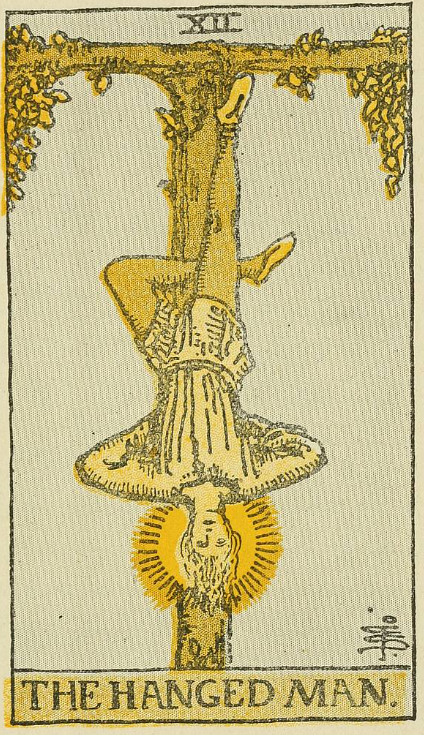







 Simon McNeil