Lately there has been significant discourse around Elon Musk’s reading list. Three main threads have arisen:
Elon Musk read Asimov wrong
Elon Musk read Ian M. Banks wrong and also Ian M. Banks personally hated Musk / Bezos types
Elon Musk may have been raised in part based around the ideas put forward in the Nazi rocket scientist Wernher von Braun‘s unpublished science fiction novel Project Mars: A Technical Tale.
Now to those people who point to Von Braun’s “the Elon” and suggest that Musk’s parents secretly groomed him to become the Nazi tyrant of mars I have some bad news: The novel wasn’t actually published until 2006. In 1952, a West German press published the technical appendix to the novel but this seems to have lacked many of the correlative elements that had some Science Fiction fandom types donning their tinfoil hats. Of course this isn’t to say that Musk may have subsequently read the Nazi’s novel after it was published, by a Canadian press, in 2006. But frankly I don’t think it really matters much for reasons that will become clear later.
There has also been mention of The Caves of Steel and the idea that Musk misread that book. This classic of science fiction by Isaac Asimov is mostly a pretty standard buddy-cop murder mystery in which a pair of mismatched detectives (a human from Earth and a robot) must learn to overcome their differences in order to solve a politically charged crime. While Asimov’s book dealt somewhat with the intersection of culture and technology via the presence of the Medievalist faction and the idea that those people who didn’t want to live in Earth’s steel caves could find sort of palingenetic liberation in space colonization it is, principally, a detective novel wearing a funny hat.
Furthermore, while Asimov is generally portrayed as a progressive political figure, we can’t ignore that the treatment of Medaevalists and the idea of moving them off-world as a solution to their dissatisfaction with modernity isn’t all that different than the Nazi homesteaders of mars fantasies of Elon. Frankly he doesn’t have to have read Asimov wrong to draw something CHUDdy out of the work.
Effectively a text is politically mute. Any text may have political language within it, sure, but without an author on one end of it and an audience on the other that’s irrelevant. An unread text has no political content. But the politics of a text lie in the communication between author and audience. As such the author can never fully lock down the politics of their texts. The necessary interference caused by the fiction form gives the audience plenty of space to insert their political ideas into a text.
And that brings us to Ian M. Banks. Authors who knew him well have said openly that Banks hated tech billionaires, that he, in fact, built one of his Culture villains off of Jeff Bezos. Banks was a life-long socialist. The Culture novels present a core society that operates on effectively anarcho-communist principles and the books were often quite didactic with their politics and their irreligiosity. It would be hard to read a Culture book and not see the left-wing politics the author put there… unless you just weren’t looking for it.
The Culture books are also thrilling space operas about spies and androids. There are sentient space ships with minds so advanced they can perceive higher dimensions. There’s cool robots. Even some of the politics has sufficient ambiguity to be malleable to right-wing aims. Consider Phlebas is aggressively anti-religion in a way that would be all too legible as tied to the same world view as the Christopher Hitchenses, Richard Dawkinses and Sam Harrisses of the world. It was a hard lesson for some strictly materialist atheists to learn that many of the luminaries of atheism in the 1990s and the first decade of the 2000s were a bunch of right-wing shit birds but the truth is that that brand of aggressively atheist irreligiosity is something that can be quite useful to a certain type of right-wing figure.
These books have multiple entry-points. Do you read The Player of Games for its treatment of how semiotics bounds the horizon of thought or for the gripping spy story? Do you take away Consider Phlebas’ anarcho-communist economics or its anti-theocratic critique of religion. Or do you just see the cool space ships? Is The Caves of Steel a classic detective novel or a template for trad homesteaders on Mars? Does it matter, at all, that the Nazi Wernher von Braun called the ruler of Mars “The Elon” in his posthumously published science fiction novel? In all these cases the book isn’t a clear communication about politics – the book is the interference pattern that exists between the author and the audience regarding politics. This is not to say that books aren’t politically useful – they are, in fact, incredibly politically useful because they often provide templates within which to articulate a politic. This is just to say that it doesn’t really matter whether Elon Musk read this or that book. There’s no political gain in pointing out that he read them poorly. There may be a slight schadenfreude in calling a powerful man illiterate but it’s rather ressentimental.
Instead we should be focusing on political action here and now to confront Musk’s political agenda and neutralize it. There’s more power in vandalizing a Tesla charging station than there is in critiquing Musk’s skills as a reader. There’s more power in pushing our elected leaders to fight back against American encroachment and to make economic and trade decisions that isolate the United States. Making fun of the powerful is all fun and games but it, too, is ultimately just a text and is, as such, politically inert unless the audience does something with it. So fucking do something.
On January 21 Ada Palmer published a blog post on the topic of self-censorship. This became relevant to subsequent discourse.
On February 7, File 770 and Jason Sandford’s blog co-published a report derived from Diane Lacey’s now-public comments regarding her role in censoring the Hugo Awards. The report surfaced two important details that had previously been left to speculation: first that the English speaking members of the concom, apparently without any feedback from the Chinese members of the concom had assembled dossiers on people who they suspected might be upsetting to the Chinese government. Some of these people (notably Paul Weimer, Xiran Jay Zhao and R. F. Kuang) were subsequently determined to be ineligible, again by the Western contingent of the concom on the basis of these dossiers. In many cases the texts declared ineligible were not read by the people assembling the dossiers. Second that this act of censorship was in concert with a decision, apparently made by Dave McCarty in specific, to exclude several works of Chinese fiction from consideration on the basis that he believed them to have been slated. Many of these works would have likely been finalists in their respective categories, making it highly questionable that the English language works that eventually won those categories would have even made the ballot if not for this intercession.
On February 19, Meg Frank stated that Dave McCarty had been “emotionally abusive, generally manipulative, and has sexually harassed myself and numerous others,” and that they’d previously made code of conduct complaints against him that had failed to gain traction due to his history of community service and concomitant popularity in the Worldcon set.
Still on February 19, Xiran Jay Zhao stated they’d been contacted by a representative of the House Select Committee on Strategic Competition Between the United States and the Chinese Communist Party. This led to speculation among various Worldcon adjacent people that the United States might be considering punitive action against Worldcon on the basis that China Telecom, a sanctioned company in the United States, made financial contributions to Worldcon which subsequently may have donated money to the Mark Protection Committee or Worldcon Intellectual Property. According to these speculations, this might be interpreted as laundering money into a US organization from a sanctioned company – which is not an entirely dissimilar state of affairs to what led to the Meng Wanzhou diplomatic incident.
Needless to say, it has been an eventful month.
So let’s begin with self-censorship. Starting with largely around the time the February 7 report came out the discourse from within fandom was to say, “OK so maybe McCarty was principally involved in the exclusions but it was self-censorship because China is so censorious he felt he had to. This is largely in keeping with Palmer’s argument that a line cannot be drawn “between state censorship and private or civilian censorship.”
However this approach ignores an important question: if we assume that a censorious regime is imposing power such that the English speaking members of the concom self-censor, which censorious regime is it? The obvious answer is that they did it based on their beliefs of what might be problematic to the Chinese state. However this raises a second, very important question, where did the concom’s ideas of what would or would not upset the Chinese state come from?
This points back to my question surrounding the exclusion of Kuang’s book from my last Hugo piece. R.F. Kuang has a book deal in China. The book that was censored says nothing bad about China and instead principally addresses questions about English colonialism. Contending that the Chinese state is censorious the next question is why somebody would think, knowing what the Chinese state tends to censor, that this book would be likely to face censure. First we must consider who was doing the censoring. Based on the leaked emails reported on by Barkley and Sanford the vetting subcommittee was hand-picked by Dave McCarty and excluded all Chinese concom members. In a leaked email from June 6, regarding Babel, Kat Jones said Babel, “has a lot about China. I haven’t read it, and am not up on Chinese politics, so cannot say whether it would be viewed as ‘negatives of China.’”
Note that she had not read the book. It was excluded because Jones understood, somehow, that the book spoke at length about China. This must be contextualized together with Dave McCarty’s decision (seemingly alone) to invalidate votes for Chinese language work that appeared on recommended reading lists produced by the publisher Qidian and by the world’s largest science fiction magazine, Science Fiction World.
The ultimate result of this censorship was the systematic exclusion of Chinese and Chinese diaspora authors from the Hugo ballot, ultimately favoring many of the same fandom-proximate figures who have become Hugo perennials. It ended up with a remarkably white set of Hugo awards. Can we really suggest that a person with first-hand knowledge of Chinese censorship practices would respond by removing all the Chinese people from the ballot? So if this constitutes self-censorship (which depends on a narrow read of self-censorship as any form of censorship undertaken by a private party at the assumed behest of a state) what was the state who was being appeased? Because it seems like this censorship does more to reify the general American misconceptions of China than anything from within China. If we call this self-censorship then it’s as valid to say the censorious regime was the US State Department as it is to say it was the CCP. After all, many of these fantasies about China come, ultimately from there.
This is categorically not something that China would want. In fact a quick perusal of Chinese media reveals that about all that was of concern within China regarding Worldcon was the presence of Chinese authors. The wrap-up article in the China Daily contained a single line regarding the (English language) winner of Best Novel before devoting a paragraph to Hai Ya and then shorter writeups for every other Chinese national who won their category. Zhao Enzhe gets a significant quotation, saying, “I always recommend the style of Chinese ancient paintings, graceful and full of vitality,” and “ancient Chinese culture provides the best style for sci-fi and with my efforts, I hope I can bring more sci-fi artworks with Chinese philosophical thinking to foreign audiences.” South China Morning Post also published a glowing feature on Hai Ya. This should tell western audiences the direction of Chinese propaganda surrounding this event. Excluding Chinese nationals from the ballot was something explicitly contrary to these aims. Notably there is nothing published in Chinese state affiliated media subsequent to the revelation of the irregularities. But considering how the profiles of Hai Ya and Zhao Enzhe contained superlative statements regarding the significance and prestige of the Hugo awards I’d suspect that nobody in the Chinese propaganda apparatus is too happy with the western members of the concom right now.
All this is to say that if self-censorship is to be brought forward as affecting the concom’s aims and if we should tie this directly to the power of the state, per Palmer’s argument, we must interrogate which state’s power was being projected by ensuring the international audience that, even at an award ceremony held in China, American literature remained dominant.
We should also consider the possibility that this is not the first Hugo award to have faced irregularities. Mary Robinette Kowal has said that Dave McCarty created proprietary software for Hugo vote tabulation this software gives him scrutiny over which people voted for which finalists but he will not show anybody the code underlying it. Considering the preponderance of sources suggesting that McCarty was the leader of the censorship effort at Chengdu it raises the question of how many other votes may have had his finger on the scales. From what I can see McCarty’s was modelling voting data as early as 2016; this could potentially call into question every Hugo finalist since the start of the EPH process. And considering the known irregularities that led to the adoption of EPH this could, in turn, suggest there hasn’t been a single Hugo Award since 2013 that is above suspicion of tampering either by the antics of the reactionary Sad Puppies or by the so-called SMOFs of the World Science Fiction Society (WSFS) putting their fingers on the scale.
Now this is where it’s relevant to bring up the accusations of harassment against Dave McCarty. These have been going around fandom for some time. As Meg Frank said, McCarty is not a missing stair. Rather he’s a man who was protected from the consequences of his actions. Complaints of groping and other abusive behaviour surfaced at 2011 SMOFCON and were largely brushed off. Meg Frank has reported that this is a pattern of behaviour demonstrated by McCarty and his enablers.
What is concerning is that treating these irregularities as solely the Dave McCarty screw-up is letting too many others off the hook. This one man didn’t amass such influence and immunity without a score of friends and helpers. If we can look at Chengdu and call it Dave McCarty’s fiefdom it’s only because of the many people who called him friend and helped him establish it. This man should have been asked to leave in 2011. Here we are, 13 years later, reaping the consequence of his enablement. And this is where we should pivot to a discussion of the byzantine finances of WSFS and its affiliated bodies.
If we look at Cheryl Morgan’s public statement following her resignation from the Hugo Award Marketing Committee we can note a rather anomalous point where she says, “Having seen legal advice on the subject, I am confident that the contracts I issued from Wizard’s Tower Press are structured in such a way that no one suing me, either individually or as an officer of WSFS, will be able to obtain the rights to any of the works published by Wizard’s Tower.” And at the time I thought this quite odd as I couldn’t think of any good reason why anyone would sue Morgan over her rather tangential involvement.
So I asked her. And she provided me with some answers which I took to a few other people. And from what I can put together Morgan had said on social media some time previous that it would be pointless to sue WSFS because WSFS barely exists as an organization and has no money. Whereupon a legal academic informed her that a litigant could always sue the membership in such a case as US law has stipulations for suits against non-incorporated entities like WSFS. And this apparently alarmed Morgan sufficient to make her want to distance herself from any element of WSFS quite vociferously to avoid ending up party to a lawsuit for something she had absolutely nothing to do with aside from managing a webpage.
Now neither Morgan nor myself are Americans and while I cannot speak for her I would never pretend to be a legal expert even within the bounds of Canadian law. I cannot adjudicate the level of actual risk Morgan faced.
It’s at this point we must turn to address Worldcon finances. During the debacle surrounding Discon III I actually tried to dig into Worldcon finances and what I found was a disorganized mess that took me down a few blind alleys and ultimately led nowhere. Frankly, from publicly available sources, it was impossible for me to figure out where Discon III money had gone. At the time I set it aside as largely irrelevant to my point surrounding the ethics of allowing an arms manufacturer as a sponsor of a literary event. Although this was not originally a particular focus of this piece it ultimately sent me down a remarkable rabbit hole due to the non-standardized and difficult to balance nature of Worldcon financial reporting year over year.
See WSFS is non-incorporated and consists of the voting membership of WSFS in any given year. That’s true. But there is a non-profit organization called Worldcon Intellectual Property (WIP) which exists to, according to Kevin Standlee, “pursue registration of marks outside the United States.” According to information compiled by Jay Blanc, the Worldcon Marks Protection Committee (MPC) seems to have unilaterally determined that the MPC would take ownership of Worldcon related trademarks within the USA as they came up for renewal. It is worth noting that the initial board of the MPC in 2015, when these decisions were made included Dave McCarty, Kevin Standlee and Ben Yalow, among others. Blanc’s investigation points out both that this appears to have been structured specifically to keep both the MPC and WIP not legally responsible for WSFS but in such a manner that it would normally require that 33% of its annual income be taken from individual small donors. Blanc asserts that WIP’s income is taken in the form of a single grant from the yearly Worldcon. According to the most recently published financial statement for WIP, WIP earned $3,100 before September 11, 2023. $3,000 from Chicon 8 and $100 listed as “Deposit, Misc.” According to minutes published in December 3, 2023 for a special meeting of the Mark Protection Committee, “There are no dues outstanding since we just received nearly $3,000 from Chengdu” A footnote indicates, “The money from Chengdu is not part of the $18,800 noted as our bank balance, since it had just been received.” It is unclear whether this means the money had yet to be deposited into WIP accounts or whether it means the money had yet to be accounted for. There is no mention of a near-$3,000 expense item in the agenda of the Worldcon Business Meeting from Chengdu dated October 19-22. Which likely indicates the payment happened after October 22 and before December 3 however there’s no audit trail I can find for it at that time.
And I want to note that this is not a Chengdu-specific problem. However it’s worth noting that it’s not uncommon for there to be a remarkably low level of granularity in financial reports from Worldcons. For instance: the Discon III financial report from September 9 2023 includes an expense item of “Art Sales Reimbursements | $30,698.78” with no immediate context as to why these reimbursements occurred. There is no references to art sales reimbursements in the minutes of either the business meeting minutes for Discon III or Chicon 8. I would expect that a reimbursement of that size would at least warrant some discussion at a business meeting or at least some explication on the financial documentation.
However such vagaries are somewhat par for the course among Worldcons. Also a challenge is that most conventions (with the exception of Chengdu) report their finances in local currency and little detail goes into describing money conversion among pass-along funds. This makes an independent third-party balancing of Worldcon finances difficult year over year.
The difficulty of transferring money in and out of China only compounded this problem. The solution that was arrived at by the conrunners was to create a separate business entity – a 501c3 incorporated in Wyoming and headquartered at the residence of one of its board members – called the Development Center for Chengdu Worldcon (DCCW) whose responsibility it was to handle US finances for Worldcon. However, it should be noted, the articles of incorporation don’t mention that as the mission of the DCCW – instead saying that its mission is to “Facilitate the education and study of literary works internationally and in the United States.”
This caused several issues. First: the delays in allowing for registration in Chengdu Worldcon proved vexatious for some attendees. Allen Tipper went so far as to call for censure of the concom, though they were prohibited by meeting rules at Chicon8 from elaborating on the minuted records, telling me, “their skirting of the rules with regards to allowing memberships to be purchased was making me lose confidence in their ability to run a Worldcon. I would have specifically noted that I could buy a membership for Glasgow before I could buy one for Chengdu.”
Based on my research of the timeline surrounding the creation of DCCW, this was likely the root cause of this issue.
The administrators of DCCW seem to have been hard-pressed to keep up with the requirements of running the charitable organization. Wyoming state records indicate that the 501c3 became delinquent in its filings on August 2, 2023 and were administratively dissolved on October 9, 2023. This state of affairs was not rectified until February 2, 2024, when their annual report to the state was filed and their status was restored.
It seems somewhat alarming that this entity was in a legally tenuous position throughout the period of the convention itself, especially considering how finances were handled between the DCCW and the Chengdu Worldcon organization (which appears to have been the legal structure of the convention within China).
Now I will admit that what follows here is something of a guess. But the financial report for the Chengdu Worldcon contains a column for China funds and overseas funds before providing a total across both categories. The China funds are reported both in CNY and in USD while overseas funds are reported only in USD. It should note that this is actually somewhat better detail than most conventions financial reports provide.
As of August 31, the date on the financial report given at the October Worldcon, income in China funds totals to $279,704.43 while overseas income comes to $236,359.60. Expenses in China funds: $94,799.14 and in the overseas funds column it is $46,844.07. This leads to a reported net income of $184,905.29 in China funds and $189,515.53 in overseas funds. What’s interesting is when we look at the reported bank balances we see that the 2032 Chengdu Worldcon bank account is listed at $184,905.29 and the bank balance reported for the DCCW is listed at $189,515.53. This would seem to indicate, although I cannot be entirely sure, that the China funds column refers to income and expenses incurred by Chengdu Worldcon while the overseas fund column refers to income and expenses incurred by DCCW.
Now it is somewhat alarming that, at the time the report was produced the DCCW was delinquent in its filings with Wyoming and by the time the report was delivered to the membership of WSSF the DCCW had been dissolved. There is no mention of this dissolution within the agenda and I have been unable to find the minutes for the business meeting although they have apparently been published. However there are other challenges that arise from my interpretation of this report in this way.
For instance pass-along payments from CoNZealand and Discon3 are split between the two organizations. The split for CoNZealand was 75% / 25% – $37,500 went to Chengdu Worldcon while $12,500 went to DCCW. On the other hand the split for Discon 3 was 70% / 30% – of $28,528 passed along $19,928 went to Chengdu Worldcon and $8,600 went to DCCW. It’s unclear why these were handled differently.
Also unclear is the $57,428 Chicon 8 Pass-along waiver expense against Chengdu Worldcon that does not touch DCCW finances at all. I tried to find references to the pass-along waiver in the minutes of Chicon 8 and was unsuccessful. The pass-along waiver does appear as income on the Chicon 8 budget as of August 31, 2023. Again it’s unclear why this decision was made.
Another oddity is how small the amount of money was spent by either organization on international travel. DCCW paid $34,173.05 on international travel. Of that $26,522.45 was for an all-staff meeting in June. The remaining $7,650.60 was paid to convention guests. This is odd considering the number of accounts that have come out of convention panelists being comped flights and or accommodation. Tied to this oddity is the presence of only two corporate sponsors on the Chengdu financial document: Chengdu Technology Innovation New City Investment and Development Co., Ltd. – which appears to be a property development concern – and Chengdu Media Group – a media production company which also seems involved in the redevelopment efforts of the former company to some extent.
However reviewing the programming book for the Chengdu Worldcon reveals several other sponsors. Notably China Telecom, a company currently under US sanctions, was listed as a “2023 Chengdu Worldcon Starseeker” tier sponsor. Huawei, another telecommunications company under US sanctions, meanwhile does not appear as a sponsor but is an exhibitor, hosted an event attended by Worldcon panelists, and gave awards to participants (entirely distinct from the Hugos). This discrepancy is explained by statements made by Ben Yalow at Smofcon 40, previously reported by File 770, “None of that appears on our financial report because we didn’t get any money out of the deal. The convention never saw that money. What the convention saw was Hugo finalists who would show up and their plane ticket was taken care of and their hotel room was taken care of. It means that our financial report is completely accurate and totally misleading.” If I am parsing Yalow’s statement correctly this means that many of the line items that appeared remarkably low on the Chengdu budget were so because sponsors provided contributions in kind. While I will not profess to have any particular knowledge of US law regarding 501c3 reporting requirements I will say, as someone with prior experience in the not-for-profit sector, that it is not best-practice to exclude contributions in kind from financial records. You end up with “totally misleading” financial statements that way.
What makes this somewhat disconcerting is that there does not appear to be any sort of impermeability between DCCW and Chengdu Worldcon finances. Payments were divided between the two and it is unclear from the records I have access to why these payment decisions were handled in this way. If it were simply a matter of handling payments from the United States, why were pass-along payments split? If there is a good reason for this then why was the ratio of these splits different for each line item?
When we include an event that included participation of companies on US sanctions lists it would have been wise to maintain books that clearly indicated that no China Telecom or Huawei contributions entered the accounting of DCCW. As they were left entirely off the books this is opaque to me.
What I really want to highlight here is that this is a culmination of a series of decisions that significantly predate the Chengdu Worldcon. The absence of a unified financial reporting model is present for the same reason as the absence of any overarching formal guiding body for the WSFS. An old libertarian drive to resist incorporation has blocked any sort of year-to-year consistency surrounding standards and practices since ~1953. Hilariously a key fear appears to have been that incorporation would provide a method for incompetent volunteers to remain in positions of authority of for various cliques to exercise out-sized influence. Of course, now, this simply happens informally as many perennial volunteers, of various levels of competence, reoccur year over year and, in fact, decade over decade.
In fact, the Chengdu financial reports are more detailed than many other Worldcons. The financial report of Worldcon 76 has no entry for legal expenses despite a $4,000 settlement to Jon Del Arroz. Worldcon 79 has no line item for charitable donation expenses despite their board having publicly said they would do so.
NASFiC 15 provided a four-line financial statement claiming both a deficit of $24,468 and a cash balance of $5,964.27. Their notes include that they expect additional income and expenses but aside from statements regarding an application for a tourism grant they provide no real detail on how they will close this deficit gap. Nor is it clear, with how WSFS is structured, who would be responsible for paying the deficit if they cannot balance their accounts. Probably Cansmof.
Finally there is the involvement of the office of Representative Mike Gallagher. Xiran Jay Zhao says that a representative of his office contacted them saying that Gallagher was interested in this situation. This isn’t entirely surprising. Gallagher is described as a “China watchdog” and probably apprehended the existence of this issue from early reporting that suggested the big story here was CCP censorship of an international literary award. Gallagher is the chair of the United States House Select Committee on Strategic Competition between the United States and the Chinese Communist Party – a republican-led committee which lacks any Chinese diaspora members and that tends to issue inflammatory rhetoric and little else. Gallagher also has prior history of being interested in nerd shit having issued a strongly worded letter to Activision Blizzard over their rather shameful behaviour during the Hong Kong protests of 2019.
However Gallagher is in a tight position over his recent refusal to vote to impeach the Homeland Security Secretary Alejandro Mayorkas. The end result is that Gallagher will not be seeking re-election. This is to say that this is an ineffective politician from an ineffective subcommittee. I would suggest the likelihood of a congressional star-chamber for members of the concom is vanishingly small. The fact that he contacted Zhao is telling. Xiran Jay Zhao is a celebrity. They’re well-known, have a large online platform via Tik Tok and have been vociferous with their criticism of the CCP. If we treat Gallagher as a propagandist, which we honestly should, then they’re pretty much perfect for his purposes. But I doubt he has the influence in Congress, as it is currently composed, to do much beyond write another strongly worded letter. Frankly Zhao is, at best, a peripheral person to this whole mess. The people who would be best situated to answer questions about what the heck the concom were thinking are a collection of volunteer conrunners scattered across the United States, not a Canadian Tik Tok star.
I will note that there is a small silver lining here as two of the Hugo winners, Samantha Mills and Adrian Tchaikovsky, have renounced their Hugo wins from 2023 on the basis of the blanket exclusion of Chinese authors. I didn’t personally like Rabbit Test much on aesthetic and structural grounds but I do want to say that Mills, who was the first Hugo winner to make this move, deserves recognition for her strong ethics. I hope more of the Hugo winning authors will follow the example set by Mills and Tchaikovsky.
The hilarious truth is that of all the broad assortment of people and organizations involved in this bizarre story one of the most blameless is the CCP. Dave McCarty actually seems to have foiled the main CCP objective of the Chengdu Worldcon by excising Chinese authors so thoroughly from the ballot. Instead we see the American SMOF contingent at the heart of year-over-year conrunning struggling to adapt the calcified traditions of an 85 year-old institution that has aggressively resisted means and standards to an international context that desperately requires means and standards.
Please don’t take this to mean I am bringing forth the shadow of WSFS Inc. once more. Because the truth is that I don’t believe there’s anything of value left to Worldcon. As a vehicle of international connection it’s a failure: the immediate response of the Worldcon core audience to irregularities was to blame foreigners when the call was coming from inside the house. As a vehicle for a prestigious award it’s a failure: there is no good reason to believe that there has been a clean Hugo award in the last decade. I have alluded to this previously but the only period, in the history of the Hugo Awards, in which non-white authors won for Best Novel was between 2015 and 2018; it seems like the interest in honoring diverse authors dropped off sharply once the Sad Puppies were safely vanquished back to the margins. I’m sure many of the voters who gave N.K. Jemisin three Hugos in a row and then never awarded another Black author would have also voted for Obama a third time if they could.
Worldcon is a millstone around the neck of the genre community. Genre authors should not seek its awards. The WSFS should wrap itself up and any bank balances remaining on its various threadbare books should be donated to charities that can persist more than a year without falling into delinquency. Should some other international Science Fiction gathering present itself, perhaps one not so intrinsically tied to a late-1930s schism between libertarians from New Jersey and New York communists, then there could potentially be a successor to Worldcon in the future. But not as Worldcon. It’s a year-over-year embarrassment. Let it die.
Earlier this month Alexander Chee wrote an article for Guernica Magazine about Dracula which proposed that some of the evil of Dracula was the sublimated eroticism that Stoker felt toward Walt Whitman. This article principally focused on the monster as a figure for interrogating evil and, midway through the article Chee recommends that his readers, ” Ask yourself what you might really fear, and why.”
Monstrosity is a threat. When I wrote about the desire to be monstrous in Cabal I said that the Nightbreed dance along the edge of the indescribable because they are everything that we can not bear to be. The monster is tied to the Jungian idea of the shadow – the idea that we, collectively as a culture, have parts of ourselves we can’t bear to look at. Even without the blood and the frenzy of the Nightbreed (who we should remember do, in fact, eat people) the very repression of the Nightbreed is a threat. They reveal what we all wish to conceal by their being.
The monster is not simply the inhuman. A chicken is inhuman. A rock is inhuman but neither chickens nor rocks are threats to humanity. We might sympathize with the chicken, kept caged, surrendering its young or being force-fed into a premature adolescence and slaughtered for food. But there is nothing of the monster about the chicken. Monstrosity is not simply being outcast or othered. While a monster is an othered figure this is a simplification of the monster. In No Future, Lee Edelman introduces his text to say, “Rather than rejecting, with liberal discourse, this ascription of negativity to the queer, we might, as I argue, do better to consider accepting and even embracing it.” This negativity he describes is much like the Shadow in that it is grounded in rejection – a rejection of futurity itself.
Certain other critics have engaged with Chee’s work and seem to misunderstand it somewhat by proposing that Chee’s description of the “literary gossip” of a meeting between Stoker, Whitman and Wilde that never happened is the root of the homophobia of Dracula. In fact Chee alludes to the homoeroticism of Dracula by pointing out that, while Stoker and Wilde met Whitman separately, Stoker’s correspondence with Whitman was deeply homoerotic. If we are to treat Dracula as a homophobic text we should situate the monstrosity of the Count in this form of the Jungian shadow – a negation that fears to look at the monstrosity that lurks within the subject, the threat of the self as a self-subversion.
To the extent that Edelman invites the queer subject to embrace the monster it is not to reach out to the liberal majority and seek empathy. It’s to make, of a political body, an explicit threat: we want no future like this. You cannot cow us with the threat to some imagined child.
Sympathy and identification with the monster is complicated when we begin to treat people as being dividual. In Men, Women and Chainsaws, Carol Clover is very careful with the idea of identification, saying, of identification with a character that it is fluid: “competing figures resonate with competing parts of the viewer’s psyche.” A person might identify both with the slasher-killer and the final girl. As Chee points out it’s not uncommon to root for the monster and yet we still feel satisfaction when he is dispatched. We enjoy watching Freddy dispatch teens in increasingly absurd ways and we enjoy watching Nancy overcome him in the end. Both the part that delights in Freddy’s sadism and in Nancy’s flagellant heroism are elements of the psyche of the audience.
When examining the figure of the monster and the question of sympathy we might be well-advised to consider Frankenstein. There is that old joke that first you realize that Frankenstein is the doctor and not the monster but then you realize that the doctor is, in fact, the monster of the story, and that’s true. Doctor Frankenstein is a monstrous figure. But his creation, in full awareness of his senses, murders William and blames Justine. He murders Elizabeth, he kills and he glories in his kills. Frankenstein’s creature is the victim of Frankenstein’s promethean hubris, he is a subject with whom we can easily sympathize. He is also a hot-blooded killer who enjoys killing.
We don’t seek out identification with the monster for the purpose of comfort. Another key example is Knife + Heart. There is a scene at a burlesque in which an elderly woman begs a monster to couple with her and the monster warns her that in the throes of passion it will consume her. She pleads the monster to do so and the monster rips her apart. This relationship of monstrous attraction is highly reflective of the bitter, collapsing and abusive relationship between the protagonist Anne and her ex-lover Loïs. Anne, watching the woman circle the monster, beg for her death in ecstasy and passion, sees herself as the monster and Loïs as the victim who cannot separate herself and, in doing so, gives herself a kind of justification for her own abusiveness. But there is another monster in Knife + Heart – the revenant-like killer who stalks the gay porn scene of 1979 Paris. And he, too, is a victim whose story demands sympathy. He was a gay man maimed and possibly murdered by a homophobic father; he watched his lover burned to death in front of him. There is a demand for sympathy just to understand his murders. But in the end we cannot help but also feel sympathy for the patrons of a porno theater who cut him down.
Monsters aren’t nice.
The idea of the identity of the monster, the shadow-self that is rejected by society, is a critical lens for understanding the subaltern. But monsters have claws and fangs. Monsters do terrible things. As both Lee Edelman and Karl Marx remind us, when it is our turn we will make no apologies for the terror. The Nightbreed of Midian want no integration into the human community and they still eat flesh and drink blood. When we want monstrosity we must want to be monsters not because they are subaltern but because they are a threat. There is no need to invoke the monster simply to sympathize with the subaltern. All you need for that is a functioning heart. The monster is a reminder that some forms of minority are subaltern because they threaten to overturn an old order and replace it with nothing that can be recognized.
Throughout 2000 my university plans and activism were very settled. I would be focusing on economic globalization academically and on the “alter globalization” movement – the organized and powerful mass-movement that sought to push back against this key process of neoliberal extractivism. But by early 2003 it was evident that our goose was cooked. 9/11 era security laws gave police unprecedented powers and many of the activists who had successfully disrupted international trade conferences previously were being scooped up as terrorists.
This process had begun before 9/11 – police shot Carlos Giuliani and ran over him with their car at the G8 summit in Genoa on July 20, 2001. Police dabbed his blood on a rock and tried to blame protesters for the death despite the bullet wounds. Susan Bendotti was killed a day later, struck by a vehicle whilst waiting at a bus stop. To my knowledge her killer was never identified.
But while explicit murder-by-police was already a threat that those of us fighting this fight had to face before September 11th, the paranoia and surveillance laws of the post 9/11 era made disruptions of international trade talks effectively impossible. The security net was impenetrable and the violence extreme.
Combined with the ramp-up to the Iraq war I saw the writing on the wall and realized, quite correctly that the peace movement would necessarily leech support away from these more violent economic clashes. Our battle against neoliberal out-sourcing of manufacture to the global south would be abandoned in the name of trying to stop a war. That the peace movement fit within the neoliberal hegemonic moral order more than economic protests meant, too, that the full fury of police violence was less likely. Simply put, if a police officer murdered an anarchist at a police riot most people didn’t stop to ask why there was a police riot going on. But cops murdering avowed pacifists calling for non-violence was less photogenic domination. If you lived in Canada or even the United States it was far safer to be a peace activist than it was to fight against global trade deals.
All this is to help explain why leftists of a certain age, that being those of us old enough to have got tear gassed in Quebec City in 2000 or to have got assaulted in Genoa in 2001 or to have been arrested for terrorism in the middle of a forest in Kannanaskis in 2002 or to have been thrown off a bridge by police on the frontier between France and Switzerland in 2003 have an especially high level of cynicism for saber-rattling among the creaky ranks of the hegemons. China didn’t do anything to deserve a war footing any more than Iraq did.
It’s just that the rulers of the global north learned 20 years ago that a war can derail any resistance to their economic order while granting them the extraordinary powers (the state of exception) necessary to do anything to anyone in the name of security. It is a moral good to refuse to participate in wars on foreign shore. But we must remember that our enemies within our own state, our REAL enemies, will instrumentalize resistance to war in service of their domestic aims. Despite the danger it’s important for the left in the imperial core to keep our eyes on the domestic fight: union struggles, dismantling of police powers and pushing back on resurgent fascism must not be abandoned in 2023 the way that the struggle against industrial out-sourcing was abandoned in 2003. But also we must crush the movement to create new external enemies because this will be used to sap our most active away from the local fights and to spread rumours of foreign influence to smear the reputations of the just.
This comes as an additional reflection arising from, not so much the Neiman book from yesterday’s review, as the media campaign that originally brought it to my attention. See Neiman was interviewed by CBC and the interview, which led me to expect the typical centrist hand-wringing over “Wokeness” was largely focused not around Neiman’s impassioned defense of Kant nor her burning hatred of Foucault but rather of a theme that only really arises briefly in her introduction and conclusion: the idea that there exists a “radical” or “woke” left who can be meaningfully juxtaposed against more reasonable leftist elements.
This is a statement I’ve always rather vehemently denied but the reasons why I deny that this is a meaningful phenomenon of “the left” are neither a no-true-Scotsman approach where I’m excluding these types from “the left” nor do I treat the subject of the scold, who will be the principal target of this discussion as being a good thing or as being a delusion of the right.
But while Neiman’s book is, honestly, almost entirely mute on the figure of the scold some of my private conversations yesterday with friends and colleagues have circled back to this subject. And so I felt it would be prudent to lay out a piece addressing a few questions:
What do I mean when I talk about the left?
Why do I say that the scold is not a left-wing phenomenon?
What, if anything, must the left do about the scold?
So let’s start by defining our terms. I have a very clear and specific definition of the left. The left is composed of non-liberal political actors who are against capitalism and for global liberation. As such the principle contingent of the left is built from various forms of socialist, anarchist and communist. Now note that I see these phrases as being broadly overlapping. I regularly call myself a Marxist and a search through this website to references to Marx will bring up many hits. I also often call myself an Anarchist as I am anti-statist and see the “socialism in one state” model as being against the goal of liberation. I don’t call myself a Leninist but, while I have little patience for Stalinists and none for red-browns, I am quite generally open to the positions of Maoists, Leninists and Trotskyists and have read political writing by all three.
I often joke that the only reasonable political center is that between Anarchism and Marxism-Leninism and, being honest, I’m not really joking. This, then, is the constellation of ideologies and tendencies I see as the left. It’s a fractious group which contains very different views on the tactical approach to overthrowing capitalism and forwarding the objective of liberation so I don’t see the left as a unified ideological clique. Rather it is a collection of several disparate and sometimes conflicting political ideologies and tendencies that happen to share two key strategic aims. Notably this definition excludes certain tendencies like Anarcho-Capitalism, which doesn’t seek to overthrow capitalism, Dengism (for the same reason), and progressive liberalism.
So now that we’ve established what I mean by “the left” the next question is to treat the figure of the scold with similar rigor. The scold is principally (although not entirely) an online phenomenon. This figure is someone who has spent enough time in online discourses to learn some academic terminology but, through inexperience, disinterest or malice, does not understand how to use that language well. Frequently this leads to scolds going so far as to invert the intrinsic meaning behind academic terminology. I will provide a few examples:
In 1989 Dr. Peggy McIntosh, a very senior humanities professor who has worked in English, Women’s Studies and Pedagogy condensed a prior work on the topic of “privilege” down to a briefer work called White Privilege: Unpacking the Invisible Knapsack. It’s very important to historicize this work in the context of her founding position at the National SEED Project on Inclusive Curriculum IE: privilege, in her work, is explicitly a pedagogical tool designed to close epistemological and ontological gaps.
McIntosh saw this as being a positive pedagogical problem. Privilege wasn’t merely a matter of blind spots but of having been taught in specific ways: “I think whites are carefully taught not to recognize white privilege, as males are taught not to recognize male privilege.” She says that there is an intentionality surrounding the invisibility of privilege but this intentionality is not a deliberate blindness on the part of the privileged subject – it’s a matter of having been instructed. Social reproduction creates the invisibility of privilege and, as a matter of pedagogy, it is a situation that can be corrected.
“I was taught to see myself as an individual whose moral state depended on her individual moral will,” McIntosh writes, establishing that this view is incorrect. This is something which I personally agree on although my (Deleuzean) tendency to shatter the “individual” and show how easily the subject can be divided may not be what she was aiming for. I suspect McIntosh was more pointing toward collective modes of subjectivation. This is, of course, a non-liberal viewpoint that reaches toward the goal of global liberation. This situates McIntosh as being one “destroy Capitalism” away from achieving my definition of leftist. McIntosh then enumerates a list of conditions she can expect, on account of her whiteness, that she has recognized are unavailable to black people.
In her essay McIntosh seems to stumble across the idea that was previously elucidated by Antonio Gramsci of hegemony – that there is a dominant cultural force operating superstructurally upon subjects which shapes their subjectivities. But it’s interesting to note that McIntosh sees privilege of consisting of two categories: privileges that should rightly be enjoyed by all and privileges that should be enjoyed by nobody. She is also quite clear that this systemic process of domination is corrosive to all the subjects within it saying, “In any case, we need to do more work in identifying how they {privileges} actually affect our daily lives. Many, perhaps most, of our white students in the U.S. think that racism doesn’t affect them because they are not people of color; they do not see “whiteness” as a racial identity.”
Now McIntosh made a small error here in that there certainly is a category of Americans who see “whiteness” as a racial identity – white supremacists – but the awareness of white supremacists that they can openly dominate is less her aim here than those people who have been instructed by white supremacist systems to ignore the system they live within. “In my class and place, I did not see myself as a racist because I was taught to recognize racism only in individual acts of meanness by members of my group, never in invisible systems conferring unsought racial dominance on my group from birth.”
Ultimately what McIntosh wanted to do was to make subjects that were taboo matters for open conversation. She wanted to close the epistemic gap between subjugated and dominating subjects within a hegemonic social milieu and to use privilege as a method of creating a clearer compassion and empathy for dominated people among the privileged classes. She ends her paper by saying that, while she was uncertain this would work, she wanted those people who had been conferred power via privilege to use said power to break it down.
However in the hands of the scold this is inverted. Privilege becomes a matter of epistemic closure. ‘You cannot understand this experience because you have privilege,’ the scold says. ‘You should not speak because you have privilege,’ the scold says. Privilege is taken from a recognition of systemic collective hegemony and turned into a personal failing. To have privilege is, in the hands of the scold, to be personally evil. I’ve joked that people should not use “privilege” in online discourse if they don’t know who McIntosh is and this is because McIntosh is a white woman, highly educated and slightly too old to count as a member of the baby boom. McIntosh is, by her assessment in 1989 and by the standards of privilege as a received discursive tool, a privileged subject and that the origin of privilege comes from privilege is context its author makes clear as significant. She wants to change how privileged subjects are educated such that they can recognize hegemony and work to dismantle it.
Effectively the scold, in the context of left-discourses, is a person, generally but not always a progressive liberal, who hasn’t done the readings. As such they’ve missed key contexts (treatment of privilege as a pedagogical tool to bridge epistemic gaps, privilege as a systemic issue rather than an individual one, the necessity for collective action to level privilege by both extending privilege to subjugated people and by withdrawing perverse privileges from all, privilege as a method for furthering understanding and compassion) and instead use the term inexactly and in manners that forward the objective of excluding people who annoy them online.
Now it’s important to note that annoying a scold does not make a person good any more than coming from a privileged class makes a person bad. Frankly the other hallmark of the scold, beyond their tendency to mis-apply academic language they clearly don’t understand, is how easily they are annoyed. It is harmful to tell a scold they should read if they wish to be a good writer. This is flattened to being of the same class of problem as making bigoted statements. Either might cause the scold to lash out. It’s quite clear that these expressions contain a moral difference. But the moral certainty and the moral flattening of the scold also undermines their ability to argue their case well. Because the scold replaces a clear grasp of the concepts they use with moral fury and righteousness a single scold becomes very easy to discount and scolds in aggregate become just… annoying.
But, while the tendency to treat privilege as an individual failing rather than a hegemonic construction of the social superstructure tends to situate that particular class of scold among progressive liberals there can certainly be scolds among other ideologies including leftists. The problem isn’t one of ideological viewpoint – it’s one of a combination of incomplete education and extreme discursive sensitivity. As such we also see scolds very frequently among the right.
In fact the principal difference between liberal and leftist scolds on one hand and conservative scolds on the other is that liberal and leftist scolds are mostly nobodies. They might amass clout on social media platforms but this isn’t really any more of an accomplishment than being particularly good at a video game.
Right wing scolds get money and political power.
Look, for example, at Jordan Peterson. This man is treated as a clinical psychologist (although perhaps not for much longer) and his notoriety comes from his purported expertise as a Jungian scholar and analyst. And yet his self-help work demonstrates a remarkably poor grasp of key Jungian terms such as archetypes.
First off Peterson tends to inflate the importance of the conscious ego over the unconscious. This isn’t surprising since it’s hard to sell self-help books that treat the self as an ocean of concepts and affects over which the ego is a little boat floating around the top of. But also Peterson tends to flatten the Jungian unconscious of archetypes down to only those which are useful. He writes a lot about the shadow but never about the animus and anima.
After all an area of repression where the parts of the self the ego is afraid to look at is useful to his reactionary political project while the idea that there exists a feminine image in the psyche of every man and a masculine image within the psyche of every woman upsets the gender binary he cares so deeply for.
Peterson is, thus, poorly educated and regularly uses academic language he clearly doesn’t understand. It is an indictment of the Canadian educational system that this man was ever allowed to teach students but it appears his years of failing to understand the requirements of his own profession are catching up to him. It’s unfortunate that this will do little to tamp down his notoriety or his influence since neither are, at this point, tied to his membership in a professional organization.
Peterson is also incredibly sensitive to discursive offense and flattens all responses down to a uniform kind of harm. “Up yours woke moralists!” may be his most famous utterance but it’s equally evident in his participation in lawsuits over curricular restrictions placed upon TAs.
And so when I say that scolds aren’t a problem for the left it’s because scolds are a problem more generally of online culture. Part of the issue is that academics are some of the most terminally online people and academic language, both social justice language, therapy language and other specialized language regularly filters outward from academics to those for whom ‘doing the reading’ largely meant seeing a word on Tumblr, Twitter or Facebook. I still persist in arguing that scolds are, in fact, less common on the actual far-left than in other spaces with their pervasiveness and influence growing the more conservative the audience although, again, I qualify this to say there are plenty of leftist scolds. In fact the left has something of a different problem with scolds from the right in that much of the language of social justice – one of the favourite categories of misappropriated language among non-conservative scolds – is widely used correctly by leftists. Separating out people talking about privilege as a method of articulating hegemony in pedagogical spaces from those using it as a cudgel for shouting down annoying people on Twitter is thus somewhat more fraught than in other discursive spaces.
And this acts to get at my third question: what should we do about scolds.
Frankly we should encourage them to do the readings. Here Gramsci is useful again. Gramsci argued for a proletarian education by and for proletarians. He saw these as taking the forms of reading groups and discussion circles. One of the best way to inure us against scolds without falling down the rabbit hole of “the left has gone mad” reactionary types is to help people discover how to make appropriate use of this specialized language.
This blog was largely intended for a similar purpose – I wanted to introduce a body of philosophical and critical work into the discourses surrounding genre criticism – and it has been a very successful project among leftists in genre spaces. (It has also made me deeply unpopular with liberals in genre.) Pedagogy is important and, for those of us who want to take on such a role, it can be good to read pedagogical and epistemological work so that we can develop effective strategies for disseminating a clear understanding of not just the words behind social justice but the appropriate use of those words.
This also requires us to rein in our worst impulses. A Gramscian perspective on education by and for the proletariat requires us to enter discursive spaces prepared to both speak and to listen. In McIntosh’s reflection her objective was to correct deficiencies in the education of fellow white people but this required of her a fair bit of autocriticism. And there is an important lesson there in that McIntosh didn’t see her white privilege concept as being a tool to educate marginalized subjects (notwithstanding her recognition of intersectional marginalization) but to make visible the invisible to normative subjects so that the would seek to change that state of affairs.
We should not start by engaging with scolds. This way lies the sort of almost ressentimental frustration that leads to the penning of very bad books. But also we should all probably be less online in general. One of the big problems with the scold as a figure is how they flatten out discourses into simple binaries – generally ethical binaries where there is a clear good side and a clear bad side. However the structure of social media websites also flattens discourse. A look at how Twitter has allowed conspiracy theories about the forest fires in Hawaii to proliferate is a perfect example of this discursive flattening in action. A post from a literal fascist promoting fascism and a post from an annoying person being a nuisance both look effectively the same: a small rectangle of text perhaps with a link and an image. Even by the standards of textual communication the post is incredibly homogenous and this structural homogeneity makes it far too easy to treat the message of a post as homogenous.
I am very critical of McLuhan’s “medium is the message idea” in that I find the contents of a container more relevant than the form of the container but this doesn’t mean the form of the container is irrelevant and the flat homogeneity of the post as a container is something that tends to flatten an audience reception of a post. When a sensitive person sees, in aggregate, a dozen posts from scolds and two dozen that correctly identify an issue with their rhetoric they will likely just see three dozen scolds.
So what should the left do to combat scolds? We should use tactics such as those proposed by McIntosh and Gramsci to make more leftists. And we should all get the fuck off Twitter.
When I initially opened the cover and was confronted by the statement that, “Except as occasional targets, they {‘leftist’ ideas of universalism, justice and belief in the possibility of progress} are hard to find in contemporary discourse. This has led a number of my friends in several countries to conclude, morosely, that they no longer belong to the left. Despite lifetimes of commitment to social justice, they’re estranged by developments on what’s called the woke left, or the far left, or the radical left.” I assumed this was the tired Sam Harris style grift whereby a centrist liberal declares themselves the real left and, glancing at progressive liberals, declares them the far left, ignoring entirely the existence of communists, socialists and anarchists.
That’s not this book though. Instead the book is far stranger than that. This isn’t to say that the book is good. It is perhaps the second-worst work of pop-philosophy I’ve ever read (the worst being the absolutely execrable How To Be Perfect by TV producer Michael Schur). Where it differs, and how it ultimately exceeds the worst-of-the worst is in the clear breadth of Neiman’s reading. However this makes some of the remarkable exclusions in the text even more baffling. Things I could pass off as ignorance on the part of Schur are burdened with significance in Neiman’s book.
Now, since I’ve said the book is not a typical right-reframing of the Overton window a-la Sam Harris or his sad ilk the question should be raised as to what exactly the book is. And this book actually has a laser-sharp focus which is elided by its unfortunate, and overly-broad, title. This book is an attempt by Neiman to accuse Michel Foucault of smuggling Naziism into leftist philosophy. There is a secondary objective of this book – and that is to reestablish the primacy of Immanuel Kant as the champion of progress and to defend him from accusations of racism.
This comes together in her essay when Neiman makes the absurd proposition that Enlightenment philosophers can be distinguished from “practitioners of theory” in that these later “practitioners of theory” write in impenetrable jargon while the enlightenment philosophers “wrote clearly, without jargon, in the interest of reaching the widest number of readers. (Even Kant, the most difficult of Enlightenment philosophers , wrote fifteen perfectly intelligible essays for a general audience.)”
As somebody who has read both Discipline and Punish and the Critique of Pure Reason about the only thing I can say about such a claim is ‘LOL; LMAO.’
However this is ultimately a bit of a misleading passage for what follows as it becomes clear that Neiman has read both Foucault and a sufficient number of his critics to recognize that he wrote essays that were quite clear and accessible to a general audience. Rather she’s concerned that Foucault’s work depends on a method whereby it “hypnotizes” the audience rather than depending on rational argumentation.
For the first half of the book Neiman cannot mention Foucault (and she mentions Foucault quite a lot) without also bringing up the Nazi jurist Carl Schmitt and although she’s never quite bold enough to say so openly it really does seem like what Neiman wants her audience to believe about Foucault is that he was some sort of secret Nazi. She certainly doesn’t hesitate to call the concept of Power-knowledge reactionary.
But I do believe a lot of the disconnect in Neiman’s very unsympathetic reading of Foucault boils down to the old idealist / materialist split. For Neiman there are three fundamental elements to the left wing project, three precepts, that she believes Foucault’s work violates:
Universalism
Justice
Progress
Now with progress, Neiman has a very careful and specific definition which she applies. Unfortunately she reserves defining this term to the conclusion of the book which is a poor structural choice as her failure to properly define progress at the outset significantly weakens her argument.
“It’s a matter of changing direction: Rather than thinking of progress as directed to a particular goal it can be useful to think of progress from a problematic situation to one that is less constrained.” Now this is very close to Beauvoir’s idea from The Ethics of Ambiguity regarding the movement toward an open future as the objective of a Left-wing ethic. It’s a real shame that Neiman never thinks to cite Beauvoir. Although Kantians ignoring Beauvoir’s ethic is something of a perennial complaint of mine it’s remarkable how this specific Kantian manages to arrive at some of Beauvoir’s conclusions without giving her predecessor even the most cursory recognition. However what Neiman fails to do at all is demonstrate how Foucault violates this revised precept of progress.
Certainly Foucault is critical of readings of history as progressive. His project examines how power changes form in relationship to changing epistemologies and how politics acts as a form of open warfare between parties. But Neiman takes from Foucault’s historicism that his writing makes it “hard to avoid concluding that any attempt to improve things will only make them worse.” This is a wild reading of Foucault to say the least.
At one of her most charitable episodes Neiman compares Foucault’s critique to that of Rousseau but argues that after Rousseau constructed his critique he spent the rest of his life trying to fix the world.
However this appears to be Neiman treating both of these writers as their texts alone. Certainly Foucault’s academic work remained diagnostic rather than prescriptive but it could be argued just as easily that Rousseau’s diagnosis was incomplete when he abandoned it in favour of spinning off a bunch of proposals that history demonstrated failed to lead to mass liberation. Meanwhile Foucault worked hard toward prison abolition.
Neiman briefly addresses Foucault’s abolitionism but only to suggest that Foucault’s motivations for doing so were amoral and that this means these activist activities somehow didn’t count. She loves going on about the supposed moral void of Foucault’s work, citing Chomsky calling him evil, citing Améry calling him problematic. But she fails to contend with the idea that Foucault limited his academic work pretty specifically to epistemology and never pretended to be writing an ethic; not everything has to be an ethic to be useful.
Despite Neiman’s relatively nuanced perspective on progress she still falls into the broad progressivist trap of seeing an arc of history bending inexorably toward justice, saying of the Kennedy administration’s record on civil rights in the United States that, “A world where all citizens have equal rights to eat, ride and study where they want to is better than a world where they do not, and no amount of dialectical sophistication would lead a black Southerner who lived through segregation to deny it.” There are, of course, two issues with such valorizations of incremental progress. The first is that Neiman is choosing to look at a specific change in a specific historical moment and to weigh it ethically as being “more good than what immediately preceded it” but in doing so fails to contend with the possibility of reversals throughout the history prior. This is unsurprising. Neiman believes that focusing “too much” on history blocks the path to progress.
The other problem is that Neiman seems unable to believe that anyone would write a philosophical text that explicitly avoids ethical statements and keeps trying to read an ethic back into Foucault where there is none. When she succeeds she calls this ethic perverse. When she fails she decries him as amoral. Using these two positions she characterizes the extra-academic actions Foucault took which have an ethical dimension as being perverse and amoral even when he was actively fighting for liberation.
On progress Neiman frequently raises and explores the question of the State of Nature. Much of this is to defend enlightenment thinkers from accusations of racism or colonialism. Neiman is careful to cite African philosophers regularly and I will say makes a convincing argument that she is on the right side of history when it comes to black liberation. This makes her blind spots concerning Indigenous North Americans all the more bizarre. Neiman insists on talking about “tribalism” and “tribes” throughout the book, saying that she prefers the word because it conjures the idea of barbarism. She openly admits that somebody (possibly a sensitivity reader) told her she shouldn’t say that but she did it anyway. And yet, for all of this, there are only two citations to anthropologists: David Graeber, who she is dismissive of, and Claude Lévi-Strauss, who she treats as having tried to test Rousseau’s state of nature hypotheses.
She certainly fails to address the writings of anyone of the ilk of Pierre Clastres – whose work helped to scientifically repudiate the racist idea of a progression from savagery to civilization. In fact between her vehement defense of Kant against charges of racism and her insistence of tribalism, I described the first half of this book, excluding the critique of Foucault thus: someone called Kant racist and she called them a tribalist and then that same someone said that’s racist and she got so mad she wrote a whole book about it. Of course Neiman cites no Indigenous sources.
Before departing from the topic of the state of nature I will say that some of the best material in this book is a thorough, vicious and insightful critique of Richard Dawkins and of Evolutionary Psychology. She easily recognizes the misogyny at the heart of evo-psych and she pulls no punches. More strangely she claims that evo-psych is broadly accepted as settled science by left and right alike (this is news to me) and she makes a weak attempt to tie this abortion of pseudoscience back to Foucault. Foucault was, of course, quite hostile to the idea of human nature as such. This makes attempts to blame him for some of the worst of the “just human nature” crowd rather absurd. To her marginal credit it seems even Neiman recognizes she’s stretching here and so we end up with a third of a chapter mostly about how Foucault is a secret Nazi that diverges into a good critique of a contemporary reactionary movement without much connection to the rest of her thesis.
On justice she believes Foucault to be of an accord with Schmitt that there is none. She’s aghast at Foucault’s account of juridicalism and is deeply discomforted by the contents of Discipline and Punish. But there’s an odd dance Neiman often does in her critique of that book whereby she will complain about some position Foucault took there, then will generalize it to the entirety of his being, constructing an essential Foucault, then justify that essential Foucault with quotations from Nietzsche, Genealogy, History.
However it’s worth also noting that Neiman has a view of justice that is both vulgarly-progressive (she believes society has become more just over time) and that is very much in the Kantian idealist mode whereby justice is a noumen of which any given application of justice is a phenomenon reaching (necessarily) imperfectly toward it. As such she excuses contemporary injustice as a work in progress while insisting both that the prison is preferable to the gallows and also that Foucault thought the opposite. She is poorly equipped to handle a materialist view of justice as a historically-bound system of power relations.
And here is where we must address the glaring omission in the heart of Neiman’s book because she has penned an entire book about “the left” that mentions “Marxists” twice (neither complimentary), Engels once and Marx never at all. She cites Fanon a lot but of him she says, “Fanon was a universalist who sought justice and believe in the possibility of progress.” This is made even more baffling by her vague assertion that ‘the Left’ has abandoned Diderot along with the rest of the enlightenment. Diderot is brought up in her text in close proximity to Fanon.
Now it’s notable that Karl Marx, who Fanon studied with care, was very fond of Diderot. As such there is actually a philosophical lineage that can be drawn directly between Fanon and Diderot. It’s just that, for this to be intelligible, you have to admit that Karl Marx existed.
On universalism Neiman is on the weakest ground. She realizes that the colonial project of civilizing the savage was a product of universalist thought and repeatedly argues, passionately and at length, that colonial powers misappropriated enlightenment thought that was critical of their project. Again there is an idealism here that wants to separate out what a thought is in itself from how it is used. Kant criticized colonialism so the use of his work by colonial powers is irrelevant. He’s not to blame for how his work was used.
It seems like Neiman cannot imagine a molecular justice or progress. She insists the left, to have a meaningful project, must pursue the same outcome (justice and progress) for all people everywhere. What makes this absurd is that she might be much more capable of making this argument if she abandoned Kant even briefly and spoke in Marxist terms. While many contemporary Marxists (such as myself) have read enough Deleuze to recognize the value of the micropolitical and the local on praxis there is a wealth of thoroughly universalist Marxist writing she could have drawn from. I mean Trotsky is right there. As a result Neiman’s deep loyalty to Kant ultimately severely hamstrings her ability to claim that universalism is a good. She’s far too concerned with defending the reputations of Kant (especially Kant), Voltaire, Rousseau, Montesquieu and Diderot to succeed in creating a persuasive argument for the necessity of universalism on the left.
I think I understand Neiman’s hesitance around Marx though and it’s because I don’t actually believe Foucault was the real target of her critique. Frankly Neiman’s Foucault is a straw man among straw men. Anyone with even a basic grounding in Foucault can either dismantle or brush away most of her criticisms without difficulty. Foucault was amoral? So what? Does that make his epistemology incorrect? But what’s going on here is that Neiman has a deep distrust of historical materialism.
Historical materialism is a demystifying way of looking at the world as a set of contingent material conditions where progress is not assured, where justice is described in non-moral terms and where universality is ultimately impossible. If you accept a view of history as a series of conflicts between classes then the progress toward justice rapidly becomes the playing out of conflicting powers rather than reason fumbling toward a nouminous good. “We have no compassion and we ask no compassion from you. When our turn comes, we shall not make excuses for the terror,” Marx said and this was a recognition that the proletarian struggle was not one of seeking progress toward an ideal. It was a threat, “we are coming for you.”
But as much as Neiman is obviously uncomfortable with the lack of idealism in Marx she cannot bring herself to attack him. It becomes clear in her conclusion that, despite some boomerish language, her preferred political project is far too close to socialism to openly attack Marx. As I mentioned before her idea of progress is incredibly close to Beauvoir’s (Marxist) idea of freedom. To openly disavow Marx would be to destroy the basis for her own project.
And I do think Neiman constitutes a leftist, even if one with some troubling unexamined baggage around Indigenous North Americans. So I don’t think she wants to undermine that basis. Instead she has produced this remarkably bad book. She sets up a caricature of Foucault for demolition and, in his place she raises up Kant as the father of the Left. Neiman acts as if Marx never existed and as if his students and friends hardly did either (excepting Fanon whose tie to Marx she elides) and, having erased him from history she rebuilds social democracy from a basis of the categorical imperative.
Neiman’s book is thorough and, on those rare occasions she isn’t talking about Foucault, it’s logical. But the problem is that it seems to have been written from a mirror universe with significant differences from ours. Now I’ve seen enough American radlibs who know the words to liberation but who don’t understand the beat, the sort of people who will say that it’s actually doing fascist work to de-platform a fascist if, in the process of that de-platforming, a marginalized person might come to harm. But it’s absurd to call these failures of education the far-left. That is still composed principally of Marxists and Anarchists who are usually more sensible. And it’s even more absurd to suggest such frivolous appropriations of the language of social justice are the fault of Michel Foucault. Hopefully this book will be forgotten by the history whose interrogation its author fears.
In 1954 the United Fruit Company (which later rebranded as Chiquita Bananas) conspired with the CIA to overthrow the democratically elected government of Guatamala. This became an exemplar of a category of 20th century political apparatuses called “banana republics” – autocratic dictatorships, generally in the global south, which were supported by the United States with the express purpose of supporting the unimpeded flow of cheap commodities into the imperial core. Other such banana republics included the turn-of-the-century government of Honduras, the state of Hawaii, and at various times Panama, the Philippines, Mexico, Nicaragua, the Dominican Republic, Haiti and, of course, Cuba.
This phenomenon was so called because of the centrality of both fruit companies to the series of coups and dictatorships and because of the instability they fostered – republics with the shelf life of a banana. However it must be clear that the objective of the United States in supporting often brutal regimes like that of Batista in Cuba was explicitly capitalist in nature. In many cases, throughout the first two decades of the 20th century, the US military, supporting American bankers and fruit sellers, took direct control over the political levers of many of these countries including, notably, Honduras, Nicaragua and Cuba.
Bananas have never failed to be political.
Now aside from the blood fertilizing so many export fruit crops, the desolation of indigenous kingdoms like Hawaii and of independent, democratic, republics like that of Guatamala prior to the 1954 coup there is another big problem with the tropical fruit trade: its carbon footprint. The production and shipping of each single banana contributes 80g of carbon to the atmosphere. For comparison, a locally grown apple, if raised organically (the caveats of “local” and “organic” here are important for later) extracts carbon from the atmosphere at a rate of 15,000 kg/year/acre. This works out, very roughly, to a net carbon reduction of 19g per apple.
And this gets to the two hearts of our recent “bananas under communism” discourse. See certain social democrats and left-liberals don’t like to believe that the imperial core would have to make any lifestyle changes at all if we were to overthrow capitalism and bring about a true economic revolution. For them the idea that communists are proposing they should not eat bananas is tantamount to betraying the very principles of socialism, this idea that we must unleash productive potential in some vulgar Stakhnovist sense of the word.
However what many eco-socialists, green-anarchists and other materialist communists are telling them is that one significant and necessary economic transformation that has to happen around the world is a pivot to a focus on local food production with the objective of feeding people where they live. Global supply chains that give the imperial core tropical fruit year-round and at cheap prices are still, to this day, lubricated with blood. Much of the world’s supply of inexpensive chocolate depends on child-slavery.
Beyond this, the carbon cost of growing and shipping cash crops like chocolate, bananas and other tropical fruit is exorbitant compared to the better option of growing abundant fruit trees local to any given population and that population eating that fruit.
Because this is the thing that a lot of the liberal banana-defenders miss: we aren’t saying some sort of scolding moral imperative like “you don’t deserve bananas filthy American” but, rather, we are saying, “grow your own damn fruit and share it with your own damn community.”
This will, of course, mean that availability of fruit will become more seasonal and consumer choice in the imperial core will shrink. That’s actually good though. Because, as other left-permaculturalists have pointed out, there’s another problem with mass production of out-of-season tropical fruit: it mostly sucks.
Tropical fruit bred to ship from Honduras or Guatamala to Prince Edward Island in the dead of winter is bred for shelf-life and hardiness. It must travel, by boat and truck, thousands of kilometers and across days to reach grocery shelves unblemished enough for the discerning imperial core consumer. In order to achieve this with a fragile banana the hardiest breeds are selected. If they taste good this is incidental. The logic of capital persists across all fruit strains. Most important is that as much of the fruit as possible is saleable at market. Second most is that it costs next to nothing to produce. Next is that it look pretty. If it tastes and smells good this is a nice bonus.
It’s not sufficient that we switch from bananas to apples. Apples put a lot of carbon back into the atmosphere via pesticides, artificial fertilizer and shipping. The same logic that gives us hard, aroma-free, green bananas on our store shelves also created and distributed the abomination that is the “red delicious” apple. Instead we should be putting fruit right where people live. Municipalities should plant local fruit trees for shade. Orchards should grow crops for sale within a local range of 100km or less as their principal targets. We should avoid pesticides and carbon-intensive nitrogen fertilizers in our fruit production and select fruit not for shelf hardiness but for aroma and flavour. This way of looking at fruit, especially the part about growing it freely in cities for anyone to eat, is the most critical aspect of what the environmentalist left is calling for. We’re not trying to take away your banana. We’re trying to give you pawpaws for free.
However, as a concession to our Banana-loving Stahknovists we must also remind them that it’s not just a bunch of revisionist ecological hippies saying this. It’s Karl Marx. “The determination of the market-value of products, including therefore agricultural products, is a social act, albeit a socially unconscious and unintentional one. It is based necessarily upon the exchange-value of the product, not upon the soil and the differences in its fertility.” Marx says in Capital Vol. 3 – part of an extended exegesis regarding differential rents on agricultural land – but this statement makes something very clear: capital is incapable of caring about soil health.
Now Marx goes on to make a very cogent point, that as the price of rents on land will be derived from the market price on crops grown on the least-fertile land a movement away from capitalism would ultimately lead to a reduction in the price of agricultural commodities that “would have the same effect as a reduction in price of the product to the same amount resulting from foreign imports.” In other words we can get more abundance by using land in a rational, non-capitalist sense, locally and, as such, side-step the need for imports.
And this is important because the liberals of the imperial core so worried that communists will take their tasty treats away are forgetting a key question of global revolution: if we overthrew capitalism what would you do to compel the global South to keep producing your bananas? Are you going to do what the United States did in 1954 and re-inscribe empire in order to keep the treat flowing in? Will we keep watering the cocoa trees with the blood of child slaves at gunpoint even under communism?
The truth is the decision will not ultimately belong to what is now the imperial core. If a revolution were to come the flow of cheap out of season tropical fruit would die back considerably as local farmers began to focus first on feeding themselves and their families rather than growing cocoa, coffee and bananas for export. The perverse economic incentives to produce cash crops don’t exist outside of capitalist compulsion and exploitation. To abolish capitalism will abolish green $0.80 per lb bananas on your grocery shelves. But this doesn’t mean the global North will starve. The socialist relationship to food, which no longer gears price to the rent that can be gained from the worst productive land, will allow for local crops to be available and affordable for us too.
There’s an old phrase, “farmers feed cities,” and it’s true. But right now many of these farmers live in the global South and starve to feed the cities of the imperial core. This is the injustice that must end. Right now these farmers watch as climate crisis hits them with wet bulb temperatures, heightened hurricane seasons and drought. The global South is the frontline of the devastation of climate change. And so, ultimately, the shit that is really bananas is that comfortable progressives in the imperial core think they’ll have any choice at all when the revolution finally does arrive.
Your bananas will go. Better learn to like apples.
As part of our ongoing dialog over leftist praxis and AI, Nicolas Villareal recently put forward an article regarding the position of prophesy in theology and the question of the future. In it Villareal points toward prophesy as a universal of religion on a par with Herbert’s statement regarding the religious concern for the condition of the soul. Villareal argues prophesy is necessary for the formation of an ethic at social scale, saying, “In our everyday lives we can make decisions based solely on what we deem is a virtuous action, or whatever animates our personal cosmologies, but when we seek to affect the whole of the social world, changing the very foundations of society and the processes which shape people’s souls, there is a deeper set of consequences and difficulties. It is at this juncture that we must consult prophecies,” before arguing, contra Benjamin, that the character of the angel of history is that of a destroyer, that there will be an end to history and that it will be entropic, so entropic, in fact that “History will end with the end of destruction, on one level of abstraction or another.” This is a logical position to reach when you attempt to reassert a position for the timeless into one’s metaphysics such as by tracing the position of a single electron throughout the duration of all time.
There is quite a lot that is very fascinating here to discuss on topics theological, ethical and metaphysical but, as this discussion has largely centered around the position of theology within praxis, I think it might be best to begin by interrogating the claim that prophesy is a theological universal.
We can start by interrogating prophesy directly. We can start by looking at Acts 1:7 which reads, “When they therefore were come together, they asked of him, saying, Lord, wilt thou at this time restore again the kingdom to Israel? And he said unto them, It is not for you to know the times or the seasons, which the Father hath put in his own power.”
It is not for you to know.
This fundamental anxiety is something which Kierkegaard grappled with in Fear and Trembling and it is from his chosen pseudonym, Johannes de Silentio, that we see a universal counter-principle to prophesy within religion in the form of silence. Religion arises, to no small part, out of the silence of the gods. People, posing questions to being itself receive back nothing, there is no answer to the prayer. For Kierkegaard this silence was critical to any true display of faith. In Fear and Trembling de Silentio speaks of a story from Aristotle regarding the Delphic Oracle. In it a man is due to be married when the auguries warn that the wedding will bring him grave misfortune. He makes a decision in light of the prophesy to forego the wedding and the vengeful family of his bride conceal temple goods among his possessions, dooming him to death for his transgression.
De Silentio details some choices the suitor could have made and suggests, “shall he keep silent and give up celebrating the wedding? In this case he must embroil himself in a mystifictition by which he reduces himself to naught in relation to her. Aesthetics would perhaps approve of this. The catastrophe might then be fashioned like that of the real story, except that at the last instant an explanation would be forthcoming–however, that would be after it was all over, since aesthetically viewed it is a necessity to let him die … unless this science should see its way to annul the fateful prophecy.”
And so what we have here is prophesy as doom. The words of the Oracle are order-word, words that, “bring immediate death if they do not obey, or a death they must themselves inflict, take elsewhere.” Here the prophetic order-word of the Delphic Oracle literally brings the immediate death of the suitor whether he obeys or no. Marry and suffer misfortune. Heed the prophesy and die. The only hope for the suitor lies not in prophesy but in silence.
For de Silentio it is not merely the destructiveness of prophesy that brings him to prefer silence but also that he sees silence as the wellspring of faith. He describes silence as a method whereby a doubter can transform his silence to guilt and thereby absolve himself of the sin of his doubt, “Even the New Testament would approve of such a silence,” he announces.
Silence provides a barrier to knowability but not to meaning. Faith is not to be found in any sort of majoritarian meaning but in silence: “It is not as though Abraham would thereby become more intelligible, but in order that the unintelligibility might become more desultory. For, as I have said, Abraham I cannot understand, I can only admire him.”
Abraham’s duty to God exceeds any sort of ethic and it is this strange aim of de Silentio to divide the concept of duty to God directly from any intelligible ethic. Abraham doesn’t serve God because he knows it to be good. He does not have the comfort of prophesied knowledge to guide him. Abraham serves God because it is to God he owes his ultimate loyalty irrespective of ethical concerns. Meanwhile these machine gods of capitalism talk too much, as do their priests.
For Derrida this silence extends beyond the text as given and at least to the signature by which the book was signed: de Silentio. “This pseudonym keeps silent, it expresses the silence that is kept. Like all pseudonyms, it seems destined to keep secret the real name as patronym, that is, the name of the father of the work, in fact the name of the father of the father of the work.”
But names are a slippery thing and Derrida puts no more weight behind the patronym than LeGuin does in A Wizard of Earthsea. Rather Derrida suggests this act of self-naming is ultimately more meaningful than the legalities of patronym. The power behind a name comes from the, “secret name by which one calls oneself.”
It is almost as if Derrida were to create a minor language out of the pseudonym. If we treat the patronym as prophesy – a statement at birth that this person is destined for this experience – then this self-secret name, the pseudonym and the silent name in the heart of a subject becomes the undoing of that order-word. We see Paul Attreides too attempting to escape the face of his father in the names Usul, Muad’dib. And his visions are uncertainty. He sees history as an ever-unfolding topology of rise and fall. The doom of Muad’dib is that prophesy fails to become an order-word because of what must be kept silent. When Leto II arises, robed in the name of the father of the father of his work, he brings with him the golden path and the peril of prophesy once more.
In Herbert’s cosmology prophesy presented the risk of stultification. A people who knew too clearly the path before them would be complacent or fatalistic. Likewise, the doom that comes to Aristotle’s suitor comes from fatalistically denying his bride for fear of prophesy. Is, then, prophesy a true universal of religious experience or is it the method by which social power harnesses the mystic impulse of the masses?
The way you can go isn’t the real way. The name you can say isn’t the real name. Heaven and earth begin in the unnamed: name’s the mother of the ten thousand things. So the unwanting soul sees what’s hidden, and the ever-wanting soul sees only what it wants.
LeGuin’s treatment of the Tao Te Ching touches on this idea of the divine as the silent and the hidden. This is an odd text: a political and spiritual treatise for kings rendered into an anarchist metaphysics, the great surpassing of Heidegger in a short translation assembled hodge-podge from other translations. Le Guin obliterates the idea of an original root text here and instead takes her meaning where she can find it. It is, as translations go, one marked by a kind of desultory elimination of meaning, so occupying contradiction as to become a cypher. Of the first verse, Le Guin said ” A satisfactory translation of this chapter is, I believe, perfectly impossible. It contains the book. I think of it as the Aleph, in Borges’s story: if you see it rightly, it contains everything.”
But if this is so, why translate at all? If this passage, seen right, allows one to see everything why not simply write, “道可道,非常道。名可名,非常名。无名天地之始;有名万物之母。故常无欲,以观其妙;常有欲,以观其徼。此两者,同出而异名,同谓之玄。玄之又玄,众妙之门,” and say, this contains within it the universe? But, of course, this is LeGuin toying with her readers. “I believe that the Aleph of Calle Garay was a false Aleph,” the story says before detailing other possible false manifestations of this totality. “Does that Aleph exist, within the heart of a stone? Did I see it when I saw all things, and then forget it? Our minds are permeable to forgetfulness; I myself am distorting and losing, through the tragic erosion of the years, the features of Beatriz.” The silence of the forgotten creates doubt in the most total of all visions. And the act of translation, if we take Le Guin at her word, necessarily reduces the meaning of the statement. Otherwise a perfect translation would not be impossible. It is, perhaps, that a maximal quantity of meaning is necessarily harmful to intelligibility. If one did, in fact, see everything, all at once, how would they possibly remember it? The name you can say is not the real name. The careful ordering of meaning in the patronym collapses in the face of the secret name.
Marx, certainly, cautioned against the pride of prophesy writing against, “recipes for the cook-shops of the future,” as it would depend on knowledge that was unavailable. And this presents us with a dilemma: the act of prophesy necessarily cuts off avenues to the future. The act of giving voice to this or that future necessarily attempts to render Abraham understandable again at whatever cost to our faith.
In the end, perhaps we are all fools for treating religion as a monolith when there are clearly majority and minority threads running throughout it. Religion is a field of contestation for political power. And those people who would assume power will find the order-word of prophesy a tool to their liking. For those who would rather destitute power the mystical silence that speaks to the unknowable of the divine will serve far better.
Intelligibility is not coextensive with meaning. Meaning requires an ecstatic apprehension to be grasped fully. It also requires mortality, as Borges so plainly says in The Immortal, “Homer composed the Odyssey; given infinite time, with infinite circumstances and changes, it is impossible that the Odyssey should not be composed at least once… Everything in the world of mortals has the value of the irrecoverable and contingent. Among the Immortals, on the other hand, every act (every thought) is the echo of others that preceded it in the past.” Immortality is anathema to meaning.
Meaning is not found in the hyper-legibility of AI that Villareal proposes but is rather found in the brief ecstatic moments that break even the reverie of the Immortals, “the ancient elemental pleasure of the rain.” Meaning isn’t found in the legible text of a complete set of all words and their relationships to other words but in the silence that follows when a body experiences the world.
“Action introduces the known (the manufactured); then understanding, which is linked to it, relates the non-manufactured, unknown elements, one after the other, to the known. But desire, poetry, laughter, unceasingly cause life to slip in the opposite direction, moving from the known to the unknown. Existence in the end discloses the blind spot of understanding and right away becomes completely absorbed in it,” Bataille says, pointing out that these forms of beauty that make life worth living depend not on legibility. There’s no words to a laugh. And Beauvoir reminds us, ” If the satisfaction of an old man drinking a glass of wine counts for nothing, then production and wealth are only hollow myths; they have meaning only of they are capable of being retrieved in individual and living joy.”
If we are to look to the Angelus Novus as a destroying angel then we must ask whether our project is tied to raising up a power or to striking one down. We have seen the fruits of prophetic revolution. In nearly every case it has turned back around to embrace capital and a hierarchy of powers. True Communism may, as they say, have never been attempted but Thich Nhat Hanh situated true communism in the silent contemplation of the Sangha saying of Buddhist monastic life, “we are the true communists.” Perhaps we should consider whether the theology operating the mechanical Turk of historical materialism might better be a silent, secret, invisible one: a mystical theology that has no truck with prophesy as the construction of limits that it is.
Perhaps the puissance of a revolution that can bring down the order of things is one that exceeds limits, that takes the world whole. The Denma Translation Group describes taking whole, an ontological concept from the Sunzi, as a perspective on the word as a “multitude of shifting, interrelating aspects.” This is in keeping with a classical Chinese metaphysics that describes reality as the fluid interplay between forces. The Denma group counsels us to treat objects as ever-shifting interactions. This is, again, the constantly transforming topology of Muad’dib’s vision which we must contrast with Asimov’s psychohistory.
At first blush it might seem as if Hari Seldon’s great science were taking the universe whole. The first axiom of pyschohistory was that a population had to be sufficiently large to be treated probabilistically, in a manner akin to Brownian motion. This movement of particles has been a fascination of metaphysicians and physicists alike at least since the time of Lucretius who saw in the flitting of dust particles within the air a satisfactory response to the fallacy of the prime mover. For Lucretius, an atomist, it was sufficient to suggest that the atoms moved themselves. Einstein later demonstrated that the dance of particles was the result of one particle being acted upon by many other smaller particles. this is inconvenient because it tends to reintroduce the problem of the prime mover. This is a tendency Meillassoux argues against, saying, “our claim is that it is possible to sincerely maintain that objects could actually and for no reason whatsoever behave in the most erratic fashion, without having to modify our usual everyday relation to things.” In other words: Leucretius was right. When you eventually get to something monadically small, so small there is no more sense of fluid to jostle it around in, objects move themselves. Meillassoux considers the most common responses to Hume’s questions regarding causality unfounded. Dismissing both Popper’s view as insufficient to addressing Hume’s complaint and also saying, “the nature of the problem is actually unaffected by the question of whether or not natural laws will turn out to be probabilistic.” This introduces contingency back into the microscopic realm of very small particles, Einstein be damned. Meillassoux, in fact, seeks to out-Hume Hume, saying of the great skeptic, “The self-evidence of this necessity is never called into question. This is obvious in the case of the metaphysical and the transcendental solutions, since they both proceed by trying to demonstrate its truth, but what is less obvious is that Hume too never really doubts causal necessity – he merely doubts our capacity to ground the latter through reasoning.” Meillassoux proposes that there is no reason to assume physical laws operate the same in all places and in all times just because they operate here and now. Specifically he argues that the assumption “If the laws could actually change without reason – i.e. if they were not necessary – they would frequently change for no reason,” is a logical stretch to say the least. Meillassoux then spends considerable time working through how contemporary set theory demonstrates how one cannot create a totality of all possible sets since any totalization would infer the possibility of a further set still greater. (After Finitude, Continuum International Publishing Group, 2011, pages 99-106)
Meillassoux’s eventual conclusion is that, “Kant’s belief in the necessity of laws is thereby revoked as an instance of aleatory reason’s unwarranted pretension to reach beyond the limits of experience.” But, of course the limits of experience are the very thing that Leftist consciousness raising exercises such as those of Fisher and the previous attempts of Acéphale seek to go beyond.
And so we can begin to see the flaws in Hari Seldon’s mathematical prophesies. He depends on the assumption that a totality of possible sets of future histories as the basis of his predictions. This assumption regarding randomness does not hold true. Of course most of Asimov’s further axioms regarding Psychohistory attempt to limit it further but mostly by proposing limits of consistency such as the consistent response of humanity and the presence of only humanity as sentient beings within the universe. These do nothing to counter the critique that Seldon’s account of randomness among vast populations would not necessarily have predictive power.
And then there is the Mule.
This is the point at which the Foundation books tip their hand regarding the ideological assumptions that underpin their fantastical science: Asimov wants to herald the potency of the individual. In fact, throughout the books from Second Foundation onward this becomes the principal discourse: how a single, individual subject might upset probabilistic mathematics and invalidate prophesy.
But, of course, this individual subject is precisely the object voided by the soul of subjective multiplicity. Rather we have a subject who can be divided infinitely. Kierkegaard and Nietzsche may not have understood the mathematics underlying the inference but there is a mathematically unknowable self lurking under the set-theoretical assumptions of Meillassoux.
Villareal suggests the role of prophesy is to, “remember the future as we would the past.” But the consistency of the past is no more secure than the consistency of the future. As with the face of Borges’s lover the past is a changing place from the perspective of the future we now occupy. Our shared referent in Sartre certainly codified that existence comes before essence, that what we see as the essential ontological character of a being arises only as a result of that being having a real existence. But this same ontology argues we can never see an object in its totality, not because of Meillassoux’s computations of the non-total character of sets of infinities but rather simply because every object arises into being as an infinite sequence of appearances. We may be able to mathematically grasp infinities but they still don’t fit in the mind of a normal subject.
And so if we are to salvage prophesy at all it will depend on shattering normativity. The Delphic oracle chewed oleander and inhaled cave fumes to bring upon them the prophetic state: a consumption of poisons that must have brought her perilously close to the limit that is death. Sunzi’s council to take whole depends on a simultaneous occupation of two dissimilar ontological perspectives. One must see the army both as a mass that operates as a body but also as an ever-flowing interplay of relationships each of which is impactful in its particularity. To be a sage one must observe both of these perspectives simultaneously and without a process of dialectical flattening. Dividual subjects in their interrelation and the mass bodies they form both in the process of individuation and in the process of mass formation require the attention of a liberative politic. It isn’t enough for a vanguard to take it upon themselves to say, “the future must go this way” but rather to raze the debris that blocks the view of an infinity of disparate possible futures. This requires a fundamental break from the very idea of norms. Any leftist prophet must be so estranged to the normative as to seem alien. In short: if we are to salvage prophesy we must shatter the normative limits of the prophetic subject.
For Bataille, “What one calls ‘being’ is never simple, and if it has a lasting unity, it only possesses it when imperfect: it is undermined by its profound inner division, it remains poorly closed and, at certain points, attackable from the outside.” This is to say that the normative subject was to be seen as contingent. This might seem good news if we want to salvage any role for prophesy within our project except that we must, to achieve this limit-breaking non-normative self engage in the torturous process of bringing about inner experience and this runs counter to project.
For prophesy to be useful to the Left we must suspend ourselves like Odin and the Hanged Man and even then the strongest prophesy we could hope to gain is the ever-fluctuating topography of Muad’dib – no true future-remembrance. But Muad’dib’s visions, even in their mutability, foreclosed upon the future and doomed him to watch his beloved die. Even a contingent prophesy is an order-word that is subordinate to the direct and ecstatic apprehension of meaning and that seals the fate of the subject of prophesy. If we allow the hyper-legible text lists of AI to serve us as an oracle we will be faced with the hollow Kantian prophesies of Hari Seldon but doom lives even in using a mystical mode of prophesy like that of Muad-Dib. For all that his future was a contingent one, an ever-shifting fabric of transforming possibility, his visions doomed him to watch his true love die and to wander the desert, a blind and raving ascetic. Instead we should focus our sights on a true and full apprehension of immediate material conditions. In this immediacy AI is revealed not as a prophet but simply as another weapon in the unending cycle of primitive accumulation. Instead of building utopia in a preordained future we must discover it here and now in the immediacy of falling rain and in the movement of a body of troops around a camp. The future is always spontaneously erupting. We can access a transformed future by setting it free of the chains of prophesy.
When I published my recent piece Toward the Butlerian Jihad one of the concepts I brought in was the mortal soul. This was largely in service, as others have noted, of a secularization of the concept of the Butlerian Jihad – a holy war against “thinking machines” that occupies the position of a considerable historical event in the background of the science fiction novel Dune and its sequels.
However, as has been rightly pointed out by others, playing around with the idea of a soul which could be disfigured raises the risk of reintroducing natural law into our metaphysics. This is, of course, something we should avoid. I had been thinking about expanding on the concept of the mortal soul regardless as a part of my overall project on materialism and magic however, in light of this well-received response, I thought it’d be a good idea to get this explanation out a bit faster than I otherwise might have.
A brief genealogy might be a good place to start. The idea of the mortal soul is something most directly encountered in Nietzsche’s Beyond Good and Evil where he says, “Let it be permitted to designate by this expression the belief which regards the soul as something indestructible, eternal, indivisible, as a monad, as an atomon: this belief ought to be expelled from science! Between ourselves, it is not at all necessary to get rid of “the soul” thereby, and thus renounce one of the oldest and most venerated hypotheses—as happens frequently to the clumsiness of naturalists, who can hardly touch on the soul without immediately losing it. But the way is open for new acceptations and refinements of the soul-hypothesis; and such conceptions as ‘mortal soul,’ and ‘soul of subjective multiplicity,’ and ‘soul as social structure of the instincts and passions,’ want henceforth to have legitimate rights in science.”
Nietzsche attempts to walk a razor’s edge here between a materialist account of the world which abandons the concept of the soul and what he describes as the Christian atomism of the soul which he treats as the last vestiges of a belief in a rigid substance.
Nietzsch’s soul of subjective multiplicity is, instead, a process of transformation that occurs within a person. We cannot treat a mortal soul as a substantial object: a ghost within a shell. Instead it represents the ever-transforming flow of subjectivities, affects and material effects created by a person. However this psychological frame does not discount a theological reading as we can find reflections of this in the far-older concept of Anattā.
This is a thorny issue within Buddhism so I will provide my interpretation which is largely drawn from the Chán school however I do anticipate lively disagreement here. At an etymological level, Anattā means no-self. This is a challenging concept because Buddhism upholds reincarnation as a part of its metaphysical universe and if there is, in fact, no self then what is there to reincarnate?
There are two possible solutions here. The first is to suggest that there is no unchanging self while there may be a continuous stream of being, a flow of moral development and consequence, we cannot point to it as an eternal and unchanging self. After all, how could a person develop toward Nirvāna if change was impossible? As such we see a soul that exists but is, much as Nietzsche would later propose, a “soul of subjective multiplicity.” From this sense it doesn’t matter much if the soul passing between bodies is substantial because it will be caught in a constant transformation brought about by the accumulated weight of its past lives and the condition of its latest birth.
Another solution would be to treat a soul much as a candle flame used to light a second candle. In this case the original flame will eventually burn out but the new flame will remain. The origin of this new flame carries from the extinguished flame before but it is not of a substance at all. Rather it is a spark, a blend of flow and event, which ignites a novel being. The treatment of a soul as a flame is valuable here for creating an account of soul as process. A flame is never still, never static, it consumes fuel it produces waste. Early metaphysicians such as the stoics also associated fire with an elementary vital principle throughout the universe. In this sense fire stands as a form of life and even now that we understand these phenomena to be separate from each other fire remans a valuable metaphor for describing the process of a life as process, as flow and event.
And so what is a mortal soul but the account of the changes brought about through a life. As such the soul extends past the body of any given subject and into the socius that forms around them. A subject is a process of transformation. I am, at 44, not the same person I was at 22 or at 11. And tomorrow I will be somebody different still. The very act of putting pen to paper on this essay transforms me in that it will change, subtly or suddenly, how others see me. This act dissolves the body of the subject into the field of being because it is equally true that subjective changes within me – the idea of what I, as a subject, am is constantly reassessed. Being is contingent and there is no essential character to a being.
This is ultimately my interpretation of Anattā: a being that exists as process and absent substance, absent essence. This, then, gets to my later criticism regarding AI and death. These necromantic objects operate from the assumption of an essence. In order for a podcast with Plato to have any meaning whatsoever there must be an essential Plato who can be conjured back out of his texts.
That the idea of Plato, the soul of the man, is entirely different now as he has become the commentaries of philosophy and counter-philosophy passing through Aristotle and Plotinus, a worm through time all the way to Kant, Hegel and all the rest, makes the idea of a podcast that returns him to a single essential figure who could be interrogated or who could interrogate in some meaningful way absurd.
It is disfiguring of the soul because it wants to fix this process of transformation back into a substance. In the Jean Leflambeur trilogy by Hannu Rajaniemi we see such a mission taken to its absolute extreme as the Sobornost seek to do away with death itself. Their mission, to roll back time and do what Benjamin’s angel of history could not, restoring all the dead souls lost to history is a threat to others in this book’s universe precisely because of the terrifying impact such a deed would have on the ability of (post)humanity to continue to change.
Growth and change depends on the elimination of essence. Once we allow essence into our metaphysics we are trapped by the idea of Platonic remembrance and everything becomes nothing but an emanation of an essential elsewhere.
In the Theses on the Philosophy of History Walther Benjamin describes Historical Materialism as a Mechanical Turk (not unlike these “AI” tools) which must be animated by a hidden theology to become puissant. Atheist Marxists often interpret this as a critique of the failures of Marxism, like Marxism in the 1930s was insufficiently anti-theological, but this depends, to a certain extent of continuing the mistaken reading of “opiate of the masses” to mean “drug, bad, avoid” rather than historicizing it as meaning, “something to ease pain.” If we read the first thesis in a straightforward way we can instead suggest that a theology (I hesitate to say secular theology here as Benjamin was not a person of secular spirit) is needed. Regardless Benjamin’s theological interpretation of Marxism serves to target the very idea of history as a process of progress. Instead history is the wind which blows Angelus Novus into the future as the debris and dead of past eras heap up at his feet. AI technologies then attempt to do what the angel of history cannot and return these dead to us in some essential form.
I know it is a frightening concept to deny that the unknown future will be redemptive and then to insist we must fight to go there anyway. This is why I briefly invoked Kierkegaard at the end of my piece on the Butlerian Jihad because embracing the danger of an irredemptive and unknown future requires a leap past extreme anxiety. We do not leap toward God for his throne is, by now, thoroughly vacated but this increases the urgency by which we must strike down those people who would raise up a mechanical god to redeem the dead of history.
“It was but a step to the illusion that the factory work which was supposed to tend toward technological progress constituted a political achievement,” Benjamin says and I see a similar critique in those who say that “AI” is necessarily a tool that could be meaningfully wielded by a leftist project. When I say that “AI” must be stolen from the Bourgeoisie what I mean to say is that it is insufficient that Proletarian hands wield this technology for Proletarian aims. This is falling for the same progressivist view of history Benjamin rightly criticizes. Rather I am saying that it is a technology that must be denied from the Bourgeoisie. We don’t take it like Prometheus taking fire from the gods but rather to deny other hands the use of it. I see this as a moral imperative because the resurrection of an essential and immortal soul clogs the path to an open and liberatory future. Effectively the leftist project we can trace through Spinoza and Marx to Beauvoir and others depends on us disregarding the rubble of the past. We cannot redeem the dead. There is no past to return to. If we are to be free we must be mortal: we must be subject to absolute contingency and transformation. Meillassoux describes contingency as being necessary if we are to “get out of ourselves, to grasp the in-itself, to know what is whether we are or not,” and, again, this circles back to the anti-facial consciousness raising of Fisher and Foucault. I raise up this spontaneously insurrectionary desire against specters of the social democrats of the Second Internationale as they were the self-same people Benjamin critiqued for mistaking change for progress. Certainly AI tools represent a change; it does not follow they represent a progression.
Unlike Marx I do call for a revolution with a specific moral character – one which I think is clear from the citations of Deleuze and Guattari, Beauvoir, Benjamin and Kierkegaard. This moral universe is one that is necessarily toward spontaneous liberation, the potential of which is as evident as the spontaneous enlightenment of Chán Buddhism. As such its character is necessarily a mass character but one that will not allow for the possibility of redemption. It is, however, still a (secular) theological proposition. We must overcome an overwhelming anxiety that we will not bring about a future that is free and act a if that liberation were assured. In this regard, by putting the debris of history before us, “AI” is an obstacle at best. While contingency allows that a tactical use of “AI” might be valuable in this or that moment we must recognize that any such tactic will be counter to our own ethics; only holding up contingency as the supreme absolute opens the door at all to wielding such a tool.
I do want to temper this statement a bit to suggest I am not making of “AI” a Ruling Ring. This would depend on an absolute and essential understanding of evil which would go against all the contingent and transformative metaphysics I champion. But we should recognize that these uses, even if effective, are not moral. This is not because it violates some natural law. If we follow Meillassoux on contingency then we must vacate every absolute and this includes the absoluteness of laws as fundamental as the Planck Length (as Rajaniemi speculated). If we cannot even say with certainty that:
represents a limit in all places and in all times then how could we possibly say with certainty that there is any sort of social absolute? We must vacate any natural law and treat law with as much contempt as Benjamin did in the Critique of Violence. But we should also accept that even contingency is contingent and that this may lead to the creation of (contingent) fields of consistency. In such a case we can say, barring some transformation heretofore unseen, it’s right for us to do away with these tools as serving only our enemy.
In the appendices to Dune, Frank Herbert says that the chief commandment of the Butlerian Jihad was recorded in the Orange Catholic Bible: “Thou shalt not make a machine in the likeness of a human mind.” There is quite a lot that we can say about this tiny snippet of text. Helpfully Herbert expands on it.
Also in the appendices Herbert describes how space travel and the concomitant encounter with the infinite that it brought about created a crisis of faith. “All through religion, the feeling of the sacred was touched by anarchy from the outer dark,” Herbert explains before pivoting into the dualistic sort of reading of Taoism that was popular among the New Age movement at the time he was writing Dune, saying, “It was as though Jupiter in all his descendant forms retreated into the maternal darkness to be superseded by a female immanence filled with ambiguity and with a face of many terrors.” Now, again, this is the sort of statement that unfolds almost infinitely and is certainly fascinating. But if we divert ourselves to a discussion of gender and the monad within Dune we’ll never get to the point of discussing the Butlerian Jihad as a movement. So, let’s cut through this to say that Herbert saw, in periods of rapid and remarkable social and technological change, a simultaneous movement both toward the future and also into the past. “It was a time of struggle between beast- demons on the one side and the old prayers and invocations on the other.” And all of this set the basis for the great spiritual movement that set the Dune universe up – the Butlerian Jihad. Which had as its simple aim this: “Man may not be replaced.”
But what Herbert sees in the Butlerian Jihad was not just a political unification against a material foe but also an ecumenical movement wherein people saw in each other a human unity. “All religions had at least one common commandment: “Thou shalt not disfigure the soul.””
This ecumenicalism is why the ultimate text which enshrined the shared religious understanding of the increasingly scattered people of the universe was called the “Orange Catholic Bible” – it was a recognition of both ecumenicalism in general and of paradox in specific. At the time Herbert wrote the Troubles were just heating up and no religious divide seemed as hotly contested as that between Catholicism and Anglicanism outside of perhaps the Sunni / Shia split which also played heavily into Herbert’s speculative comparative theology. Herbert’s appendix on religion is clearly summarized thus: “all religions had at least one common commandment: ‘The mystery of life isn’t a problem to solve but a reality to experience.'”
This sense of the mystical permeates Herbert’s view of religion and, in considering the Butlerian Jihad’s focus on the humanistic and the ecumenicalism that emerged out of this humanist focus, we come to see one of the motivations of the Butlerian Jihad as a reification of collective immediate experience over the analytical.
Of course today the name of the Butlerian Jihad is increasingly adopted by those people who are resistant to the hype around two technologies: Large Language Models and and Diffusion Models. These are both probabilistic tools that analyze data and attempt to infer likely results. In the case of LLMs they do so by interrogating a data set for likely text replies to any given text input. In diffusion models they do this by assessing the probability of an image occurring compared to other images with subtly different features. Ultimately both are just a combination of statistics, calculus and stolen copyright IP. These two technologies have been rather deceptively marketed as artificial intelligence. This is a bit rich when the truth is that there is no intelligence at play at all. These algorithms actually do not violate the chief commandment of the Butlerian Jihad in that they are not actually a likeness of a human mind. Rather they are an aggregation of human tools (mathematics) and the products of human labour (training sets). The truth is that the problem with “AI” is not that they have disfigured the soul but rather that their owners would break that other aim of the Butlerian Jihad. They seek to replace workers with these tools. In Capital, Marx said of the Luddites, “It took both time and experience before the workpeople learnt to distinguish between machinery and its employment by capital, and to direct their attacks, not against the material instruments of production, but against the mode in which they are used,” and I do think this is an important step that we have to take if we wish to resist the automation of creative labour and caring labour which is the aim of these men and their tools.
The issue with “AI” isn’t that it disfigures the soul. Instead it’s things like the US National Eating Disorder Helpline laying off its staff in favour of a chatbot. As such we must engage in resistance to AI not as a religious activity but as a political one. But, of course, as Herbert says, “When religion and politics ride the same cart, when that cart is driven by a living holy man (baraka), nothing can stand in their path.”
This is a dichotomy that Deleuze and Guattari interrogate at length in 1227: Treatise on Nomadology – The War Machine, which they open by stating “political sovereignty, or domination, has two heads: the magician-king and the jurist-priest.” This serves to open an axiom in which they argue that the war machine is exterior to the State apparatus.
They go on to state that this opposition of the jurist-priest and the magician-king is only relative. “They function as a pair.” Religion and politics are always riding in the same cart. But, as these two figures together compose the entirety of the state as a stratum, and as they are not actually in conflict but are rather complimentary poles Deleuze and Guattari state that “war is not contained within this apparatus.” War is extrinsic to the construction of the state. The use of violence by a state either occurs via non-warrior means such as the police officer and the judge or it requires a state to bring the military under juridical control.
Deleuze and Guattari deploy Dumézil’s interpretation of the god Indra to argue that he, as a war god, is entirely outside the dualities of the state: “another species, another nature.” They propose that a war machine is not like chess but rather like Go. “Go pieces… have only an anonymous, collective or third-person function: ‘It’ makes a move. ‘It’ could be a man, a woman, a louse, an elephant.” They describe Go as a war without battle lines, “with neither confrontation nor retreat, without battles even: pure strategy.”
All this is in service of claiming the production of a war machine outside the boundaries of the state. If Indra and Go and all these other non-state examples from anthropology, mythography and ludic theory are in opposition to the state-construction then we, too, can go to war against the state. They argue for the idea of an Urstaat – that is to say that the existence of humanity is coextensive with the existence of the state but that, likewise, the existence of an outside to the state which is not another state is also coextensive with the existence of humanity. However they continue this argument against the absoluteness of the state by bringing in another concept: ecumenicalism. For Deleuze and Guattari the two elements that allowed the formation of a war machine against the state were the ecumenon of global non-state actors and the fragmentation of culture into bands as per McLuhan‘s investigation of neo-tribalism. But for them these two factors: the global non-state ecumenon and the fragmentation into bands was not a stable dyad but instead represented two tendencies present in all places and at all times and that mixed and blended in various ways. “It is in terms not of independence, but of coexistince and competition in a perpetual field of interaction.”
And it’s with this in mind that they turn to epistemology and the idea of a minor science. And here they put forward that there are, in fact, two sciences: a royal science of objects and solids and a minor science of flow and flux. They identify this with the concept of becoming, which, for Deleuze and Guattari, is always already the domain of the minority as the majority represents a normative influence that attempts to concretize relationships. They describe this as a model of science that is, “problematic, rather than theorematic: figures are considered only from the viewpoints of the affections that befall them.”
This establishes this minor science as being a domain of collective immediacy. Much as the Go piece might be anything from an elephant to a flea the minor science avoids the concrete and analytic approach to reality of royal science. It’s not that these sciences are without math but rather, “instead of being good forms absolutely that organize matter, they are ‘generated’ as ‘forces of thrust’ (poussées) by the material, in a qualitative calculus of the optimum.”
It’s interesting to piece apart how this idea of a nomadic geometry interacts with the method by which diffusion models function. Because, of course, diffusion models are, to a certain extent, doing just this. They are quite literally engaging in a qualitative calculus that attempts to infer an optimum image to respond to a text prompt. And this helps us to disentangle ourselves a bit from the question of the state and return to the question of the “AI” and for us to ask this: should we raise the Butlerian Jihad at all? But this is falling for a trap. It does seem true that diffusion models are, at the very least, the product of a minor science. It’s also very likely true that the first real resistance to them will come from the state form. Western states are deeply concerned with the idea of the, “deepfake,” the idea that a diffusion model might produce hyperreal images that allow for an undermining of the state itself by hostile actors. But, blinded to the existence of an outside to the state, most states can only imagine those hostile actors as being other states. The privacy laws of the EU – that supreme product of the Jurist-Priest – are likely among the greatest obstacles the owners of this war machine will face.
Rather the concern should be that the global ecumenon that holds possession of the war machine represented by “AI” is also not our friend. After all these global ecumenons and these fragmentary bands exist (in part) in a state of perpetual competition. And one of the vectors of competition remains that of class conflict and I’ve talked before about how class conflict is the motor that drives my concerns with “AI” technologies.
Let’s be clear: The Bourgeoisie are one of the global ecumenons that Deleuze and Guattari describe as being outside the state not in terms of independence but rather of, “coexistence and competition in a perpetual field of interaction.” But so are religions. So are band societies. So are the Proletariat. This is an instinct that Marxists had at the outset and have sometimes seemed to forget: the Proletariat are not the citizens of this or that state but are a group of people far greater than any given state. The conflict between the Proletariat and the Bourgeoisie is coextensive with both state and non-state fields of action. And right now the hands holding the war machine of “AI” are not Proletarian. As such it behooves us either to smash that machine or to steal it.
But what can we do? The powers behind “AI” claim it is an inevitability. You cannot stuff the genie back in the bottle. There is no alternative. Fisher describes this Thatcherite slogan as the ultimate condensation of capitalist realism in his eponymous book. Fisher situates the problem of capitalist realism as, in part, one of interiority and exteriority. “In the 1960s and 1970s, capitalism had to face the problem of how to contain and absorb energies from outside. It now, in fact, has the opposite problem; having all-too successfully incorporated externality, how can it function without an outside it can colonize and appropriate?”
And in this we can see the value, to capitalists, of a minor science that can perpetually produce an outside of sorts. Beyond the practical level of being able to lay off chat line workers, graphic designers, illustrators and ad-copy writers and thus make more money AI allows capitalists to mine the past itself for new products. “How would you like to hear a podcast where Plato talks to Aristotle?” Death remains the outside Capitalism cannot fully conquer. But this creates paradoxical relationship with death within Capitalism. As Erich Fromm says, “The world becomes a sum of lifeless artifacts; from synthetic food to synthetic organs, the whole man becomes part of the total machinery that controls and is simultaneously controlled by… He aspires to make robots as one of the greatest achievements of his technical mind, and some specialists assure us that the robot will hardly be distinguished from living men.” This, Byung-Chul Han reflects, is an “undead, death-free life.” But in its function as a form of undeath we can begin to see how these human tools made by human hands, trained by human labour and employed for human ends, do, ultimately, have an aim which violates that precept of Herbert’s ecumenical religion. By creating an economy of undeath diffusion technologies do, in fact, disfigure the human soul. After all, what else but a disfigurement of his mortal soul could it be to resurrect a homunculus of John Lennon to write new songs for corporate masters? Notwithstanding the statist political concern how disfiguring is the deepfake that takes a person and puts words in their mouth, deeds at their hands and sends these lies out into the vast field of the global online? So perhaps we should raise the banner of Jihad even though this war machine is a tool to smash states. Maybe we should, if we wish to favour the human, or even the broader ecumenon of the living be smashing these machines that ape being without any interiority.
Perhaps the solutions are intertwined with some of the problematics we’ve laid out. In Capitalist Realism Fisher asks the question, “is there no alternative?” And the answer he gives is that alternatives abound. “The long, dark night of the end of history has to be grasped as an enormous opportunity,” he tells us, “even glimmers of alternative political and economic possibilities can have a disproportionately great effect. The tiniest event can tear a hole in the grey curtain of reaction which has marked the horizons of possibility under capitalist realism. From a situation in which nothing can happen, suddenly anything is possible again.”
Fisher never gave us a project though. He never proposed some positive way to get there from here. At least not in any complete form. Before his death he was working on a book called Acid Communism that would have conveyed just this. He never finished it but some fragments exist. In the principal extant fragment Fisher says, “The subduing of the counterculture has seemed to confirm the validity of the scepticism and hostility to the kind of position Marcuse was advancing. If ‘the counterculture led to neoliberalism’, better that the counterculture had not happened. In fact, the opposite argument is more convincing — that the failure of the left after the Sixties had much to do with its repudiation of, or refusal to engage with, the dreamings that the counterculture unleashed. There was no inevitability about the new right’s seizure and binding of these new currents to its project of mandatory individualisation and overwork.” In this fragment Fisher says his plan was to use a hauntological read of the 1960s and 70s to piece out the potentialities never followed – the trail away from “no alternative” and back to a future that could be free. “Potentials exert influence without being actualised. Actual social formations are shaped by the potential formations whose actualisation they seek to impede,” he says. In other words, the first step to realizing an alternative to the neoliberal economic order is to recognize “there is no alternative” for the post-hoc lie it always was. Neoliberalism was only inevitable insofar as it happened. But just because Neoliberalism arose in the 1970s and this is inevitable because the past is inaccessible (notwithstanding the undead ministrations of “AI” software) it does not follow that neoliberalism is inevitable now.
Fisher’s fragment juxtaposes the absolute futurity of Leninism with all its concomitant rigidity and pleasure-denial against the idea of the psychedelic. It seems as if he were pointing in the direction not of a harsh and super-egoic drive into a post-revolutionary future but to one of a collective immediacy defined by an exploration of the bounds of consciousness. On Foucault he said, “Foucault, seldom comfortable in his own skin, was always looking for a way out of his own identity. He had memorably claimed that he wrote ‘in order not to have a face’, and his prodigious exercises in rogue scholarship and conceptual invention, the textual labyrinths he meticulously assembled from innumerable historical and philosophical sources, were one way out of the face. Another route was what he called the limit-experience, one version of which was his encounter with LSD. The limit-experience was paradoxical: it was an experience at and beyond the limits of ‘ordinary’ experience, an experience of what cannot ordinarily be experienced at all. The limit-experience offered a kind of metaphysical hack. The conditions which made ordinary experience possible could now be encountered, transformed and escaped — at least temporarily. Yet, by definition, the entity which underwent this could not be the ordinary subject of experience — it would instead be some anonymous X, a faceless being.” This psychedelic escape from faciality would lead to a form of collective spiritual experience, of “consciousness raising.”
For Fisher, and for many of us who followed in his wake, there was a fundamental error to the Leninist revolutions of the 20th century in staking the spiritual life of their people against a secular religion of the state. Lenin might claim that the future would absolve him when these states withered away and we got communism but, as Melissa Webber said in Government Flu, “It never happened, did it?”
There was still a futurity to Foucault and Fisher’s attempts to escape the face but they weren’t the teleological / eschatological justifications of Lenin. Instead they were a pursuit of something new, something fundamentally other. They sought a future that would not redeem us because it was unknowable until it arrived. But beyond a return to unionization and a lot of talk about music Fisher never really said how to get there. For Graham Jones it seems the answer lies in Red Enlightenment. For him the consciousness raising Fisher alluded to would give rise to a secular spirituality. This involves an occupation of a deliberate paradox that first divides the enlightenment between moderate and radical tendencies and then problematizes the same divisions, and their subsequent fruits. Graham Jones recognizes how reactionaries have wrong-footed the left by adopting broad-reaching and open-ended ideologies (citing Jordan Peterson as an example of such a vector) while we remain debating between the modernist and post-modernist tendencies about what our project even should be.
But if we want to forge something other, something new, one thing is clear, we need to embrace a mystical view of the world that smashes the divisions of faciality and that prepares people for a Kierkegaardian leap over the levelling scythe of “no alternative” and into a future beyond this.
This heightens the urgency by which we must either destroy or wrest control of “AI” away from its current masters. The nostalgic resurrection of undead culture via unending stale remix will not get us into the future. The situation on the ground right now is perilous. The weapon that states most fear is in the hands of enemies who must not be allowed to set a course to the future. We must, on the left, care enough about the state of the mortal soul to demand its mortality. And this requires us to fight back against the undead suspension of death that Byung Chul-Han and Erich Fromm warn of. A war machine can be nearly anything: a flea or an elephant or a bit of calculus and statistics running on a server farm somewhere. It’s important we don’t abandon science and become blind men wandering in the fantastical desert of giant worms but we must ensure we understand the minor sciences, both their potentials and the threats they pose. It’s easy to fall into the trap of turning a dialectical worldview into a dualist one where two monolithic classes are ultimately behind all phenomena but this isn’t so. If we are anti-state we must recognize that so are some of our enemies. If we are anti-AI we must recognize that so are many states. But out of this chaotic situation potential emerges. We need to treat this conflict not as a chess match but as a game of Go, placing stones that can fruit like mushrooms into new configurations in the future.
I think it’s fundamentally important that the left understand tools like AI. And I think it’s equally important we understand why we must fight them. But we cannot get ourselves bound up in a vision of a redeeming future when the truth is that our only hope of success lies in absolute contingency.
At the start of this piece I described the Butlerian Jihad as a reification of collective immediate experience over the analytical and that is crucial right now to the left. And so, with this in mind the answer to the question of whether we should raise the standard of the Butlerian Jihad is a resounding yes!
As long as that technology is in the hands of our enemies it blocks the path to an unknown future with the accumulated debris of dead voices and dead faces. And so either the technology must be extinguished or the hands that wield it must be cut off.



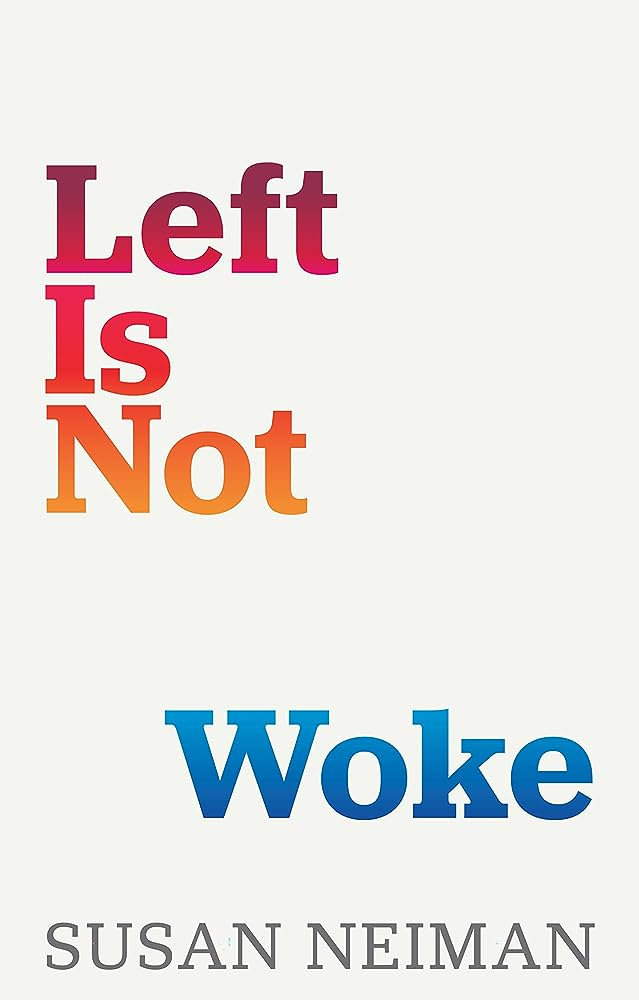

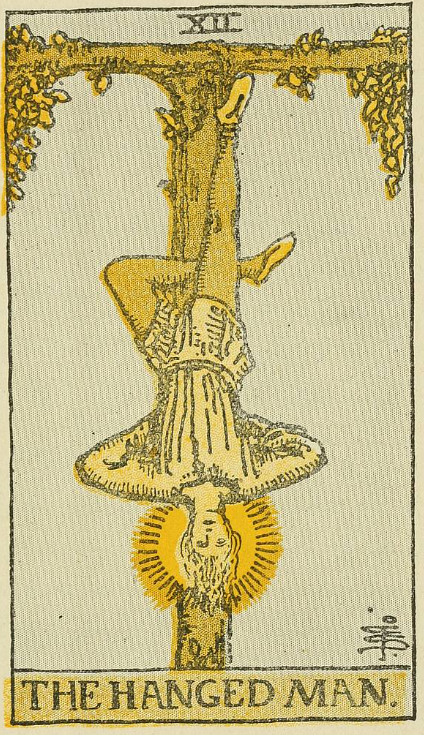


 Simon McNeil