Lately there has been significant discourse around Elon Musk’s reading list. Three main threads have arisen:
- Elon Musk read Asimov wrong
- Elon Musk read Ian M. Banks wrong and also Ian M. Banks personally hated Musk / Bezos types
- Elon Musk may have been raised in part based around the ideas put forward in the Nazi rocket scientist Wernher von Braun‘s unpublished science fiction novel Project Mars: A Technical Tale.
Now to those people who point to Von Braun’s “the Elon” and suggest that Musk’s parents secretly groomed him to become the Nazi tyrant of mars I have some bad news: The novel wasn’t actually published until 2006. In 1952, a West German press published the technical appendix to the novel but this seems to have lacked many of the correlative elements that had some Science Fiction fandom types donning their tinfoil hats. Of course this isn’t to say that Musk may have subsequently read the Nazi’s novel after it was published, by a Canadian press, in 2006. But frankly I don’t think it really matters much for reasons that will become clear later.
There has also been mention of The Caves of Steel and the idea that Musk misread that book. This classic of science fiction by Isaac Asimov is mostly a pretty standard buddy-cop murder mystery in which a pair of mismatched detectives (a human from Earth and a robot) must learn to overcome their differences in order to solve a politically charged crime. While Asimov’s book dealt somewhat with the intersection of culture and technology via the presence of the Medievalist faction and the idea that those people who didn’t want to live in Earth’s steel caves could find sort of palingenetic liberation in space colonization it is, principally, a detective novel wearing a funny hat.
Furthermore, while Asimov is generally portrayed as a progressive political figure, we can’t ignore that the treatment of Medaevalists and the idea of moving them off-world as a solution to their dissatisfaction with modernity isn’t all that different than the Nazi homesteaders of mars fantasies of Elon. Frankly he doesn’t have to have read Asimov wrong to draw something CHUDdy out of the work.
Effectively a text is politically mute. Any text may have political language within it, sure, but without an author on one end of it and an audience on the other that’s irrelevant. An unread text has no political content. But the politics of a text lie in the communication between author and audience. As such the author can never fully lock down the politics of their texts. The necessary interference caused by the fiction form gives the audience plenty of space to insert their political ideas into a text.
And that brings us to Ian M. Banks. Authors who knew him well have said openly that Banks hated tech billionaires, that he, in fact, built one of his Culture villains off of Jeff Bezos. Banks was a life-long socialist. The Culture novels present a core society that operates on effectively anarcho-communist principles and the books were often quite didactic with their politics and their irreligiosity. It would be hard to read a Culture book and not see the left-wing politics the author put there… unless you just weren’t looking for it.
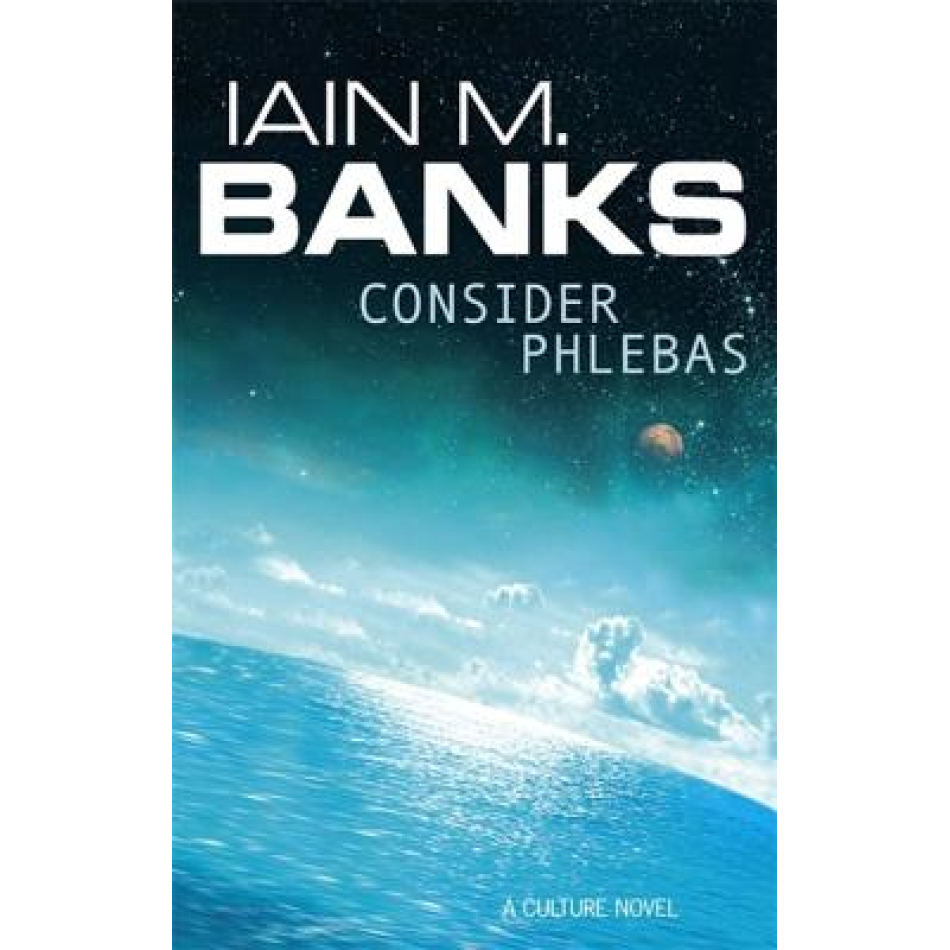
The Culture books are also thrilling space operas about spies and androids. There are sentient space ships with minds so advanced they can perceive higher dimensions. There’s cool robots. Even some of the politics has sufficient ambiguity to be malleable to right-wing aims. Consider Phlebas is aggressively anti-religion in a way that would be all too legible as tied to the same world view as the Christopher Hitchenses, Richard Dawkinses and Sam Harrisses of the world. It was a hard lesson for some strictly materialist atheists to learn that many of the luminaries of atheism in the 1990s and the first decade of the 2000s were a bunch of right-wing shit birds but the truth is that that brand of aggressively atheist irreligiosity is something that can be quite useful to a certain type of right-wing figure.
These books have multiple entry-points. Do you read The Player of Games for its treatment of how semiotics bounds the horizon of thought or for the gripping spy story? Do you take away Consider Phlebas’ anarcho-communist economics or its anti-theocratic critique of religion. Or do you just see the cool space ships? Is The Caves of Steel a classic detective novel or a template for trad homesteaders on Mars? Does it matter, at all, that the Nazi Wernher von Braun called the ruler of Mars “The Elon” in his posthumously published science fiction novel? In all these cases the book isn’t a clear communication about politics – the book is the interference pattern that exists between the author and the audience regarding politics. This is not to say that books aren’t politically useful – they are, in fact, incredibly politically useful because they often provide templates within which to articulate a politic. This is just to say that it doesn’t really matter whether Elon Musk read this or that book. There’s no political gain in pointing out that he read them poorly. There may be a slight schadenfreude in calling a powerful man illiterate but it’s rather ressentimental.
Instead we should be focusing on political action here and now to confront Musk’s political agenda and neutralize it. There’s more power in vandalizing a Tesla charging station than there is in critiquing Musk’s skills as a reader. There’s more power in pushing our elected leaders to fight back against American encroachment and to make economic and trade decisions that isolate the United States. Making fun of the powerful is all fun and games but it, too, is ultimately just a text and is, as such, politically inert unless the audience does something with it. So fucking do something.
 Simon McNeil
Pingback: Wow! Signal: March 2025 – Ancillary Review of Books